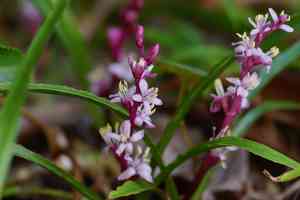
Reineckea (Reineckea carnea)
Also known as: Chinese Sacred Lily, False Lily of the Valley
The plant features elongated, cylindrical rhizomes that are 2 to 4 mm in diameter. It has 3 to 8 linear, narrowly lance-shaped or inversely lance-shaped leaves, each measuring around 10 to 40 cm in length and 5 to 35 mm in width. These leaves are smooth and taper to a pointed tip. The plant typically reaches a height of 5 to 15 cm, with a peak of 2 to 6 cm. Its bracts are ovate-deltoid and measure 5 to 8 mm.
In This Article
Attributes of Reineckea
Lifespan
Perennial
Plant Type
Herb
Plant Height
20 cm
Spread
40 cm
Leaf Color
Green
Flower Size
1-2 cm
Flower Color
Pink
Images of Reineckea
Quickly Identify Reineckea
1
Reineckea carnea can be identified by its evergreen, strap-like leaves that form clumps, and its spikes of small, bell-shaped, purple-pink flowers which bloom in late summer.
Scientific Classification of Reineckea
Phylum
Vascular plants
Class
Monocotyledons
Order
Asparagus and allies
Family
Asparagus
Genus
reineckea
Species
Reineckea
Planting and Growing of Reineckea
Care Difficulty
Easy
Watering Schedule
Every 2 days
Sunlight Requirements
Partial sun
Sunshine Duration
4-6 hours
Ideal Temperature
60-75℉
Soil Type
Potting Mix, Peat Mix
Soil pH
5.5-7
Fertilizer Type
Balanced
Pruning Season
Spring, Summer
Pruning Area
Branches, Leaves
Pruning Frequency
2 times a year
Repotting Season
Spring
Pot Type
Plastic, Ceramic
 How to Water Reineckea?
For Reineckea carnea, ensure the soil remains consistently moist but not waterlogged. Watering should result in the soil being damp to a depth of approximately 2-3 inches. The principle to follow is to balance moisture retention with proper drainage to avoid root rot.
What are the symptoms of an underwatered Reineckea?
›
What should I do if my Reineckea is not getting enough water?
›
What are the symptoms of an overwatered Reineckea?
›
How to save an overwatered Reineckea?
›
 What Are the Sunlight Requirements for Reineckea?
Reineckea carnea prefers partial sun to full shade, thriving best under these indirect light conditions. Ideal lighting supports robust growth, enhancing the plant's appearance and reducing stress-induced ailments.
More About Sunlight Requirements Techniques→
What is the best lighting condition for Reineckea carnea?
›
How to ensure optimal lighting for Reineckea carnea indoors?
›
Why is ideal lighting critical for Reineckea carnea?
›
 What Is the Ideal Temperature Range for Reineckea?
The ideal temperature range for Reineckea carnea is between 60°F and 75°F. This range provides the optimal growing conditions to ensure healthy foliage and flowering, giving the plant a balanced environment that maximizes its growth potential without stressing it from adverse temperature conditions.
 What Soil is Best for Reineckea?
Reineckea carnea thrives in well-drained soil, which prevents waterlogging and root rot. This type of soil allows for the right balance of moisture retention and aeration, promoting healthy root growth and plant vigor. To support its growth, Reineckea carnea benefits from nutrient-rich soil. Organic matter, such as compost or well-rotted manure, can be mixed into the soil to provide essential nutrients and improve soil structure, leading to robust foliage and vibrant flowers. Consistent soil moisture is key for Reineckea carnea. While it desires moisture, the soil should not be wet. Regular watering, paired with mulch to retain moisture, ensures that the plant remains hydrated, improving overall plant health.
 How to Fertilize Reineckea?
Reineckea carnea, commonly known as the false lily of the valley, prefers a balanced application of nutrients. For liquid fertilizers, use a diluted solution at half the recommended strength to avoid root burn. When using slow-release granules, apply them sparingly around the plant base to ensure gradual nutrient release throughout the growing season.
 How to Prune Reineckea?
Begin by inspecting the plant for any dead or damaged leaves. Using a pair of sharp, clean scissors or pruning shears, carefully trim these away to encourage healthier new growth. Focus on removing the older, discolored outer leaves first, which helps rejuvenate the plant and allows light to penetrate more freely. To keep the plant looking tidy and to manage its shape, gently trim back any overgrown stalks or branches. Keep in mind the plant’s natural growth habit as you do this, aiming to maintain its appealing arching form. Trim evenly all around the plant to preserve a naturally balanced look.
More About Pruning Techniques→
 How to Propagate Reineckea plant?
1
Collect seeds from mature Reineckea carnea plants in the late fall. Allow the seeds to dry for a few days before storing them in a cool, dry place. Ensure that the seeds are completely dry to prevent mold growth during storage.
2
Prepare a seed tray with a mixture of peat and sand. Sow the seeds on the surface and cover them lightly with a thin layer of soil. Keep the soil moist but not waterlogged to encourage germination.
3
In early spring, dig up the entire plant and separate it into smaller clumps using a sharp knife. Each division should have a healthy root system. Replant the divisions promptly to prevent the roots from drying out.
 How to Repot Reineckea plant?
1
Repotting Reineckea carnea is best done when you notice roots peeking out from the pot's drainage holes or the plant showing signs of stunted growth. Springtime is ideal, as it aligns with the plant's active growing season, ensuring optimal health and vigor post-repotting.
2
Choose a pot with sufficient drainage holes to prevent waterlogging, ideally one size larger than the current pot. A pot with a diameter of 1-2 inches larger provides adequate space for growth but avoids excessive soil moisture retention, which can contribute to root rot.
3
Opt for a well-drained potting mix rich in organic matter. This soil type ensures proper aeration and prevents compaction, providing ideal conditions for root expansion and preventing issues such as root rot and nutrient deficiencies.
Learn More About Reineckea Diseases
Anthracnose
Bacterial Leaf Spot
Bacterial Soft Rot
Bacterial Wilt
Black Spot
Chemical Injury
Crown Gall
Cyst Nematode
Damping-off
Downy Mildew
Drought Stress
Fusarium Wilt
Gray Mold
Leaf Curl
Leaf Spot
Mosaic
Nutrient Deficiency
Nutrient Toxicity
Powdery Mildew
Root Rot
Root-knot Nematode
Rusts
Sooty Mold
Spider Mites
Temperature Stress
Thrips Damage
White Mold



