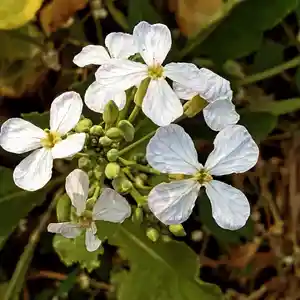
Wild radish(Raphanus raphanistrum)

Wild radish (Raphanus raphanistrum)

Also known as: Wild Radish, Jointed Charlock

The wild radish (Raphanus raphanistrum) is a versatile plant with several edible parts, each offering unique flavors and uses. Here’s how you can enjoy them:

1. **Leaves**: Young leaves are tender and can be eaten raw in salads or sandwiches, adding a peppery note. Older leaves are better cooked, similar to how you would prepare spinach or kale.

2. **Flowers**: These can be used fresh in salads to add both color and a mild, radish-like taste.

3. **Seed Pods**: When young and tender, seed pods can be a crunchy, raw snack, or they can be added to salads. They are also delicious when pickled or lightly stir-fried.

4. **Roots**: The roots can be consumed after peeling away the tough outer layer. They can be grated raw into salads for a spicy kick, or cooked by roasting or boiling to soften their texture and mellow their flavor.

Always ensure correct identification and avoid plants exposed to chemicals or pollutants.

Attributes of Wild radish

Lifespan
Annual, Biennial
Plant Type
Herb
Plant Height
20 cm to 80 cm
Spread
10 cm
Leaf Color
Green Blue
Flower Size
3 cm to 4 cm
Flower Color
White Yellow Pink Purple Lavender Orange Gold

PlantJoy - Identify plants with a snap

Identify and diagnose plants, get toxicity alerts, and explore safety guides for all types of fungi.

Try for Free

Images of Wild radish

Wild radish(Raphanus raphanistrum)

Quickly Identify Wild radish

1
Basal leaves form a deep-green rosette shape.
2
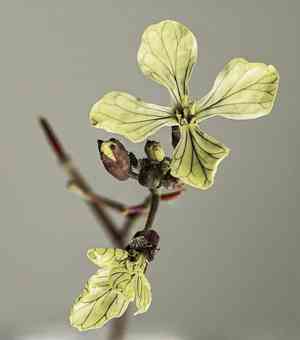
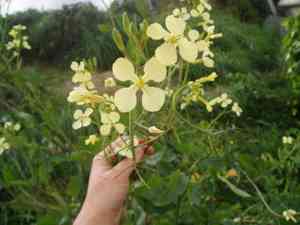
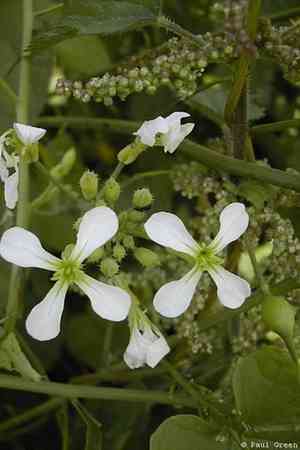
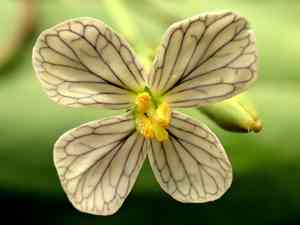
Clusters of four-petaled flowers in various colors.
3
Erect pods progress from green-purple to yellow-brown or grey.
4
Leaves are pinnately lobed with bristly hairs.
5
Robust, angular stem with slight ridges, reaching 3 feet (90 cm).

Scientific Classification of Wild radish

Phylum
Vascular plants
Class
Dicotyledons
Order
Brassicales
Family
Cruciferae
Genus
Radishes
Species
Wild radish

Planting and Growing of Wild radish

Care Difficulty
Easy
Watering Schedule
Every 4 days
Sunlight Requirements
Full sun
Sunshine Duration
4-8 hours
Ideal Temperature
60-75℉
Soil Type
Potting Mix, Peat Mix
Soil pH
6.5-7.5
Fertilizer Type
Balanced
Pruning Season
Spring, Summer
Pruning Area
Branches, Leaves
Pruning Frequency
2 times a year
Repotting Season
Spring
Pot Type
Plastic, Ceramic

water icon How to Water Wild radish?

When watering Raphanus raphanistrum, aim for a thorough soak that reaches down to the roots without leaving the soil waterlogged. Approximately 200ml per watering is ideal. Ensure water penetrates well without pooling on the surface.
What are the symptoms of an underwatered Wild radish?
What should I do if my Wild radish is not getting enough water?
What are the symptoms of an overwatered Wild radish?
How to save an overwatered Wild radish?
More About Watering Techniques

sunlight icon What Are the Sunlight Requirements for Wild radish?

Sunlight Requirements: Full sun, Partial sun
Duration of light: 6 to 8 hours
Raphanus raphanistrum thrives under full sun to partial sun conditions, benefiting from long durations of direct light, fostering strong growth and vibrant flowering phases.
What is the ideal light level for Raphanus raphanistrum?
How can I provide ideal lighting conditions?
What are the benefits of ideal lighting?
More About Sunlight Requirements Techniques

temperature icon What Is the Ideal Temperature Range for Wild radish?

Ideal Temperature: 60 ~ 75℉
Raphanus raphanistrum, commonly known as wild radish, thrives best in temperatures ranging from 60°F to 75°F. These temperatures provide optimal conditions for its growth, allowing the plant to maintain healthy leaves and root development.

soil icon What Soil is Best for Wild radish?

Soil type: Sandy loam, Loam, Calcareous soil
Soil PH: 6.5 ~ 7.5
Raphanus raphanistrum thrives in well-drained soil, ensuring the roots are not waterlogged. This encourages robust root growth essential for nutrient uptake and a healthy plant. This plant prefers moderately fertile soils that provide a balanced supply of nutrients. This supports its rapid growth and flowering without excessive vegetative growth. Adequate soil aeration is crucial for Raphanus raphanistrum, as it ensures that roots get the needed oxygen. This condition helps prevent root diseases and promotes vigor. More About Soil

fertilize icon How to Fertilize Wild radish?

Fertilizer type: Balanced
For Raphanus raphanistrum, an ideal fertilizer regimen involves using a balanced 10-10-10 NPK ratio. When applying liquid fertilizer, mix one tablespoon of the fertilizer with one gallon of water. For solid, slow-release fertilizers, use about half a cup per plant spread evenly around the root zone. More About Fertilizing Techniques

prune icon How to Prune Wild radish?

Pruning Time: Spring, Summer, Autumn
Wear gloves to protect your hands from any irritants. Always disinfect pruning tools before and after use to prevent the spread of disease. Avoid pruning in extreme temperatures, as this can stress the plant considerably. Correct timing is crucial; while it's mostly safe to prune in spring and summer, during the dormant months of autumn, pruning should be more limited to ensure the plant retains energy. Be mindful of the plant’s overall shape and growth direction while pruning, and avoid removing more than one-third of the plant at a time. More About Pruning Techniques

propagate icon How to Propagate Wild radish plant?

Propagate Time: Spring, Early spring, Late spring
1
Choose healthy and viable seeds from a reputable source. Soaking the seeds overnight can improve germination rates by softening the seed coat.
2
Sow the seeds in seed trays or pots with a damp potting mix. Cover them lightly with soil, as a deep planting might hinder germination.
3
Keep the soil consistently moist but not waterlogged. Maintain a temperature range of 15-20°C to ensure optimal growth conditions for germination.
More About Propagating Techniques

repot icon How to Repot Wild radish plant?

Repotting frequency: Every 1-2 years
1
The ideal time to repot Raphanus raphanistrum is when the roots start poking out of the drainage holes, or the plant looks like it's outgrowing its current space. Observing these signs ensures the plant has sufficient room to breathe and access nutrients, promoting healthier growth.
2
Choose a pot that is 1-2 inches larger in diameter than the current one, with ample drainage holes. This ensures excess water can escape easily, preventing root rot while providing enough space for roots to spread and access nutrients.
3
Opt for a well-draining potting mix, possibly mixed with sand or perlite. This aids in maintaining the right moisture levels, preventing waterlogging, thereby offering a conducive growing environment, facilitating thriving root and plant health.

PlantJoy - Identify plants with a snap

Find the best spots for them to optimize their health, simply using your phone.

Try for Free

Toxicity of Wild radish

Is Wild radish toxic to cat?

Wild radish presents a moderate toxicity hazard to felines. Ingesting significant quantities of wild radish can result in poisoning, as every part of the plant contains toxic components. Pet owners must remain alert for any indications of physical distress, illness, or pain in their cats, which may arise from consuming wild radish. If poisoning is suspected, it is essential to obtain prompt veterinary assistance to safeguard the health and well-being of the affected cat.

Is Wild radish toxic to dog?

Wild radish presents a low-level toxicity threat to dogs. If canines ingest large quantities of this plant, they may suffer poisoning. Every part of the wild radish is deemed toxic and can play a role in the poisoning process. Should a dog consume any portion of wild radish, it might display symptoms characteristic of poisoning, which requires urgent veterinary care for accurate diagnosis and appropriate treatment.

Identify toxic plants for your safety

Learn which plants are harmful to you and your pets, and make informed choices for a safer home!

Try for Free
WARNING
The judgment on toxicity and danger is for reference only. We DO NOT GUARANTEE any accuracy of such judgment. Therefore, you SHALL NOT rely on such judgment. It is IMPORTANT TO SEEK PROFESSIONAL ADVICE in advance when necessary.
More About Toxic Techniques