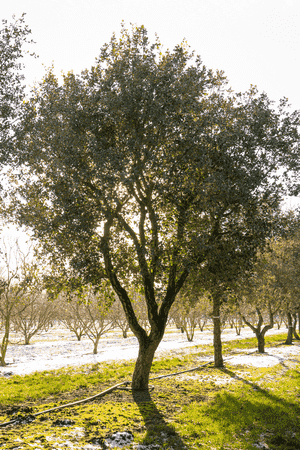
Cork oak (Quercus suber)
Also known as: Cork Oak
The cork oak tree, native to the western Mediterranean region, is notable for its versatile bark. This bark is primarily used to create wine bottle stoppers, but it also finds applications in insulation, flooring, and automotive components. Additionally, cork oak trees provide a friendly habitat for birds and squirrels.
In This Article
Attributes of Cork oak
Lifespan
Perennial
Plant Type
Tree
Plant Height
12 m to 21 m
Spread
12 m to 21 m
Leaf Color
Green
Flower Size
2.5 cm
Flower Color
Yellow Green
Images of Cork oak
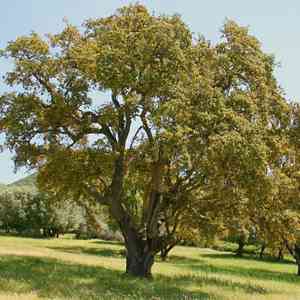
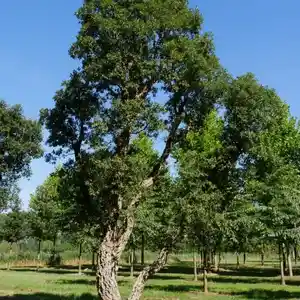
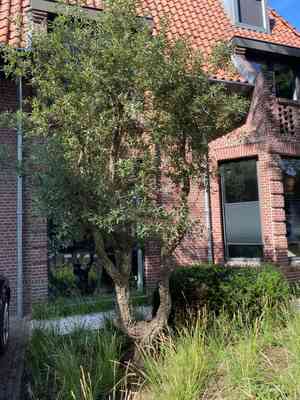
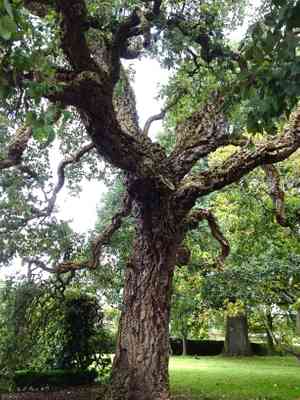
Quickly Identify Cork oak
1
Distinctive spongy and corky bark with a pale gray hue and deep reddish-brown crevices.
2
Oval to oblong acorns with a shaggy, cup-shaped cap, measuring 1 to 1.5 inches (2.5 to 3.8 cm).
3
Alternating, ovate to elliptical leaves with dark green upper side and gray, hairy underside.
4
Light gray stem covered in fuzzy hairs, with reddish-brown buds and robust branching pattern.
5
Impressive stature reaching 70 to 100 feet (21 to 30 meters) with an equally wide crown.
Scientific Classification of Cork oak
Phylum
Vascular plants
Class
Dicotyledons
Order
Fagales
Family
Beech
Genus
Oaks
Species
Cork oak
Planting and Growing of Cork oak
Care Difficulty
Moderate
Watering Schedule
Every 2 days
Sunlight Requirements
Full sun
Sunshine Duration
4-8 hours
Ideal Temperature
60-75℉
Soil Type
Potting Mix, Peat Mix
Soil pH
5.5-7.5
Fertilizer Type
Balanced
Pruning Season
Spring, Summer
Pruning Area
Branches, Leaves
Pruning Frequency
2 times a year
Repotting Season
Spring
Pot Type
Plastic, Ceramic
 How to Water Cork oak?
Quercus suber, commonly known as the cork oak, requires a deep and thorough drenching. Water around 1000 ml should be applied, ensuring the soil is moist but not waterlogged. Aim for even distribution, encouraging growth without drowning the roots.
More About Watering Techniques→
What are the symptoms of an underwatered Cork oak?
›
What should I do if my Cork oak is not getting enough water?
›
What are the symptoms of an overwatered Cork oak?
›
How to save an overwatered Cork oak?
›
 What Are the Sunlight Requirements for Cork oak?
Quercus suber prospers in full sun to partial sun environments. Consistent light exposure fosters robust growth and enhances the tree's natural defenses, leading to a thriving landscape feature.
More About Sunlight Requirements Techniques→
Optimal Light Needs
›
Benefits of Adequate Sunlight
›
Solution for Achieving Ideal Conditions
›
 What Is the Ideal Temperature Range for Cork oak?
The ideal temperature range for cultivating Quercus suber, commonly known as the Cork Oak, is between 60°F and 75°F. Within this temperature range, the plant can optimally conduct photosynthesis processes, leading to healthy growth and development. This range provides the necessary warmth for enzyme activities and metabolic processes to thrive efficiently. Maintaining these conditions helps the Cork Oak to establish a robust root system and sustain healthy foliage.
 What Soil is Best for Cork oak?
Quercus suber thrives in well-drained soils that allow excess water to escape easily. This prevents root rot and encourages healthy root development, meaning the tree can grow strong and remain stable. The tree benefits from nutrient-rich soil that provides essential vitamins and minerals. These nutrients support robust growth, leading to a fuller canopy and a stronger trunk. While Quercus suber doesn't demand high fertility, moderate nutrient levels support steady growth. This type of soil balances tree health without overwhelming it with excessive nutrients.
More About Soil→
 How to Fertilize Cork oak?
For Quercus suber, a moderate application of fertilizer is ideal. Use about 1 cup of balanced 10-10-10 (N-P-K) granular slow-release fertilizer per square meter around the tree’s root zone. For liquid fertilizers, dilute to half the recommended strength to prevent any root harm and cover the same area.
More About Fertilizing Techniques→
 How to Prune Cork oak?
To effectively prune Quercus suber, begin by examining the tree for any dead, damaged, or diseased branches. Use clean and sharp pruners to remove these at the base, ensuring a clean cut to promote healing. Focus on removing branches that cross or rub against each other, as they can cause wounds and become entry points for pests and diseases. If you're dealing with a larger tree, start pruning from the top down to maintain its natural shape.
More About Pruning Techniques→
 How to Propagate Cork oak plant?
1
Collect acorns from healthy Quercus suber trees in autumn. Soak them in water for 24 hours to remove any non-viable seeds. Store the viable seeds in a cool, moist place for stratification over winter.
2
Select a healthy branch and cut a 6-8 inch section with multiple nodes. Remove all leaves except a few at the top. Dip the cut end in rooting hormone to enhance root development.
3
Choose a healthy rootstock and a compatible scion. Make precise cuts on both to ensure a good fit. Bind them together securely using grafting tape, ensuring that the cambium layers match.
 How to Repot Cork oak plant?
1
Quercus suber, also known as the cork oak, signals the need for repotting when its roots begin circling the pot or poke out of the drainage holes, indicating a lack of space. Weak growth and compacted soil are also signs. Repotting in the warmer months, especially during spring or summer, allows the plant to establish itself faster, making full use of the active growing season.
2
When selecting a pot for your Quercus suber, opt for one that is just a little larger than its current container. This prevents root rot and allows the plant to establish a strong root system. Ensure there are sufficient drainage holes to help excess water escape, promoting healthy root development and reducing the risk of overwatering.
3
The ideal soil for repotting a cork oak is a well-draining loamy mix that retains enough moisture for growth but dries out fairly quickly to prevent waterlogging. Such a soil mix enhances root aeration, supports robust growth, and mimics the plant's natural habitat conditions, ensuring it thrives in its new pot.
Learn More About Cork oak Diseases
Anthracnose
Bacterial Leaf Spot
Black Spot
Chemical Injury
Crown Gall
Damping-off
Downy Mildew
Drought Stress
Fusarium Wilt
Gray Mold
Leaf Curl
Leaf Spot
Mosaic
Nutrient Deficiency
Nutrient Toxicity
Powdery Mildew
Root Rot
Root-knot Nematode
Rusts
Sooty Mold
Spider Mites
Temperature Stress
Thrips Damage
White Mold



