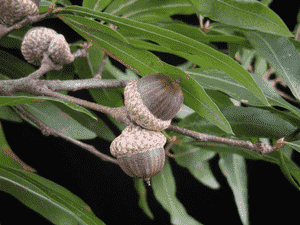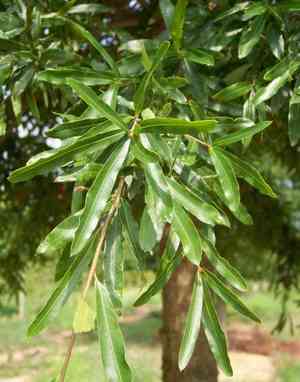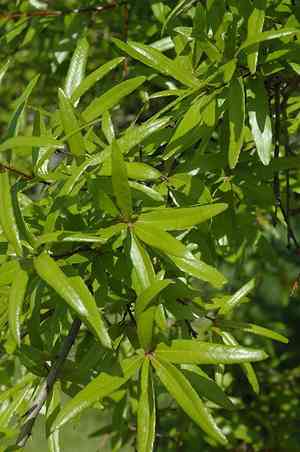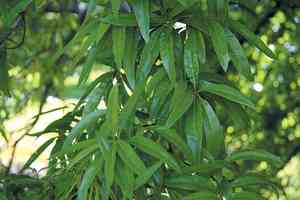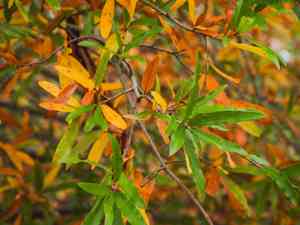
Willow oak(Quercus phellos)

Willow oak (Quercus phellos)

Also known as: Peach oak

Willow oak (Quercus phellos) is a medium-sized deciduous tree commonly found in North America. What sets it apart from other oak species is its unique foliage: the leaves are narrow, lance-shaped, and resemble those of a willow tree, which is the origin of its name.

Attributes of Willow oak

Lifespan
Perennial
Plant Type
Tree
Plant Height
20 m to 30 m
Spread
9 m to 15 m
Leaf Color
Green Yellow
Flower Size
2.5 cm
Flower Color
Yellow Green

PlantJoy - Identify plants with a snap

Identify and diagnose plants, get toxicity alerts, and explore safety guides for all types of fungi.

Try for Free

Images of Willow oak

Willow oak(Quercus phellos)

Quickly Identify Willow oak

1
Slender willow-like leaves with bristle-tipped apex
2
Yellow-green catkins in spring
3
Rounded acorns with scaly caps
4
Hairless greenish-brown stem with reddish-brown buds
5
Gray to dark gray-brown bark with shallow ridges and furrows

Scientific Classification of Willow oak

Phylum
Vascular plants
Class
Dicotyledons
Order
Fagales
Family
Beech
Genus
Oaks
Species
Willow oak

Planting and Growing of Willow oak

Care Difficulty
Easy
Watering Schedule
Every 4 days
Sunlight Requirements
Full sun
Sunshine Duration
4-8 hours
Ideal Temperature
60-80℉
Soil Type
Potting Mix, Peat Mix
Soil pH
6.5-7.5
Fertilizer Type
Balanced
Pruning Season
Spring, Summer
Pruning Area
Branches, Leaves
Pruning Frequency
2 times a year
Repotting Season
Spring
Pot Type
Plastic, Ceramic

water icon How to Water Willow oak?

Quercus phellos, commonly known as the willow oak, thrives well when thoroughly watered. Ensure that the soil is consistently moist but never waterlogged. A good practice is to allow the water to soak deeply into the ground, which helps the roots to establish and grow vigorously. During each watering session, approximately 1000 milliliters should suffice, ensuring the soil remains hydrated without causing saturation.
What are the symptoms of an underwatered Willow oak?
What should I do if my Willow oak is not getting enough water?
What are the symptoms of an overwatered Willow oak?
How to save an overwatered Willow oak?
More About Watering Techniques

sunlight icon What Are the Sunlight Requirements for Willow oak?

Sunlight Requirements: Full sun, Partial sun
Duration of light: 6 to 8 hours
Quercus phellos flourishes in full to partial sunlight, benefiting from 6 to 8 hours of daily exposure. Ideal lighting fosters healthy growth, helping maintain its vibrant leaf color and acorn yield.
How much sunlight does Quercus phellos need daily?
What are the solutions to achieve ideal sunlight for Quercus phellos?
What are the benefits of Quercus phellos receiving ideal sunlight?
More About Sunlight Requirements Techniques

temperature icon What Is the Ideal Temperature Range for Willow oak?

Ideal Temperature: 60 ~ 80℉
The ideal temperature range for Quercus phellos, also known as the willow oak, is between 60 and 80 degrees Fahrenheit. This range ensures optimal physiological processes for the tree, including photosynthesis, respiration, and nutrient uptake. Maintaining this temperature range helps the tree grow robustly, resist diseases, and produce healthy foliage.

soil icon What Soil is Best for Willow oak?

Soil type: Loam, Sandy loam
Soil PH: 6.5 ~ 7.5
Quercus phellos thrives in well-drained soils, which prevent waterlogging and ensure adequate oxygen supply to the roots. Good drainage is critical to prevent root rot, allowing the tree to maintain its majestic appearance and longevity. Rich, fertile soil full of organic matter promotes strong growth in Quercus phellos. Nutrients in the soil support vigorous leaf development and robust branching patterns, accentuating the tree's graceful silhouette. While drainage is important, retaining some soil moisture helps sustain Quercus phellos, especially during dry spells. Moist soils prevent stress, ensuring the willow oak remains lush and healthy throughout the growing season. More About Soil

fertilize icon How to Fertilize Willow oak?

Fertilizer type: Balanced
The amount of fertilizer required for Quercus phellos largely depends on the age and size of the tree. Young trees require less fertilizer compared to mature trees, generally requiring about 1 pound for every inch of trunk diameter. This nutrient boost helps encourage healthy growth, robust leaves, and strong root systems. More About Fertilizing Techniques

prune icon How to Prune Willow oak?

Pruning Time: Spring, Summer, Autumn
Begin by inspecting the Quercus phellos for any dead or damaged branches, which are easily identified by their brittle and dry appearance. Utilize clean, sharp tools to make precise cuts close to the base of these branches without damaging the main trunk. This not only preserves the health and structure of the tree but also allows sunlight to penetrate the canopy, promoting vigorous regrowth. After removing deadwood, focus on shaping the tree. Trim back overgrown branches to maintain the desired height and width, ensuring a balanced structure. Thinning out crowded limbs aids in improving air circulation, reducing disease risk, and allowing inner foliage access to light, which is crucial for a healthy Willow Oak. More About Pruning Techniques

propagate icon How to Propagate Willow oak plant?

Propagate Time: Spring, Early spring, Late spring
1
Collect acorns from a mature Quercus phellos tree in autumn. Ensure the acorns are fully mature and show no signs of damage or pest infestation for successful seed propagation.
2
Select healthy, green, and semi-hardwood stems from the parent plant. Cut each about 6-8 inches long with a clean and slanting cut to maximize rooting area.
3
Choose a compatible rootstock and scion from healthy plants. Ensure smooth cambium contact between the scion and rootstock, and secure them with grafting tape.
More About Propagating Techniques

repot icon How to Repot Willow oak plant?

Repotting frequency: Biennially or as needed
1
Repot Quercus phellos when you notice roots growing out through the drainage holes, or if the growth seems restricted. These signs indicate that the plant has outgrown its current pot and requires more space for its roots to develop properly.
2
Opt for a pot that's one size larger than the current one and ensures it has good drainage holes. The increased space allows the roots to expand, promoting healthier growth. A well-draining pot prevents waterlogging, reducing the risk of root rot.
3
Use a well-draining, loamy mix suited for oak species. This type of soil retains enough moisture yet drains excess water efficiently, preventing root rot. Such a composition supports nutrient uptake while maintaining an airy environment for roots.

PlantJoy - Identify plants with a snap

Find the best spots for them to optimize their health, simply using your phone.

Try for Free

Toxicity of Willow oak

Is Willow oak toxic to humans?

The willow oak, a type of oak tree, poses a mild toxicity risk if consumed. Ingesting it can lead to mild to moderate symptoms, particularly with excessive quantities. This toxic effect is mainly due to the tannins present in the young leaves and acorns. Consuming these plant parts can result in various health issues such as stomach upset, constipation, diarrhea, bloody stools, and intense thirst. In severe cases, there may also be an impact on kidney function. These trees are commonly cultivated as ornamental plants in parks and gardens, making them easily reachable by children who might unwittingly gather and consume the leaves or acorns.

Is Willow oak toxic to cat?

Willow oak is recognized to possess a mild level of toxicity for cats. Incidents of poisoning generally happen when the plant's leaves or seeds are consumed in significant quantities. Although the exact toxic agents have not been specified, cat owners must understand that ingestion may cause physical distress or sickness. If poisoning is suspected, it is crucial to promptly seek veterinary assistance to safeguard the health and welfare of the impacted cat.

Is Willow oak toxic to dog?

The willow oak species is known to possess a mild degree of toxicity for dogs. If dogs ingest large quantities of the leaves or seeds from the willow oak, it can lead to poisoning. Dog owners should be vigilant in identifying possible poisoning symptoms, which could manifest as vomiting, diarrhea, or abdominal discomfort. Should a dog consume any parts of the willow oak, it is essential to obtain immediate medical attention at a veterinary clinic to safeguard the well-being of the pet.

Identify toxic plants for your safety

Learn which plants are harmful to you and your pets, and make informed choices for a safer home!

Try for Free
WARNING
The judgment on toxicity and danger is for reference only. We DO NOT GUARANTEE any accuracy of such judgment. Therefore, you SHALL NOT rely on such judgment. It is IMPORTANT TO SEEK PROFESSIONAL ADVICE in advance when necessary.
More About Toxic Techniques