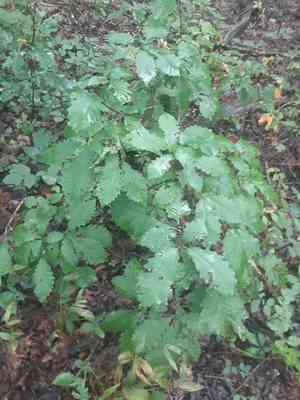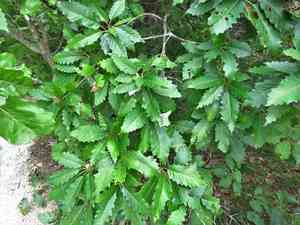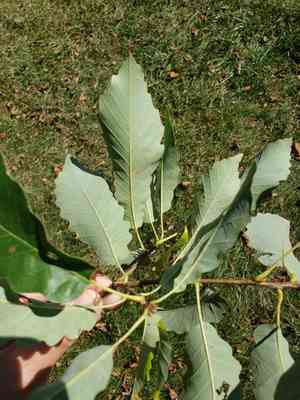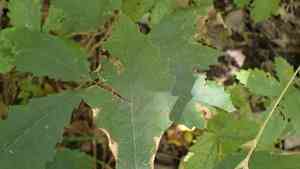
Chinquapin oak(Quercus muehlenbergii)

Chinquapin oak (Quercus muehlenbergii)

Also known as: Yellow oak, Rock oak

The chinquapin oak (Quercus muehlenbergii) is a deciduous tree found across the eastern and southern United States, as well as parts of Mexico and Canada. Known for its durable hardwood used in construction, this tree also produces sweet acorns. These acorns are highly attractive to a range of wildlife, including mice, voles, chipmunks, deer, and various bird species.

Attributes of Chinquapin oak

Lifespan
Perennial
Plant Type
Tree
Plant Height
30 m
Spread
18 m to 24 m
Leaf Color
Green Yellow Red Gold Brown
Flower Size
3 mm
Flower Color
Yellow Green Gold

PlantJoy - Identify plants with a snap

Identify and diagnose plants, get toxicity alerts, and explore safety guides for all types of fungi.

Try for Free

Images of Chinquapin oak

Chinquapin oak(Quercus muehlenbergii)

Quickly Identify Chinquapin oak

1
Distinctive acorns in pairs with furry grey cups, measuring 1/2-1 inch (1.3-2.5 cm) long.
2
Toothed chestnut-like leaves, 4-8 inches (10-20 cm) long, shiny green above, wavy margins.
3
Male flowers in long, drooping catkin clusters up to 4 inches (10 cm) long.
4
Sturdy orange-brown twigs with white lenticels, 0.1-0.2 inches (2.5-5 mm) in diameter.
5
Light gray bark with raised ridges, deep fissures, and rough texture evolving with age.

Scientific Classification of Chinquapin oak

Phylum
Vascular plants
Class
Dicotyledons
Order
Fagales
Family
Beech
Genus
Oaks
Species
Chinquapin oak

Planting and Growing of Chinquapin oak

Care Difficulty
Easy
Watering Schedule
Every 2 days
Sunlight Requirements
Full sun
Sunshine Duration
4-8 hours
Ideal Temperature
60-75℉
Soil Type
Potting Mix, Peat Mix
Soil pH
6.5-7.5
Fertilizer Type
Balanced
Pruning Season
Spring, Summer
Pruning Area
Branches, Leaves
Pruning Frequency
2 times a year
Repotting Season
Spring
Pot Type
Plastic, Ceramic

water icon How to Water Chinquapin oak?

When watering Quercus muehlenbergii, ensure the soil is moist but not waterlogged. Aim for about 950 milliliters, allowing the water to penetrate deeply into the soil to reach the expanding root system. It's essential to maintain consistent moisture without drowning the plant.
What are the symptoms of an underwatered Chinquapin oak?
What should I do if my Chinquapin oak is not getting enough water?
What are the symptoms of an overwatered Chinquapin oak?
How to save an overwatered Chinquapin oak?

sunlight icon What Are the Sunlight Requirements for Chinquapin oak?

Sunlight Requirements: Full sun, Partial sun
Duration of light: 6 to 8 hours
Quercus muehlenbergii thrives best in full sun to partial shade environments. Ideal sunlight exposure ensures robust foliage development, essential for photosynthesis and providing food and shelter in ecosystems.
How much sunlight does Quercus muehlenbergii need daily?
What are the best conditions for receiving ideal light?
What benefits come from Quercus muehlenbergii receiving ideal light?
More About Sunlight Requirements Techniques

temperature icon What Is the Ideal Temperature Range for Chinquapin oak?

Ideal Temperature: 60 ~ 75℉
The ideal temperature range for Quercus muehlenbergii, commonly known as the Chinkapin Oak, falls between 60°F and 75°F. Within this range, the trees thrive and exhibit healthy growth patterns. Temperatures within these parameters ensure optimal physiological processes including photosynthesis, nutrient uptake, and respiration.

soil icon What Soil is Best for Chinquapin oak?

Soil type: Loam, Calcareous soil, Sandy loam
Soil PH: 6.5 ~ 7.5
Quercus muehlenbergii thrives in well-drained soils, preventing waterlogging which can lead to root rot. This type of soil ensures the roots receive ample oxygen, promoting healthy growth and resilience. This species benefits from nutrient-rich soil that provides essential minerals and nutrients. A fertile ground boosts growth rates and contributes to robust crown development, maintaining the health of the foliage. Chinkapin oak requires soil with moderate moisture retention to balance water availability. It helps in maintaining consistent moisture without excessive dryness or sogginess, supporting steady growth. More About Soil

fertilize icon How to Fertilize Chinquapin oak?

Fertilizer type: Balanced
When fertilizing Quercus muehlenbergii, it's crucial to provide the right amount to promote healthy growth. For liquid fertilizer, generally, use about one ounce per gallon of water, applied around the base of the tree. For slow-release granular fertilizers, about one pound per inch of trunk diameter is recommended. Distribute it evenly at the base, extending to the drip line. More About Fertilizing Techniques

prune icon How to Prune Chinquapin oak?

Pruning Time: Spring, Autumn
Before you begin pruning, ensure your tools are disinfected to prevent the spread of disease. Use a mixture of bleach and water to clean shears, saws, and loppers. Begin by examining the overall structure of the tree to identify any dead, diseased, or crossing branches. These should be prioritized for removal to promote healthier growth patterns. Start by removing any dead or broken branches using sharp, clean tools. Make cuts at an angle just above a healthy bud or branch to encourage new growth. Carefully select branches to remove that will help thin the canopy, allowing more light and air to penetrate. This reduces disease risk and helps nourish the entire tree. Trim back overgrown branches to maintain the tree’s natural shape using the 'cut-back' method. This involves making cuts close to a bud or side shoot, promoting balanced growth. More About Pruning Techniques

propagate icon How to Propagate Chinquapin oak plant?

Propagate Time: Early spring,Spring,Late spring
1
Collect mature acorns in the fall for seed propagation. Ensure that the acorns are healthy, without holes or fungus, as these are more likely to germinate successfully.
2
Soak acorns to check for viability; viable ones sink. Later, stratify them in moist sand for a few weeks to break dormancy before planting them in soil.
3
Choose compatible rootstocks for grafting and use methods such as cleft grafting in early spring. Ensure a firm union between scion and rootstock for optimal growth.
More About Propagating Techniques

repot icon How to Repot Chinquapin oak plant?

Repotting frequency: Every 2-3 years
1
Identify the right time to repot your Quercus muehlenbergii by observing signs like roots protruding from drainage holes, stunted growth, or soil compaction. Spring and autumn are ideal seasons, as the tree is either coming out of dormancy or preparing for it, facilitating root recovery and growth.
2
Select a pot that is one size larger than the current one, with good drainage holes. This offers ample space for root expansion, preventing root-bound issues and ensuring healthy growth. The material should be durable and weather-resistant to protect outdoor specimens.
3
Opt for a loamy, well-draining soil mix which mimics the natural environment of Quercus muehlenbergii. This composition allows for adequate moisture retention while preventing waterlogging, promoting optimal root health and nutrient uptake for robust growth.

PlantJoy - Identify plants with a snap

Find the best spots for them to optimize their health, simply using your phone.

Try for Free

Toxicity of Chinquapin oak

Is Chinquapin oak toxic to humans?

As a species within the oak genus, the chinquapin oak possesses the potential for toxicity when parts of it are consumed. Consuming any part of this tree can lead to mild to moderate symptoms. The young leaves and acorns contain tannins, which are responsible for their toxic nature. These tannins can provoke an upset stomach, constipation, diarrhea, bloody stools, increased urination, and severe thirst; in more serious cases, the kidneys may also be adversely affected. Given that this plant is commonly found in parks and residential areas, there is a risk that children may inadvertently pick and consume the young leaves or acorns, unaware of their toxic effects.

Is Chinquapin oak toxic to cat?

The chinquapin oak carries a mild toxicity risk for cats. High consumption of the plant's leaves or seeds may lead to toxic reactions in felines. Following ingestion, affected cats could experience physical discomfort, indicating possible health issues stemming from poisoning. While the specific toxic compounds have not been identified, the potential for illness underscores the importance of closely monitoring a cat's interactions with chinquapin oak. Given the urgency related to poisoning, it is crucial for pet owners to promptly seek veterinary assistance if their cat exhibits any signs of distress after consuming chinquapin oak.

Is Chinquapin oak toxic to dog?

The chinquapin oak is recognized for possessing a mild toxicity level that can adversely affect dogs. If ingested in significant quantities, this plant may poison canines. The components of the plant that present a danger are primarily the leaves and seeds, necessitating their removal from areas accessible to pets to avert unintentional consumption. Should a dog ingest parts of the chinquapin oak, it may display symptoms typical of poisoning. Although the specific toxic compounds are not outlined, pet owners must be vigilant, as any signs of illness post-ingestion require immediate consultation with a veterinarian. Timely treatment at a veterinary facility is essential to ensure the health and recovery of a dog exposed to chinquapin oak toxicity.

Identify toxic plants for your safety

Learn which plants are harmful to you and your pets, and make informed choices for a safer home!

Try for Free
WARNING
The judgment on toxicity and danger is for reference only. We DO NOT GUARANTEE any accuracy of such judgment. Therefore, you SHALL NOT rely on such judgment. It is IMPORTANT TO SEEK PROFESSIONAL ADVICE in advance when necessary.
More About Toxic Techniques