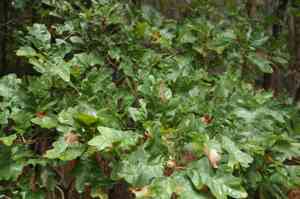
Sand post oak (Quercus margarettae)
Also known as: Sand Post Oak, Margaret's Oak
The sand post oak, scientifically known as Quercus margarettae, is an oak species native to the southeastern United States. This tree is notably slow in its growth, sometimes taking up to 30 years to bear acorns. It's commonly utilized for erosion control, particularly on sandy terrains. This species is also referred to as the dwarf post oak.
In This Article
Attributes of Sand post oak
Lifespan
Perennial
Plant Type
Tree, Shrub
Plant Height
12 m
Spread
25 m
Leaf Color
Green
Flower Size
Not significant, as oak flowers are small and inconspicuous
Flower Color
Green Yellow
Images of Sand post oak
Quickly Identify Sand post oak
1
Deciduous tree, reaching 30-40 feet (9-12 meters) with slow growth rate.
2
Male flowers in green catkins, female flowers short red spikes in leaf axils.
3
Acorns 1/2 inch (1.27 cm) with light brown color, bowl-shaped cap with thin scales.
4
Leaves 2-4 inches (5-10 cm), dark green shiny upper side, light green pubescent underside.
5
Smooth gray twigs, reddish-brown ovoid bud, 1/16 to 1/8 inch (2 to 3.2 mm) thickness.
Scientific Classification of Sand post oak
Phylum
Vascular plants
Class
Dicotyledons
Order
Fagales
Family
Beech
Genus
Oaks
Species
Sand post oak
Planting and Growing of Sand post oak
Care Difficulty
Easy
Watering Schedule
Every 2 days
Sunlight Requirements
Full sun
Sunshine Duration
6-10 hours
Ideal Temperature
60-75℉
Soil Type
Potting Mix, Peat Mix
Soil pH
6-7.5
Fertilizer Type
Balanced
Pruning Season
Spring, Summer
Pruning Area
Branches, Leaves
Pruning Frequency
2 times a year
Repotting Season
Spring
Pot Type
Terracotta, Plastic
 How to Water Sand post oak?
For Quercus margarettae, an adequate watering amount is essential. The goal is to ensure that the soil is consistently moist but never waterlogged. In one session, water about 1000 milliliters per tree. Always allow the excess water to drain away fully and check the top 5 centimeters of soil to ensure it's moist but not wet.
What are the symptoms of an underwatered Sand post oak?
›
What should I do if my Sand post oak is not getting enough water?
›
What are the symptoms of an overwatered Sand post oak?
›
How to save an overwatered Sand post oak?
›
 What Are the Sunlight Requirements for Sand post oak?
Quercus margarettae thrives best in environments offering full to partial sun. This promotes optimum photosynthesis and supports robust health, leading to a more resilient plant.
More About Sunlight Requirements Techniques→
How much sun does Quercus margarettae need?
›
What are some ways to achieve ideal lighting for Quercus margarettae?
›
What are the benefits of providing ideal light conditions?
›
 What Is the Ideal Temperature Range for Sand post oak?
The ideal temperature range for Quercus margarettae is between 60°F and 75°F. Within this range, the plant can efficiently perform vital physiological processes and achieve optimal growth. Consistent temperatures help ensure healthy foliage and strong structural development.
 What Soil is Best for Sand post oak?
Quercus margarettae thrives in well-drained soil. Good drainage prevents waterlogging, which can damage roots and lead to poor growth or tree death. Ensuring proper drainage helps maintain aeration in the soil, allowing roots to breathe and enhancing microbial activity, essential for nutrient uptake. While drought-tolerant, Quercus margarettae prefers soil that retains moderate moisture. This balance ensures that the tree has enough water during dry periods, promoting robust growth and enhancing its resilience to environmental stressors. It's essential to grow Quercus margarettae in soil that is rich in organic matter. Nutrient-rich soil supports vigorous growth by providing essential elements like nitrogen, potassium, and phosphorus, which are crucial for leaf development, root strengthening, and overall vitality.
 How to Fertilize Sand post oak?
When fertilizing Quercus margarettae, less is often more. Use a balanced 10-10-10 liquid fertilizer at a rate of 1 tablespoon per gallon of water. For slow-release fertilizers, scatter no more than 1 pound per inch of trunk diameter at the base of the tree, ensuring even distribution.
 How to Prune Sand post oak?
Start with clean, sharp pruning shears or saws for any cuts on Quercus margarettae. Proper tools ensure clean cuts, minimizing stress and disease entry points. Inspect the tree for branches that appear lifeless or are infected. Removing these first focuses the tree's energy on healthier growth and prevents infection spread. Thin out crowded branching to improve sunlight penetration and air flow. This not only aids in reducing fungal infections but also supports balanced growth. Shape your Quercus margarettae by removing wayward branches. This maintains its natural form while ensuring structural integrity and visual appeal.
More About Pruning Techniques→
 How to Propagate Sand post oak plant?
1
Collect acorns in autumn when they mature and fall naturally from the tree. Ensure they are free from damage or signs of pest infestation before proceeding to the next step.
2
Place the acorns in a moistened, sterile sand or peat mixture in a sealed container and refrigerate for 6-8 weeks. This simulates winter conditions necessary for breaking dormancy.
3
After stratification, sow the acorns approximately one inch deep in seed trays filled with potting soil. Keep the soil consistently moist, but not waterlogged, to encourage germination.
 How to Repot Sand post oak plant?
1
You should consider repotting your Quercus margarettae when you notice that roots are circling the pot or growing out of the drainage holes. This is a clear signal that the plant has outgrown its current container. Additionally, if the growth appears stunted or if water takes too long to drain, it's likely time for a new pot. Spring and early summer are ideal times for repotting, as the plant will be entering an active growth phase.
2
Select a pot that is 1-2 inches larger in diameter than the current one. It should have ample drainage holes to prevent water-logging, which could lead to root rot. The material of the pot, whether it's clay, plastic, or ceramic, should offer stability but also allow for sufficient air circulation. A slightly larger pot ensures that new roots have space to grow without overwhelming the plant with too much soil, which can retain moisture excessively.
3
Opt for a well-drained loamy soil mix that provides the necessary aeration and minimal water retention. This type of soil will help prevent the roots from sitting in water, which can lead to rot. A rich loamy mix also supplies the essential nutrients to sustain the plant after repotting while supporting strong root development and robust growth.
Toxicity
Ingestion of acorns or leaves
WARNING
The judgment on toxicity and danger is for reference only. We DO NOT GUARANTEE any accuracy of such judgment. Therefore, you SHALL NOT rely on such judgment. It is IMPORTANT TO SEEK PROFESSIONAL ADVICE in advance when necessary.



