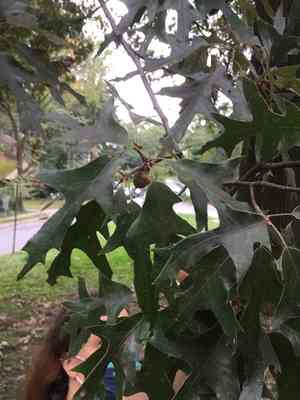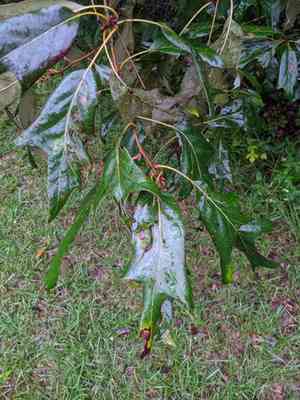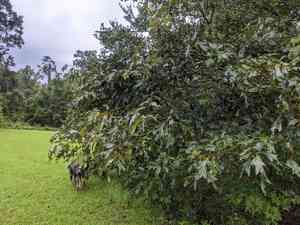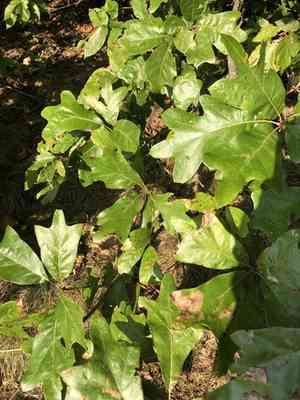
Southern red oak(Quercus falcata)

Southern red oak (Quercus falcata)

Also known as: Water oak, Three-lobed red oak

The Southern Red Oak (Quercus falcata), standing tall at heights of 70 to 80 feet, serves as a vital asset for both wildlife and humans, often living up to 275 years.

**Wildlife Contributions:**
- **Nutritional Value:** Its acorns are a crucial food source for various animals, including deer, squirrels, and birds.
- **Habitat Provision:** The tree's extensive canopy offers ideal nesting sites and shelter for birds and small mammals.

**Human Benefits:**
- **Timber Use:** Known for its strong and durable wood, the Southern Red Oak is commonly used in creating furniture, flooring, and other construction materials.
- **Shade Provider:** It offers substantial shade, which helps in reducing energy costs and enhancing outdoor comfort.
- **Aesthetic Appeal:** The tree adds beauty and elegance to landscapes with its lush foliage and commanding presence.

These qualities make the Southern Red Oak an invaluable component of both natural ecosystems and human environments.

Attributes of Southern red oak

Lifespan
Perennial
Plant Type
Tree
Plant Height
25 m to 44 m
Spread
18 m to 21 m
Leaf Color
Green White
Flower Size
2.5 cm
Flower Color
Yellow Green

PlantJoy - Identify plants with a snap

Identify and diagnose plants, get toxicity alerts, and explore safety guides for all types of fungi.

Try for Free

Images of Southern red oak

Southern red oak(Quercus falcata)

Quickly Identify Southern red oak

1
Falcate leaves with a U-shaped base, measuring 5-9 inches (12.7-22.9 cm) long and 4-5 inches (10.2-12.7 cm) wide.
2
Distinctive bowl-shaped acorn with warty, hairy cap, 0.6-1 inch (15-25 mm) in length.
3
Smooth gray bark on medium branches, orange-brown angular twigs, 0.1 to 0.2 inches (2.5 to 5 mm) in diameter.
4
Male flowers in slender yellowish-green catkins, 2-4 inches (5-10 cm) long, lacking fragrance.
5
Mature trunk with dark gray, scaly bark, broad ridges, and deep furrows for a rugged texture.

Scientific Classification of Southern red oak

Phylum
Vascular plants
Class
Dicotyledons
Order
Fagales
Family
Beech
Genus
Oaks
Species
Southern red oak

Planting and Growing of Southern red oak

Care Difficulty
Easy
Watering Schedule
Every 4 days
Sunlight Requirements
Full sun
Sunshine Duration
6-12 hours
Ideal Temperature
60-75℉
Soil Type
Potting Mix, Peat Mix
Soil pH
4.5-6.5
Fertilizer Type
Balanced
Pruning Season
Spring, Summer
Pruning Area
Branches, Leaves
Pruning Frequency
2 times a year
Repotting Season
Spring
Pot Type
Plastic, Ceramic

water icon How to Water Southern red oak?

For Quercus falcata, also known as the Southern Red Oak, water deeply and thoroughly to promote strong, deep root development. The key is to saturate the soil to a depth of about a foot without creating waterlogged conditions. This typically translates to around 2000 milliliters per session, depending on soil type and drainage capabilities.
What are the symptoms of an underwatered Southern red oak?
What should I do if my Southern red oak is not getting enough water?
What are the symptoms of an overwatered Southern red oak?
How to save an overwatered Southern red oak?

sunlight icon What Are the Sunlight Requirements for Southern red oak?

Sunlight Requirements: Full sun
Duration of light: six to eight hours
Quercus falcata thrives in full sun conditions, with exposure to six to eight hours of sunlight daily. Such ample sunlight ensures adequate photosynthesis, promoting vitality and resilience against environmental stresses.
What is the ideal location for Quercus falcata?
How to provide the best lighting for Quercus falcata indoors?
What are the benefits of ideal light conditions for Quercus falcata?
More About Sunlight Requirements Techniques

temperature icon What Is the Ideal Temperature Range for Southern red oak?

Ideal Temperature: 60 ~ 75℉
The ideal temperature range for Quercus falcata, commonly known as Southern Red Oak, is between 60°F and 75°F. This temperature supports optimal growth and development, ensuring that the plant can efficiently perform photosynthesis. Keeping the environment within this range will help maintain the tree's health and vigor, especially during its growing season.

soil icon What Soil is Best for Southern red oak?

Soil type: Loam, Sandy loam
Soil PH: 4.5 ~ 6.5
Quercus falcata thrives in well-drained soils that prevent water from pooling around its roots. This condition helps to avoid root rot and promotes healthy growth. The plant benefits from a nutrient-rich substrate that supports its growth and development. Loamy soils often provide a balanced mix of nutrients necessary for the oak's health. Good soil aeration allows oxygen to reach the roots, enhancing respiration and essential nutrient uptake. This boosts the plant's overall vigor and resilience. More About Soil

fertilize icon How to Fertilize Southern red oak?

Fertilizer type: Balanced
Quercus falcata, commonly known as southern red oak, requires a balanced approach to fertilization. For liquid fertilizers, a concentration of 1 liquid ounce per gallon of water is recommended. For slow-release granules, roughly 0.5 to 1 pound per tree is optimal, considering the tree's age and size. More About Fertilizing Techniques

prune icon How to Prune Southern red oak?

Pruning Time: Spring, Summer, Autumn, Winter
Start by removing any dead, diseased, or damaged wood as these can be detrimental to the tree's health. Use clean, sharp tools and make cuts at a slight angle. For larger branches, use a three-cut method to prevent tearing. This involves an initial cut from beneath, a second cut from above, and a final cut to remove the stub. Ensure not to cut too close to the trunk, preserving the branch collar which aids in healing. Focus on creating a single strong central leader, as this oak species benefits from a clear vertical growth path. When branches converge or rub against each other, select the healthier option to retain and remove the competing limb. This helps in forming a robust framework capable of withstanding environmental stresses. More About Pruning Techniques

propagate icon How to Propagate Southern red oak plant?

Propagate Time: Early spring, Spring, Late spring
1
Collect acorns from mature Quercus falcata trees in autumn when they naturally drop to the ground. Ensure the acorns are free from pests or diseases.
2
Before planting, soak acorns in water for 24 hours to enhance germination rates. Discard any acorns that float, as these are likely not viable.
3
For propagation via cuttings, select healthy branches and cut 6-8 inch sections. Remove leaves from the bottom half to facilitate root growth.
More About Propagating Techniques

repot icon How to Repot Southern red oak plant?

Repotting frequency: Every 2-3 years
1
You should consider repotting Quercus falcata when you notice that the roots are growing out of the drainage holes, the soil seems compacted or doesn't retain moisture well, or the growth has slowed significantly. These are signals that the plant needs more space or fresh nutrients.
2
Select a pot that is 2-3 inches larger in diameter than the current one. It should have good drainage holes to prevent water logging, which can lead to root rot. A slightly bigger pot allows room for growth while minimizing the risk of over-watering.
3
Opt for a well-draining loamy soil mix to ensure adequate drainage and nutrient availability. Well-balanced soil helps maintain root health and supports robust growth by preventing root rot and nutrient lock.

PlantJoy - Identify plants with a snap

Find the best spots for them to optimize their health, simply using your phone.

Try for Free

Toxicity of Southern red oak

Is Southern red oak toxic to humans?

The tissues of the Southern red oak tree, including its leaves and seeds, contain tannins. These compounds render the plant extremely bitter to most animals, generally discouraging them from consuming it. However, young children and individuals with cognitive impairments may inadvertently ingest portions of this tree. The presence of tannins primarily leads to digestive issues, which can manifest as constipation, diarrhea, nausea, cramping, and colic. Furthermore, those who have been exposed to it may experience depressive symptoms and frequently pass discolored urine as their body attempts to eliminate the toxin. Additionally, swallowing acorns whole can pose a risk of choking or causing bowel obstructions.

Is Southern red oak toxic to cat?

The Southern red oak presents a slight toxicity risk to cats, especially if these animals consume its leaves or seeds in significant amounts. While specific toxic compounds are not specified, pet owners should remain vigilant regarding possible general symptoms of physical distress that may occur after ingestion. If any unusual signs of illness or discomfort are observed in their cat, including alterations in behavior or appetite, it is recommended that owners promptly pursue veterinary assistance to safeguard the health of their feline friend.

Is Southern red oak toxic to dog?

The southern red oak presents a mild toxicity risk for dogs, especially when they consume excessive amounts of this plant. The parts of the oak that can result in poisoning if ingested in large quantities include the leaves and seeds. Affected dogs may display symptoms such as gastrointestinal disturbances, which encompass vomiting and diarrhea. Therefore, it is vital for pet owners to keep a close eye on their dogs and prevent them from eating substantial amounts of southern red oak. If a dog does consume any part of the southern red oak and starts to show signs of discomfort, it is critical to seek prompt veterinary assistance to guarantee appropriate treatment and recovery.

Identify toxic plants for your safety

Learn which plants are harmful to you and your pets, and make informed choices for a safer home!

Try for Free
WARNING
The judgment on toxicity and danger is for reference only. We DO NOT GUARANTEE any accuracy of such judgment. Therefore, you SHALL NOT rely on such judgment. It is IMPORTANT TO SEEK PROFESSIONAL ADVICE in advance when necessary.
More About Toxic Techniques