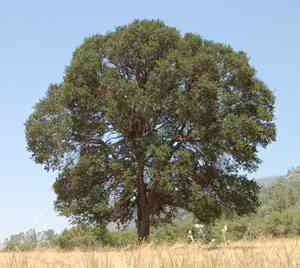
Blue oak(Quercus douglasii)

Blue oak (Quercus douglasii)

Also known as: Mountain oak

The Blue Oak (Quercus douglasii) is exclusive to California and stands out as the state's most drought-resistant deciduous oak. This medium-sized tree typically reaches heights of 6 to 20 meters. Its leaves have a distinctive bluish tint, which inspired its common name. Additionally, the tree produces acorns known for their mildly sweet kernels.

Attributes of Blue oak

Lifespan
Perennial
Plant Type
Tree
Plant Height
6 m to 20 m
Spread
12 m to 15 m
Leaf Color
Green Blue
Flower Size
N/A (Quercus douglasii does not have prominent flowers; it primarily reproduces via acorns)
Flower Color
Yellow Green

ForwardPlant - Identify plants with a snap

Identify and diagnose plants, get toxicity alerts, and explore safety guides for all types of fungi.

Try for Free

Images of Blue oak

Blue oak(Quercus douglasii)

Quickly Identify Blue oak

1
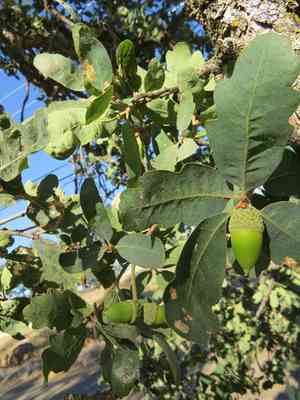
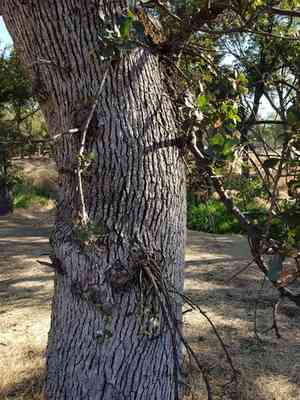
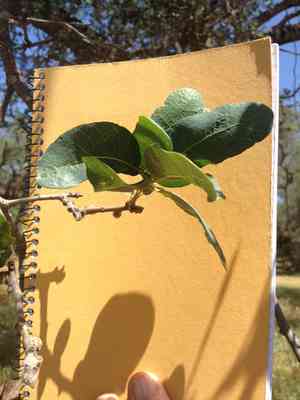
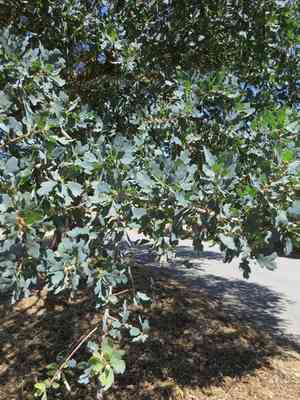
Blue Oaks can be identified by their blue-green, glossy leaves that are deciduous, typically lobed, and have a leathery texture. The bark is light gray and with age develops a checkered pattern of deep fissures and ridges. The acorns are ovoid, usually 2.5-3.5 cm long.

Scientific Classification of Blue oak

Phylum
Vascular plants
Class
Dicotyledons
Order
Fagales
Family
Beech
Genus
Oaks
Species
Blue oak

Planting and Growing of Blue oak

Care Difficulty
Easy
Watering Schedule
Every 2 days
Sunlight Requirements
Full sun
Sunshine Duration
4-8 hours
Ideal Temperature
60-75℉
Soil Type
Potting Mix, Peat Mix
Soil pH
6.5-7.5
Fertilizer Type
Balanced
Pruning Season
Spring, Summer
Pruning Area
Branches, Leaves
Pruning Frequency
2 times a year
Repotting Season
Spring
Pot Type
Plastic, Ceramic

water icon How to Water Blue oak?

When watering Quercus douglasii, it's crucial to provide around 2000 ml each time. The principle is to ensure that the water penetrates deeply into the root system. This encourages the roots to grow stronger and deeper, enhancing drought resistance. Water the soil until it feels consistently moist but not soggy.
What are the symptoms of an underwatered Blue oak?
What should I do if my Blue oak is not getting enough water?
What are the symptoms of an overwatered Blue oak?
How to save an overwatered Blue oak?

sunlight icon What Are the Sunlight Requirements for Blue oak?

Sunlight Requirements: Full sun, Partial sun
Duration of light: 6-8 hours daily
Quercus douglasii prefers full to partial sun. Ideal sunlight encourages healthy, lush foliage and robust growth, enhancing the tree's longevity and aesthetic appeal.
How much sunlight is ideal for Quercus douglasii?
What should be done if the tree isn't getting enough sunlight?
What will happen when it receives ideal sunlight?
More About Sunlight Requirements Techniques

temperature icon What Is the Ideal Temperature Range for Blue oak?

Ideal Temperature: 60 ~ 75℉
The ideal temperature range for Quercus douglasii, commonly known as Blue Oak, lies between 60°F and 75°F. This range provides optimal conditions for growth and development, ensuring that the plant can photosynthesize efficiently and maintain its physiological processes without undergoing stress from temperature extremes.

soil icon What Soil is Best for Blue oak?

Soil type: Sandy loam, Loam
Soil PH: 6.5 ~ 7.5
Quercus douglasii thrives in well-drained soil to prevent root rot. Good drainage helps the plant access necessary oxygen and nutrients, promoting healthy growth and resilience. Rich in organic matter, the soil supports the growth of Quercus douglasii by providing essential nutrients. This enhances the tree's ability to establish and maintain lush foliage. The soil should retain some moisture without becoming waterlogged. This balance ensures that Quercus douglasii receives the hydration it needs while preventing stress caused by excess water.

fertilize icon How to Fertilize Blue oak?

Fertilizer type: Balanced
Quercus douglasii trees typically require a moderate amount of fertilizer. For liquid fertilizers, dilute water-soluble fertilizer to half-strength and apply evenly to avoid over-fertilization. For slow-release fertilizers, use approximately 1 pound per inch of trunk diameter, scattered evenly around the root zone.

prune icon How to Prune Blue oak?

Pruning Time: Spring, Summer
Begin by removing any dead, diseased, or damaged branches. This will help prevent the spread of disease and improve the overall appearance. Focus on maintaining the tree’s natural structure. Remove branches that cross each other or grow inward. Ensure the central leader is strong and dominant. Prune to thin the canopy rather than topping the tree. This allows light and air to reach all parts of the tree, promoting healthier growth. More About Pruning Techniques

propagate icon How to Propagate Blue oak plant?

Propagate Time: Early spring, Late spring
1
Begin by collecting acorns in the fall. Choose healthy, blemish-free seeds as these are more likely to germinate successfully. Be sure to collect seeds when they are fully ripened.
2
Oak seeds require cold stratification to break dormancy. Place seeds in a refrigerator for about 4-6 weeks before planting. This mimics natural winter conditions and enhances germination rates.
3
After stratification, plant the acorns in seed trays filled with the prepared soil mix. Ensure they are sown at a depth of twice their diameter. Water lightly to maintain moisture without soaking.
More About Propagating Techniques

repot icon How to Repot Blue oak plant?

Repotting frequency: Every 2-3 years
1
Repot Quercus douglasii when you notice slowed growth, roots circling the pot, or roots emerging from drainage holes. These are signs that the current pot no longer accommodates its growth, and a new home is necessary for continued vigor.
2
Select a pot with good drainage and a size just slightly larger than the current one. A larger pot encourages healthy root expansion without overwhelming the plant with excess soil moisture, which can lead to root rot.
3
Opt for a well-draining, sandy loam to support Quercus douglasii. This type of soil mimics their natural habitat, providing the right balance of moisture retention and aeration, essential for robust root health and growth.

ForwardPlant - Identify plants with a snap

Find the best spots for them to optimize their health, simply using your phone.

Try for Free

Toxicity of Blue oak

Is Blue oak toxic to cat?

The blue oak plant has a low level of toxicity that can impact cats if they consume substantial amounts of its parts, especially the leaves and seeds. In cases where a cat ingests blue oak, it may display signs of mild physical distress or discomfort. While the exact toxic components are not specified, consuming considerable quantities of blue oak is recognized to be detrimental. To safeguard the health of a cat that has ingested this plant, it is essential to seek immediate veterinary care. Swift medical attention can help alleviate any negative effects and enhance the cat's prognosis.

Is Blue oak toxic to dog?

The blue oak presents a low level of toxicity risk for dogs. These animals may experience poisoning if they consume significant quantities of its leaves or seeds. The symptoms of such poisoning can differ, but they may include gastrointestinal distress like vomiting and diarrhea, lethargy, or more severe health issues depending on the amount consumed. It is vital for dog owners to keep a watchful eye on their pets and prevent them from ingesting excessive amounts of blue oak. Should a dog accidentally ingest blue oak, it is essential to seek prompt veterinary assistance to guarantee the optimal health outcome for the pet.

Identify toxic plants for your safety

Learn which plants are harmful to you and your pets, and make informed choices for a safer home!

Try for Free
WARNING
The judgment on toxicity and danger is for reference only. We DO NOT GUARANTEE any accuracy of such judgment. Therefore, you SHALL NOT rely on such judgment. It is IMPORTANT TO SEEK PROFESSIONAL ADVICE in advance when necessary.
More About Toxic Techniques