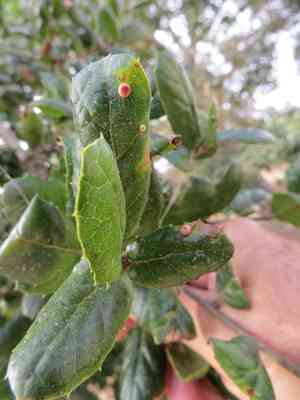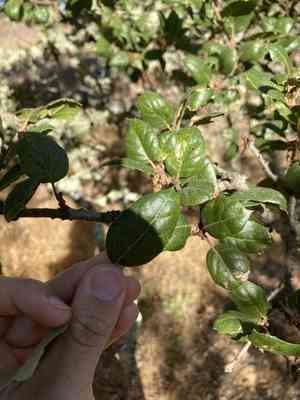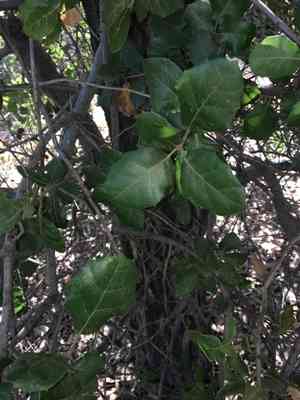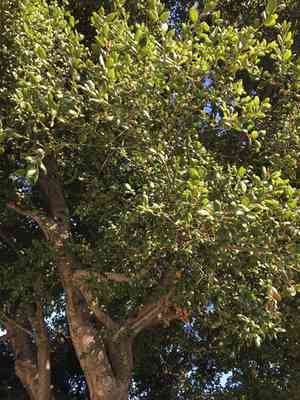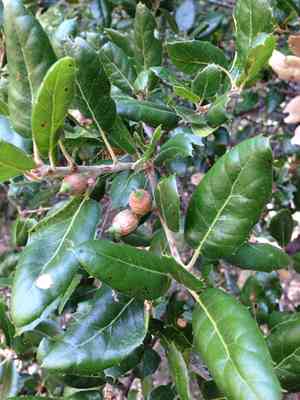
Coast live oak(Quercus agrifolia)

Coast live oak (Quercus agrifolia)

Also known as: Evergreen oak

The Coast Live Oak (Quercus agrifolia) is an evergreen tree known for its shrublike characteristics. Found from California to Mexico, it is frequently used in modern U.S. landscaping. Native Americans traditionally valued its acorns as a food source.

Attributes of Coast live oak

Lifespan
Perennial
Plant Type
Tree
Plant Height
10 m to 25 m
Spread
6 m to 15 m
Leaf Color
Green Blue
Flower Size
5 cm to 10 cm
Flower Color
Yellow Green

PlantJoy - Identify plants with a snap

Identify and diagnose plants, get toxicity alerts, and explore safety guides for all types of fungi.

Try for Free

Images of Coast live oak

Coast live oak(Quercus agrifolia)

Quickly Identify Coast live oak

1
Variable height from 20 to 70 feet (6 to 21 meters).
2
Bark changes from smooth to deeply furrowed and thick with age.
3
Broad, dense crown with horizontally growing primary branches.
4
Irregular crown due to diagonally extending higher branches.
5
Leaves shed and renewed in late spring, following early spring flowering.

Scientific Classification of Coast live oak

Phylum
Vascular plants
Class
Dicotyledons
Order
Fagales
Family
Beech
Genus
Oaks
Species
Coast live oak

Planting and Growing of Coast live oak

Care Difficulty
Easy
Watering Schedule
Every 2 days
Sunlight Requirements
Full sun
Sunshine Duration
6-10 hours
Ideal Temperature
50-80℉
Soil Type
Potting Mix, Peat Mix
Soil pH
6.5-7.5
Fertilizer Type
Balanced
Pruning Season
Spring, Summer
Pruning Area
Branches, Leaves
Pruning Frequency
2 times a year
Repotting Season
Spring
Pot Type
Plastic, Ceramic

water icon How to Water Coast live oak?

When watering Quercus agrifolia, ensure the soil is moistened to a depth of about 8-12 inches. This deep soak encourages strong root growth, mimicking the natural watering patterns in its native habitat. Use approximately 1000 ml per session to achieve this depth, unless heavy rainfall has occurred recently.
What are the symptoms of an underwatered Coast live oak?
What should I do if my Coast live oak is not getting enough water?
What are the symptoms of an overwatered Coast live oak?
How to save an overwatered Coast live oak?
More About Watering Techniques

sunlight icon What Are the Sunlight Requirements for Coast live oak?

Sunlight Requirements: Full sun, Partial sun
Duration of light: 6 to 8 hours
Quercus agrifolia prefers full sun to partial sun, thriving with about 6 to 8 hours of sunlight daily. Proper exposure supports healthy growth, strong resistance against pests, and optimized acorn production.
How to achieve ideal sunlight exposure?
What are the solutions to get this ideal light?
What benefits does ideal sunlight bring?
More About Sunlight Requirements Techniques

temperature icon What Is the Ideal Temperature Range for Coast live oak?

Ideal Temperature: 50 ~ 80℉
The ideal temperature range for growing Quercus agrifolia, also known as Coast Live Oak, is between 50°F and 80°F. This temperature range supports optimal growth and helps the plant to maintain its physiological processes efficiently. When temperatures are within this range, the plant can efficiently perform photosynthesis, respiration, and other cellular functions that contribute to its overall health and vitality.

soil icon What Soil is Best for Coast live oak?

Soil type: Loam, Sandy loam, Acidic soil
Soil PH: 6.5 ~ 7.5
Quercus agrifolia thrives in soils with excellent drainage. This characteristic ensures that water doesn't accumulate around the roots, which can prevent root rot and other moisture-related issues, allowing the tree to grow healthy and strong. This oak species prefers soils rich in organic matter. Such soils provide essential nutrients, which promote vigorous growth and enhance the overall health and disease resistance of the tree. Quercus agrifolia grows well in slightly acidic soils, which can enhance nutrient availability. This acidity level helps the oak tree absorb critical nutrients efficiently, fostering robust growth. More About Soil

fertilize icon How to Fertilize Coast live oak?

Fertilizer type: Balanced
For Quercus agrifolia, fertilizer should be applied lightly. This tree generally does not require heavy fertilization. Use a balanced 10-10-10 nitrogen-phosphorus-potassium (N-P-K) fertilizer at a rate of 1 cup per inch of trunk diameter. Spread the fertilizer evenly under the tree's drip line to ensure even nutrient distribution. More About Fertilizing Techniques

prune icon How to Prune Coast live oak?

Pruning Time: Winter
Start by identifying and removing any dead, damaged, or diseased branches. Use clean, sharp pruning shears and make your cuts cleanly. This encourages the plant to heal quickly and reduces the risk of infection. Carefully assess the natural growth pattern of Quercus agrifolia and remove any awkward, crossing, or overly dense branches. This practice helps in maintaining a balanced and aesthetically pleasing shape while ensuring healthier growth. When making cuts, angle them above a bud or branch junction. This not only supports optimal growth patterns but also facilitates faster and effective healing. More About Pruning Techniques

propagate icon How to Propagate Coast live oak plant?

Propagate Time: Autumn, Early spring
1
To propagate Quercus agrifolia from seeds, begin by collecting ripe acorns in autumn. Ensure that acorns are mature and free from holes or damage indicative of pests.
2
Use a well-draining, sandy soil mix to fill pots or containers for planting acorns. This will provide the best environment for germination and early growth of seedlings.
3
Plant acorns about one inch deep in the prepared soil. Water thoroughly and place containers in a location that receives indirect sunlight. Ensure the soil remains moist but not waterlogged.
More About Propagating Techniques

repot icon How to Repot Coast live oak plant?

Repotting frequency: Every 2-3 years
1
Repot your Quercus agrifolia when you observe signs such as roots growing out of the drainage holes, or when growth appears stunted. These indicate a need for a larger space to accommodate the plant's expanding root system, typically during spring or autumn.
2
Select a pot that is at least an inch wider in diameter than the current pot, to provide ample space for root growth. Ensure it has good drainage to prevent waterlogging, which can cause root rot, benefiting the plant significantly.
3
A well-draining potting mix is essential for Quercus agrifolia to prevent water retention. This kind of soil emulates the tree's natural habitat, promoting healthy root development and preventing root rot.

PlantJoy - Identify plants with a snap

Find the best spots for them to optimize their health, simply using your phone.

Try for Free

Toxicity of Coast live oak

Is Coast live oak toxic to humans?

The tissues of the coast live oak tree contain tannins, which are present in its leaves and seeds. This characteristic renders the plant extremely bitter to most animals, causing them to avoid it. However, young children and other vulnerable individuals might mistakenly consume parts of the tree. Tannins primarily lead to digestive disturbances, which can include constipation, diarrhea, nausea, abdominal cramping, and colic. Prolonged exposure may lead to depressive symptoms and the presence of profuse, discolored urine. Additionally, any acorns that are swallowed intact pose a risk of choking or bowel obstruction. It is essential to keep small children away from this tree.

Is Coast live oak toxic to cat?

Coast live oak has a mild toxic effect on cats. Cats face the risk of poisoning when they consume significant amounts of the plant's leaves or seeds. Following ingestion, they may show symptoms of physical distress or illness. Therefore, it is crucial to obtain prompt attention from a veterinary facility to reduce harmful effects and safeguard the cat's health and welfare.

Is Coast live oak toxic to dog?

The coast live oak presents a slight toxicity risk to dogs. If canines consume excessive amounts of its leaves or seeds, they may experience poisoning. Symptoms can include gastrointestinal disturbance, vomiting, or diarrhea following the ingestion of coast live oak parts. Therefore, it is vital for dog owners to keep a close eye on their pets and discourage them from eating large quantities of this plant. If a dog does consume coast live oak and shows symptoms of poisoning, seeking immediate veterinary assistance is crucial to safeguard the animal's health and well-being.

Identify toxic plants for your safety

Learn which plants are harmful to you and your pets, and make informed choices for a safer home!

Try for Free
WARNING
The judgment on toxicity and danger is for reference only. We DO NOT GUARANTEE any accuracy of such judgment. Therefore, you SHALL NOT rely on such judgment. It is IMPORTANT TO SEEK PROFESSIONAL ADVICE in advance when necessary.
More About Toxic Techniques