Quassia (Quassia) (Quassia)
Also known as: Bitterwood, Quassia Wood, Jamaica Quassia
Quassia is a genus of flowering plants in the Simaroubaceae family, known for their bitter wood that has been traditionally used for medicinal purposes and as an insecticide.
In This Article
Attributes of Quassia (Quassia)
Lifespan
Perennial
Plant Height
2 to 5 meters
Spread
Varies, often up to 3-4 meters
Leaf Color
Dark green
Flower Size
Approximately 2-3 cm
Flower Color
Bright red
Images of Quassia (Quassia)
Quickly Identify Quassia (Quassia)
1
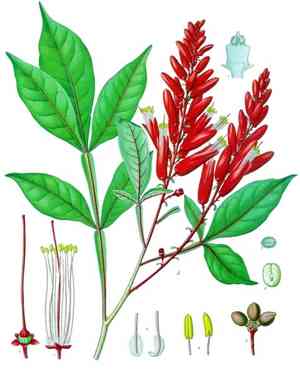
Quassia can be recognized by its pinnate leaves with 3-8 pairs of leaflets, its bright red flowers, and its bitter-tasting wood. The leaves are glossy, and the flowers are tubular and often clustered.
Scientific Classification of Quassia (Quassia)
Phylum
Tracheophyta
Class
Magnoliopsida
Order
Sapindales
Family
Simaroubaceae
Genus
Quassia
Planting and Growing of Quassia (Quassia)
Care Difficulty
Moderate
Watering Schedule
Every 4 days
Sunlight Requirements
Partial sun
Sunshine Duration
4-8 hours
Ideal Temperature
68-77℉
Soil Type
Potting Mix, Peat Mix
Soil pH
5.5-7.5
Fertilizer Type
Balanced
Pruning Season
Spring, Summer
Pruning Area
Branches, Leaves
Pruning Frequency
2 times a year
Repotting Season
Spring
Pot Type
Plastic, Ceramic
 How to Water Quassia (Quassia)?
The Quassia plant benefits from a balanced watering regimen. When watering, ensure the soil is thoroughly wet but not overly saturated. A deep soaking until water drains from the bottom of the pot, using approximately 500 ml, is ideal. This ensures moisture reaches the root zone.
What are the symptoms of an underwatered Quassia (Quassia)?
›
What should I do if my Quassia (Quassia) is not getting enough water?
›
What are the symptoms of an overwatered Quassia (Quassia)?
›
How to save an overwatered Quassia (Quassia)?
›
 What Are the Sunlight Requirements for Quassia (Quassia)?
Quassia thrives in partial sun, preferring dappled light. Providing it between 3 to 6 hours of indirect sunlight daily promotes vibrant growth and strengthens its resistance to external stressors.
How much sunlight does Quassia need?
›
Where is the best place to position Quassia?
›
What are the benefits of optimal sunlight for Quassia?
›
 What Is the Ideal Temperature Range for Quassia (Quassia)?
For the flourishing of Quassia, maintaining an ideal temperature range between 68°F and 77°F is crucial. This range mimics the natural climate of tropical regions where Quassia thrives, ensuring its metabolic processes occur at an optimal rate.
 What Soil is Best for Quassia (Quassia)?
Quassia plants thrive in nutrient-rich soil which provides essential elements for optimal growth. Ensuring the presence of organic matter can significantly enhance plant health by improving soil structure and supplying continuous nutrients. A well-draining soil is crucial for Quassia to prevent waterlogging, which can lead to root rot. This type of soil ensures that excess water flows away quickly, safeguarding plant roots and promoting efficient nutrient uptake. While drainage is important, Quassia also benefits from soil that retains moderate moisture. This balance ensures that the plant has consistent access to water between watering sessions, promoting steady growth and resilience.
 How to Fertilize Quassia (Quassia)?
Quassia plants generally require a balanced approach to fertilization. It's important to administer fertilizers at half the recommended strength to avoid overfeeding. During the active growing season, opt for a 20-20-20 NPK mixture to provide an adequate balance of nutrients.
 How to Prune Quassia (Quassia)?
Start by closely examining your Quassia for any branches that appear dead, diseased, or damaged. These branches should be the first to go as they can harbor pests or diseases. Use clean, sharp shears to make clean cuts close to where the branch joins the main stem. To encourage a natural form, step back and identify parts of the Quassia that have grown too long or asymmetrically. Trim back these areas selectively to maintain its desired shape without over-pruning. Balance is key. Pruning can stimulate new growth in Quassia plants. Trim just above a node or leaf bud where you want to encourage growth. Cutting just above a node helps to stimulate the growth of new branches and enhances the fullness of the plant.
 How to Propagate Quassia (Quassia) plant?
1
Begin by filling a seed tray with a mixture of potting soil and sand. Lightly press the Quassia seeds into the soil and cover them with a thin layer of the mix. Water gently to avoid displacing the seeds.
2
Select a healthy branch for cuttings, ideally a non-flowering one. With a sterile knife, cut a section around 4-6 inches long, including at least two nodes.
3
Dip the cut end of the cutting into rooting hormone to stimulate root growth. Insert the cutting into a small pot filled with a well-draining soil mix, ensuring at least one node is below the soil surface.
 How to Repot Quassia (Quassia) plant?
1
Quassia plants need repotting when their roots outgrow the pot or when soil drainage becomes poor. If you notice roots curling around the base, or water sitting on the surface too long, it's time for a change. Ideally, start repotting when these signs appear during spring or autumn for least stress on the plant.
2
Selecting a proper pot size is crucial for Quassia. Choose a pot only slightly larger than the current one—allowing extra space for roots without overwhelming the plant. The pot should have sufficient drainage holes to prevent root rot, vital for keeping your Quassia healthy and thriving.
3
For Quassia, opt for a well-draining potting mix to facilitate healthy root development. This ensures that excess water won't accumulate, which can lead to root rot. A mixture with components like perlite or sand within organic matter helps in maintaining ideal moisture levels, supporting vigorous growth.
Toxicity
ingestion
WARNING
The judgment on toxicity and danger is for reference only. We DO NOT GUARANTEE any accuracy of such judgment. Therefore, you SHALL NOT rely on such judgment. It is IMPORTANT TO SEEK PROFESSIONAL ADVICE in advance when necessary.

