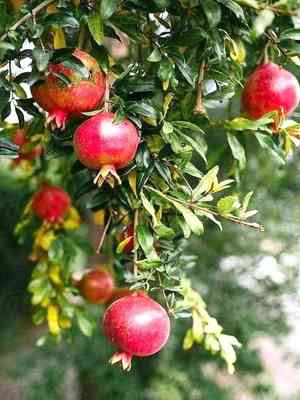
Pomegranate (Punica granatum)
Also known as: Pomegranate
The pomegranate (Punica granatum) is a deciduous shrub or small tree originating from western and southern Asia. Known for its extensive history, it holds deep symbolic meaning in various polytheistic traditions. The fruit is integral to many West Asian culinary practices. Beyond its edible uses, the pomegranate is also appreciated for its ornamental appeal.
In This Article
Attributes of Pomegranate
Lifespan
Perennial
Plant Type
Tree, Shrub
Plant Height
1.8 m to 6 m
Spread
1.2 m to 4.5 m
Leaf Color
Green Bronze
Flower Size
1 cm to 2 cm
Flower Color
Red Orange Yellow White Pink Gold
Images of Pomegranate
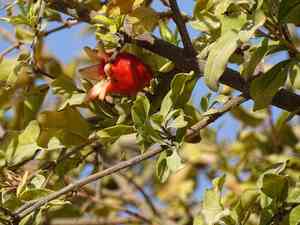
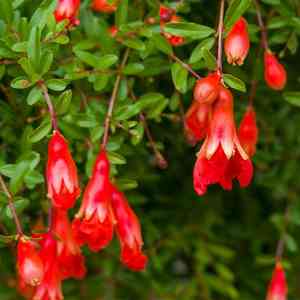
Quickly Identify Pomegranate
1
Deciduous shrub reaching 6-10 feet (1.8-3 meters) tall and wide.
2
Distinct red flowers with tubular bell shape blooming late spring to early summer.
3
Large spherical berry, 2-5 inches (5-12 cm) wide with tough rind.
4
Leaves are oblong-lanceolate, 1-4 inches (1-9 cm) long, dark green with prominent veins.
5
Flowers' thick calyx with 5-7 sepals, bright colors like orange, red, pink.
Scientific Classification of Pomegranate
Phylum
Vascular plants
Class
Dicotyledons
Order
Myrtle order
Family
Loosestrife
Genus
Punica
Species
Pomegranate
Planting and Growing of Pomegranate
Care Difficulty
Easy
Watering Schedule
Every 2 days
Sunlight Requirements
Full sun
Sunshine Duration
6-10 hours
Ideal Temperature
68-86℉
Soil Type
Potting Mix, Peat Mix
Soil pH
5.5-7.2
Fertilizer Type
Balanced
Pruning Season
Spring, Summer
Pruning Area
Branches, Leaves
Pruning Frequency
2 times a year
Repotting Season
Spring
Pot Type
Plastic, Ceramic
 How to Water Pomegranate?
For Punica granatum, ensure the soil is evenly moist but not waterlogged. Water deeply so that the moisture reaches the root zone, approximately 500 ml each time, and let the top layer dry out between watering sessions. The goal is to mimic natural rainfall patterns without drowning the plant.
More About Watering Techniques→
What are the symptoms of an underwatered Pomegranate?
›
What should I do if my Pomegranate is not getting enough water?
›
What are the symptoms of an overwatered Pomegranate?
›
How to save an overwatered Pomegranate?
›
 What Are the Sunlight Requirements for Pomegranate?
Full sun conditions are ideal, signifying six to eight hours of direct sunlight daily, which promotes strong growth, floral abundance, and fruit development, improving both yield and plant health.
More About Sunlight Requirements Techniques→
Optimal Sun Exposure
›
Solution for Living in Less Sunny Areas
›
Benefits of Ideal Light Conditions
›
 What Is the Ideal Temperature Range for Pomegranate?
The ideal temperature range for Punica granatum, commonly known as pomegranate, is between 68°F and 86°F. This range provides optimal conditions for the plant’s growth and fruit production. Within this temperature window, the pomegranate experiences healthy photosynthesis rates, ensuring robust growth and fruit development. By maintaining this temperature range, you can help ensure that the pomegranate plant thrives and reaches its full productive potential.
 What Soil is Best for Pomegranate?
Punica granatum thrives in well-drained soil that prevents waterlogging, essential to avoid root rot. This type of soil ensures the roots can access oxygen, helping the plant stay healthy and vigorous. A nutrient-rich soil provides essential minerals and organic matter that pomegranate plants need for optimal growth and fruit production. Incorporating compost or well-rotted manure can enhance soil fertility significantly. While pomegranates prefer well-drained soils, they also require soils that retain some moisture without becoming waterlogged. This balance helps support consistent growth and fruit development.
More About Soil→
 How to Fertilize Pomegranate?
Punica granatum, commonly known as pomegranate, demands moderate fertilization. It's best to apply a balanced fertilizer like 10-10-10. For each liquid feeding, mix one tablespoon of fertilizer with a gallon of water and pour it around the plant's base.
More About Fertilizing Techniques→
 How to Prune Pomegranate?
Start by removing any dead, damaged, or diseased branches to maintain tree health. Next, focus on thinning out the canopy by cutting off any overcrowded branches. This allows sunlight to reach the inner part of the tree, which is crucial for fruit development. Shape the tree by trimming back any straggly branches, especially those growing inward towards the trunk, to maintain an open, vase-like structure. Prune carefully around flowering branches to avoid excessive removal of budding flowers. For those looking to maximize fruit yield, focus on pruning to open up the center of the plant. Younger trees benefit from light pruning to promote a strong framework. In older trees, severe pruning can rejuvenate older wood. Remember to make clean cuts at a slight angle and just above a bud to encourage active growth in the correct direction. Aim to leave several strong, evenly-spaced branches. Try to distinguish between vegetative (leafy) and fruiting branches when pruning to maintain fruit production balance.
More About Pruning Techniques→
 How to Propagate Pomegranate plant?
1
Select healthy, disease-free shoots for cuttings, ideally semi-hardwood, about 6-8 inches long. Remove the lower leaves and dip the base in rooting hormone. This will increase the chances of successful root development once planted.
2
Prepare a potting mix with equal parts of sand, peat, and perlite. This well-draining mixture supports healthy root development. Plant the cutting about two inches deep into the potting mix and ensure it is upright and stable.
3
Place the potted cuttings in a warm, well-lit area but avoid direct sunlight. Maintain high humidity by covering the pot with a plastic bag or using a propagator. Monitor regularly, ensuring the soil remains moist but not waterlogged.
 How to Repot Pomegranate plant?
1
Look for roots growing out of the pot drainage holes, soil compacted or washing away easily, and the plant showing stunted growth. These are signals that Punica granatum may need repotting. Best conducted in spring or autumn when the plant is naturally more resilient to changes.
2
Opt for a pot one size larger than the current one, with proper drainage holes to avoid waterlogging. Terra cotta pots are ideal as they are breathable, helping moisture escape and preventing root rot. This choice promotes healthier root growth and plant vitality.
3
Choose a soil mix rich in organic matter, providing nutrients, with a good proportion of sand or perlite to ensure proper drainage. This helps maintain the right moisture balance and avoids the risk of root rot, crucial for this sun-loving, drought-tolerant plant.



