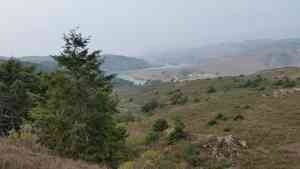
Common douglas-fir (Pseudotsuga menziesii)
Also known as: Red pine, False hemlock
The Common douglas-fir is named in honor of David Douglas, a Scottish botanist who first documented the species. Its seeds are a vital food source for many small mammals. Additionally, various Native American tribes traditionally used its bark, resin, and needles to create herbal treatments for a range of health issues. The wood of the Douglas-fir is also prized for its strength, making it a popular choice in heavy timber construction.
In This Article
Attributes of Common douglas-fir
Lifespan
Perennial
Plant Type
Tree
Plant Height
20 m to 100 m
Spread
12 m
Leaf Color
Green
Flower Size
8 cm to 15 cm
Flower Color
Yellow Red Orange
Images of Common douglas-fir

Quickly Identify Common douglas-fir
1
Height ranges from 40 to 80 feet (12 to 24 meters), reaching up to 300 feet (91 meters) in the wild.
2
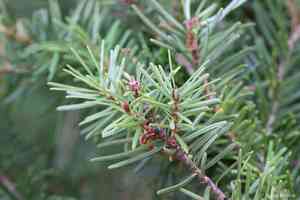
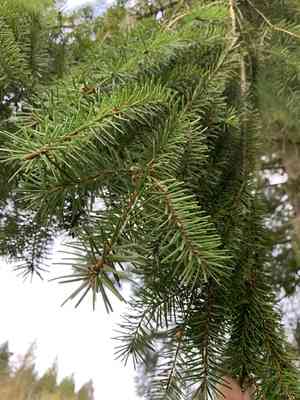
Needles are flat, dark green, up to 1.25 inches (3.2 cm) long, emitting a fragrant smell when touched.
3
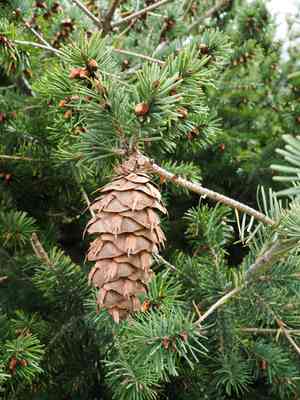
Distinct cones with 3-lobed bracts and unique three-pointed tongue-like appendages, measuring 3 to 4 inches (7.6 to 10.2 cm).
4
Leaves are aromatic, flat needles, spiral arrangement, with 0.75 to 1.25 inches (1.9 to 3.2 cm) length.
5
Slender stems with reddish-brown color, circular leaf scars, and diametric thickness of 0.4 to 0.8 inches (1 to 2 cm).
Scientific Classification of Common douglas-fir
Phylum
Vascular plants
Class
Conifers
Order
Pines and allies
Family
Pine
Genus
Douglas firs
Species
Common douglas-fir
Planting and Growing of Common douglas-fir
Care Difficulty
Hard
Watering Schedule
Every 2 days
Sunlight Requirements
Partial sun
Sunshine Duration
4-8 hours
Ideal Temperature
45-70℉
Soil Type
Potting Mix, Peat Mix
Soil pH
5-6.5
Fertilizer Type
Balanced
Pruning Season
Spring, Summer
Pruning Area
Branches, Leaves
Pruning Frequency
2 times a year
Repotting Season
Spring
Pot Type
Plastic, Ceramic
 How to Water Common douglas-fir?
Ensure that the soil around the Pseudotsuga menziesii is evenly moist but not saturated. Aim to water enough so that the top 2 inches of soil are moist, which typically requires about 2500 ml of water each session. The watering should be thorough but avoid waterlogging, as the roots need air to thrive.
More About Watering Techniques→
What are the symptoms of an underwatered Common douglas-fir?
›
What should I do if my Common douglas-fir is not getting enough water?
›
What are the symptoms of an overwatered Common douglas-fir?
›
How to save an overwatered Common douglas-fir?
›
 What Are the Sunlight Requirements for Common douglas-fir?
Pseudotsuga menziesii prefers areas with 6-8 hours of full sun or partial sun. Optimal sunlight exposure ensures vigorous growth, dense foliage, and robust health, protecting against environmental stresses and enhancing overall vitality.
More About Sunlight Requirements Techniques→
What are the ideal lighting conditions for Pseudotsuga menziesii?
›
What steps can I take to ensure my tree gets enough light?
›
What benefits does optimal light provide?
›
 What Is the Ideal Temperature Range for Common douglas-fir?
The optimal growth temperature for Pseudotsuga menziesii ranges from 45°F to 70°F. In this temperature range, the plant exhibits healthy growth, optimal photosynthesis, and overall vitality. This range suits its native environment, promoting its natural cycle of growth and dormancy.
 What Soil is Best for Common douglas-fir?
Pseudotsuga menziesii thrives in soil that is well-drained to prevent root rot. Such soil allows excess water to flow away, keeping the roots healthy and oxygenated, which is crucial for the growth of this coniferous tree. A rich, nutrient-dense soil provides essential minerals and nutrients required for the vigorous growth of Pseudotsuga menziesii. This helps in building strong roots and supports the overall health of the tree. Though it prefers well-drained soil, Pseudotsuga menziesii requires soil that can retain adequate moisture to sustain its needs during dry spells. Balanced moisture levels support its growth cycles and prevent stress.
More About Soil→
 How to Fertilize Common douglas-fir?
For Pseudotsuga menziesii, also known as Douglas fir, appropriate fertilization is crucial. The tree generally requires a balanced approach, where too little or too much fertilizer can both be detrimental. For liquid fertilizers, a diluted concentration is best, applying about half the recommended dose every month during the growing season. For slow-release fertilizers, apply approximately one pound per inch of trunk diameter annually, ideally split across two to three applications.
 How to Prune Common douglas-fir?
Start by identifying any dead, diseased, or damaged branches. These should be removed first to prevent any potential spread of disease and to improve the overall health of the tree. Once the unhealthy branches are removed, focus on shaping the tree. Cut back long branches that detract from the overall form of the tree, making sure to cut just outside the branch collar to encourage proper healing. Pruning should aim to create a balanced canopy. Remove select internal branches to increase light penetration and air circulation through the tree, which can prevent fungal diseases and improve overall vigor.
More About Pruning Techniques→
 How to Propagate Common douglas-fir plant?
1
Harvest the seeds from mature cones. Ensure the cones are fully ripe to increase germination success. Dry the cones in a warm, airy environment to allow the seeds to naturally release.
2
Choose healthy, semi-hardwood stems for cutting propagation. Cut segments approximately 6-8 inches long, making sure to include at least three nodes for potential root and shoot growth.
3
For seeds, plant them in pots with well-draining, nutrient-rich soil. For cuttings, insert them into a similar medium. Provide regular watering and partial sunlight to encourage growth.
 How to Repot Common douglas-fir plant?
1
Repotting Pseudotsuga menziesii, or Douglas fir, is best done when you notice the plant is root-bound or has stopped growing vigorously. Spring and autumn are ideal because the plant is not experiencing extreme heat or cold, providing a stable environment for root recovery and new growth.
2
Select a pot that is slightly larger than the current one, with sufficient drainage holes. This ensures adequate air flow and prevents waterlogging, which can lead to root rot. A terracotta or ceramic pot is preferable as it provides stability and helps maintain moisture balance.
3
For optimal growth, use well-draining, acidic soil specifically designed for conifers. The right soil mix enhances nutrient absorption and maintains the ideal pH level for your Douglas fir, promoting its health and lush growth.



