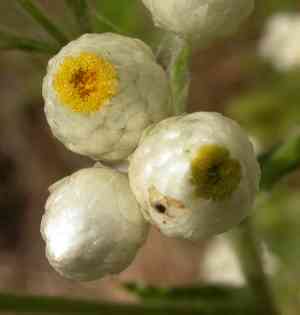
Ladies' tobacco (Pseudognaphalium californicum)
Also known as: California rabbit tobacco
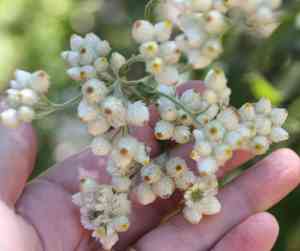
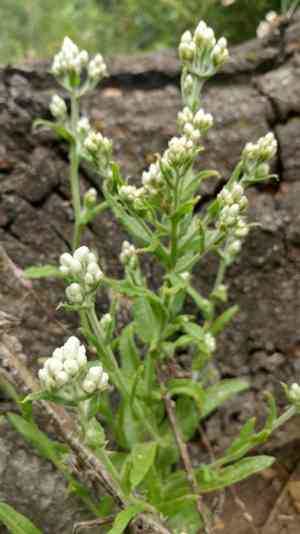
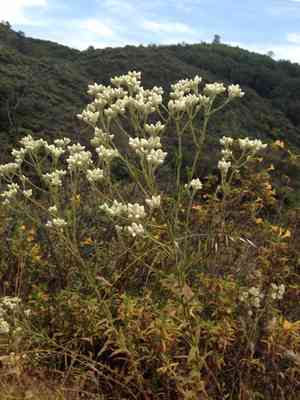
The plant you're describing sounds like Ladies' tobacco (Pseudognaphalium californicum). This annual herbaceous shrub reaches about 91 cm in height and 61 cm in width. It features clusters of creamy white, fragrant flowers that bloom from winter through summer, and these flowers attract hummingbirds, bees, butterflies, and moths. The plant becomes semi-deciduous in the summer.
In This Article
Attributes of Ladies' tobacco
Lifespan
Annual, Biennial, Perennial
Plant Type
Herb
Plant Height
20 cm to 80 cm
Spread
60 cm
Leaf Color
Green Blue
Flower Size
2.5 cm to 13 cm
Flower Color
White Yellow Pink Green
Images of Ladies' tobacco
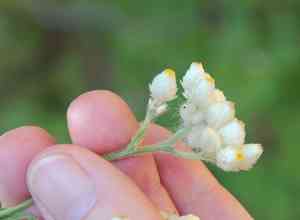
Quickly Identify Ladies' tobacco
1
To identify Pseudognaphalium californicum, look for its erect stems that are covered with dense white hairs. The leaves are also woolly and can feel soft to the touch. The small, yellowish flower heads are often grouped into clusters.
Scientific Classification of Ladies' tobacco
Phylum
Vascular plants
Class
Dicotyledons
Order
Asterales
Family
Daisy
Genus
Cudweeds
Species
Ladies' tobacco
Planting and Growing of Ladies' tobacco
Care Difficulty
Easy
Watering Schedule
Every 2 days
Sunlight Requirements
Full sun
Sunshine Duration
6-10 hours
Ideal Temperature
60-75℉
Soil Type
Potting Mix, Peat Mix
Soil pH
6.5-7.5
Fertilizer Type
Balanced
Pruning Season
Spring, Summer
Pruning Area
Branches, Leaves
Pruning Frequency
2 times a year
Repotting Season
Spring
Pot Type
Plastic, Ceramic
 How to Water Ladies' tobacco?
Pseudognaphalium californicum, also known as California everlasting, requires watering such that the soil is evenly moist but never waterlogged. Ideally, each watering session should provide 250 milliliters of water per pot, ensuring the water seeps down evenly, promoting healthy root development. The principle is to mimic natural rainfall patterns, offering moisture without drowning the roots.
What are the symptoms of an underwatered Ladies' tobacco?
›
What should I do if my Ladies' tobacco is not getting enough water?
›
What are the symptoms of an overwatered Ladies' tobacco?
›
How to save an overwatered Ladies' tobacco?
›
 What Are the Sunlight Requirements for Ladies' tobacco?
Pseudognaphalium californicum ideally thrives in areas with full to partial sun, which supports rich foliage growth and increases flowering yield, resulting in a robust plant.
What is the best lighting condition for Pseudognaphalium californicum?
›
How can you achieve ideal lighting for this plant?
›
What are the benefits of ideal lighting for Pseudognaphalium californicum?
›
 What Is the Ideal Temperature Range for Ladies' tobacco?
The ideal temperature range for Pseudognaphalium californicum is between 60°F and 75°F. This range allows the plant to carry out photosynthesis efficiently, supports optimal growth, and ensures the physiological processes are not stressed by external conditions. Consistently maintaining temperatures within this range promotes healthy leaf and flower development, contributing to overall plant vigor.
 What Soil is Best for Ladies' tobacco?
Pseudognaphalium californicum thrives in well-draining soil conditions. Ensuring good drainage prevents root rot, a common problem in waterlogged soils, promoting healthier root systems and robust growth. This plant doesn't require overly rich soil. Sandy or loamy soils with moderate nutrient levels are ideal, providing sufficient nutrients for growth without risking nitrogen burn or excessive vegetative growth, which could weaken the plant structure. A soil pH range of 6.5 to 7.5 is ideal for Pseudognaphalium californicum, as it ensures optimal nutrient availability. Proper pH balance helps avoid toxicity or deficiency issues that can stifle plant health and development.
 How to Fertilize Ladies' tobacco?
For Pseudognaphalium californicum, applying a balanced liquid fertilizer at half strength is usually sufficient. This species does not require heavy feeding, so stick to a low concentration mixture. A dose of 1/2 teaspoon of liquid fertilizer mixed in a gallon of water is typically ideal for this plant.
 How to Prune Ladies' tobacco?
Prune Pseudognaphalium californicum during its growing seasons—Spring and Autumn. Ensure that you wait until there is no more frost in Spring and before the severe cold sets in during Autumn. Use sharp, clean pruning shears to make precise cuts, minimizing damage to the plant. Disinfect your tools before and after use to prevent disease spread. Identify and remove any dead or diseased stems by cutting them back to the base. Trim back the plant by one-third to half of its growth to encourage fullness and shape.
 How to Propagate Ladies' tobacco plant?
1
Gather mature seeds from the Pseudognaphalium californicum plant once the flowers have dried out. Let them dry completely before storing or planting to increase germination success.
2
Choose a healthy, non-flowering stem and cut a section about 4-6 inches long. Remove the leaves from the lower half of the cutting to prevent decay when planted.
3
Sow seeds on the surface of a sterile seed-starting mix, and lightly cover them with soil. For cuttings, dip the cut end in rooting hormone and plant in moist, well-drained potting mix. Keep them in a warm, sunny spot.
 How to Repot Ladies' tobacco plant?
1
You should consider repotting Pseudognaphalium californicum when you notice roots emerging from the drainage holes or when the soil dries out extremely quickly after watering. These signs suggest the plant has outgrown its current pot.
2
Select a pot that is one size larger than the current one. Ensure it has good drainage holes, as proper drainage will help prevent root rot. The extra space allows roots to expand, promoting healthier growth.
3
Opt for a soil mix that is lightweight and well-draining, such as a sandy soil blend. This type of soil prevents waterlogging and encourages root oxygenation, essential for the thriving of this plant.
Learn More About Ladies' tobacco Diseases
Anthracnose
Bacterial Leaf Spot
Bacterial Soft Rot
Bacterial Wilt
Crown Gall
Cyst Nematode
Damping-off
Downy Mildew
Drought Stress
Fusarium Wilt
Gray Mold
Leaf Spot
Mosaic
Nutrient Deficiency
Nutrient Toxicity
Powdery Mildew
Root Rot
Root-knot Nematode
Rusts
Sooty Mold
Spider Mites
Temperature Stress
Thrips Damage
White Mold

