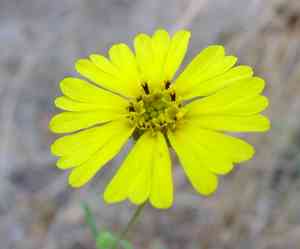
San joaquin adobe sunburst (Pseudobahia peirsonii)
Also known as: None
The plant features leaves that reach up to 6 centimeters in length, typically split into a few leaflets which further divide into lobed sections. The inflorescence consists of a single flower head, encircled by approximately eight phyllaries that are fused at their base to form a rounded, cup-like involucre with pointed lobes. It showcases around eight golden ray florets, with yellow disc florets situated at the center of the head.
In This Article
Attributes of San joaquin adobe sunburst
Lifespan
Annual
Plant Type
Herb
Plant Height
10 to 30 cm (4 to 12 inches)
Spread
Typically, the crown diameter is about the same as the plant height.
Leaf Color
Green
Flower Size
1.5 to 2 cm (0.6 to 0.8 inches)
Flower Color
Yellow
Images of San joaquin adobe sunburst
Quickly Identify San joaquin adobe sunburst
1
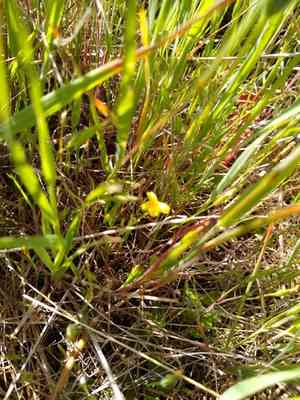
Pseudobahia peirsonii can be identified by its small, yellow, daisy-like flower heads, which bloom in early spring. The plant often grows in clusters, and its stems and leaves are covered with fine hairs. Look for it in heavy clay soils within grassland regions.
Scientific Classification of San joaquin adobe sunburst
Phylum
Vascular plants
Class
Dicotyledons
Order
Asterales
Family
Daisy
Genus
Sunburst
Species
San joaquin adobe sunburst
Planting and Growing of San joaquin adobe sunburst
Care Difficulty
Easy
Watering Schedule
Every 2 days
Sunlight Requirements
Full sun
Sunshine Duration
6-8 hours
Ideal Temperature
60-75℉
Soil Type
Potting Mix, Peat Mix
Soil pH
6.5-7.5
Fertilizer Type
Balanced
Pruning Season
Spring, Summer
Pruning Area
Branches, Leaves
Pruning Frequency
2 times a year
Repotting Season
Spring
Pot Type
Plastic, Ceramic
 How to Water San joaquin adobe sunburst?
For Pseudobahia peirsonii, ensure the soil is thoroughly moistened without being waterlogged. Aim for about 250 ml per watering, allowing water to penetrate deeply to encourage strong root growth without drowning the roots.
What are the symptoms of an underwatered San joaquin adobe sunburst?
›
What should I do if my San joaquin adobe sunburst is not getting enough water?
›
What are the symptoms of an overwatered San joaquin adobe sunburst?
›
How to save an overwatered San joaquin adobe sunburst?
›
 What Are the Sunlight Requirements for San joaquin adobe sunburst?
Partial to full sun exposure ensures rich photosynthesis and healthy growth, with flowering stimulated under optimal sunlight conditions.
Optimal Light Orientation
›
Protective Shading
›
Reflective Surfaces
›
 What Is the Ideal Temperature Range for San joaquin adobe sunburst?
For Pseudobahia peirsonii, the ideal temperature range lies between 60°F to 75°F. This range ensures optimal growth and development, providing suitable conditions for photosynthesis and nutrient absorption. It is important to maintain this range to facilitate healthy foliage and blooming cycles, minimizing stress impacts on the plant.
 What Soil is Best for San joaquin adobe sunburst?
Pseudobahia peirsonii thrives in well-drained soil that prevents waterlogging. This helps the plant to avoid root rot, ensuring its roots receive adequate air and do not suffocate. The plant benefits from a nutrient-rich soil that supports its growth and flowering. A good balance of nutrients leads to vibrant blooms and healthy foliage, particularly in spring. Moderate moisture retention in the soil helps to maintain consistent hydration levels for Pseudobahia peirsonii, allowing it to thrive during dry periods without frequent watering.
 How to Fertilize San joaquin adobe sunburst?
Pseudobahia peirsonii enjoys light feeding, requiring no more than half the recommended dose on most fertilizers. A liquid fertilizer diluted to half-strength ensures the nutrients are neither overwhelming nor insufficient for its needs.
 How to Prune San joaquin adobe sunburst?
Begin by removing any dead, damaged, or diseased branches from the Pseudobahia peirsonii, using sharp, sterilized shears to prevent infection. Next, focus on cutting back any overcrowded or crossing branches that impede air circulation and sunlight penetration, trimming them back to a main branch or the plant's base. Aim to shape the plant to its natural form, ensuring balanced growth by maintaining an open, vase-like structure. Remember to trim away any foliage or branches that deter the plant's aesthetic or structural balance, and always make cuts at a 45-degree angle for optimal healing.
 How to Propagate San joaquin adobe sunburst plant?
1
Collect seeds from mature Pseudobahia peirsonii plants in the autumn as they naturally disperse. Ensure that seeds are fully ripe and dry them in a well-ventilated area before storage.
2
Sow the seeds in early spring using a seed tray filled with well-draining potting mix. Lightly press the seeds into the soil and cover with a thin layer of soil.
3
Place the seed trays in a warm, sunny spot or under grow lights. Regularly monitor moisture levels, ensuring the soil stays lightly moist during germination, which could take several weeks.
 How to Repot San joaquin adobe sunburst plant?
1
Pseudobahia peirsonii should be repotted when you notice roots protruding from the drainage holes or when the plant’s growth appears stunted. Spring and autumn are the ideal seasons as the plant is not under stress from extreme temperatures, allowing better adaptation to a new pot.
2
Select a pot that is one size larger than the current one. It should have good drainage to prevent waterlogging, which can harm the roots. Clay or terracotta pots are excellent choices, as they promote breathability and help keep the roots healthy and prevent rot.
3
A well-draining, sandy mix is crucial for Pseudobahia peirsonii. This type of soil prevents water accumulation and allows air circulation around the roots. Such conditions mimic its natural habitat and promote healthier growth and stronger roots.
Learn More About San joaquin adobe sunburst Diseases
Anthracnose
Bacterial Leaf Spot
Bacterial Wilt
Crown Gall
Cyst Nematode
Damping-off
Downy Mildew
Drought Stress
Fusarium Wilt
Gray Mold
Leaf Curl
Leaf Spot
Mosaic
Nutrient Deficiency
Nutrient Toxicity
Powdery Mildew
Root Rot
Root-knot Nematode
Rusts
Sooty Mold
Spider Mites
Temperature Stress
Thrips Damage
White Mold
Chemical Injury



