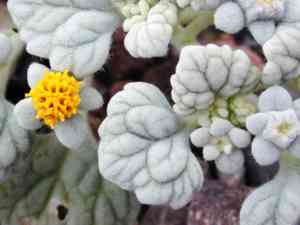
turtleback (Psathyrotes)(Psathyrotes)

turtleback (Psathyrotes) (Psathyrotes)

Also known as: fanleaf

Plants native to the arid regions of southwestern North America include both annual and perennial species, often characterized by their low growth habit and dense branching. These plants typically have features like:

1. **Compact Structure:** Many are low-growing and densely branched.
2. **Hairy and Scaly Surfaces:** These surfaces help reduce water loss and provide some protection against herbivores.
3. **Aromatic Qualities:** A distinctive turpentine-like odor is common among these plants.
4. **Alternate Leaf Arrangement:** Leaves are often arranged alternately along the stem.
5. **Leaf Adaptations:** Leaves tend to be hairy, aiding in water retention and reflecting sunlight.

These adaptations enable them to conserve water and thrive in the extreme conditions of their native dry habitats.

Attributes of turtleback (Psathyrotes)

Lifespan
Perennial
Plant Height
5-40 cm
Spread
N/A
Leaf Color
Gray-green
Flower Size
0.5-1 cm
Flower Color
Yellow

ForwardPlant - Identify plants with a snap

Identify and diagnose plants, get toxicity alerts, and explore safety guides for all types of fungi.

Try for Free

Images of turtleback (Psathyrotes)

turtleback (Psathyrotes)(Psathyrotes)

Quickly Identify turtleback (Psathyrotes)

1
Psathyrotes plants can be identified by their distinctive turtleback-like leaves and low-growing habit. The leaves are usually gray-green and hairy, and the flowers are small, yellow, and clustered.

Scientific Classification of turtleback (Psathyrotes)

Phylum
Tracheophyta
Class
Magnoliopsida
Order
Asterales
Family
Asteraceae
Genus
Psathyrotes

Planting and Growing of turtleback (Psathyrotes)

Care Difficulty
Moderate
Watering Schedule
Every day
Sunlight Requirements
Full sun
Sunshine Duration
4-8 hours
Ideal Temperature
60-75℉
Soil Type
Potting Mix, Peat Mix
Soil pH
6.5-8
Fertilizer Type
Balanced
Pruning Season
Spring, Summer
Pruning Area
Branches, Leaves
Pruning Frequency
2 times a year
Repotting Season
Spring
Pot Type
Plastic, Ceramic

water icon How to Water turtleback (Psathyrotes)?

Psathyrotes, a desert-adapted plant, thrives on minimal water. Ideally, it should receive about 250 ml in one go. This amount ensures moisture reaches the roots without oversaturating the desert-like soil. The principle here is to mimic its natural arid environment, with water just enough to keep it healthy.
What are the symptoms of an underwatered turtleback (Psathyrotes)? ›
What should I do if my turtleback (Psathyrotes) is not getting enough water? ›
What are the symptoms of an overwatered turtleback (Psathyrotes)? ›
How to save an overwatered turtleback (Psathyrotes)? ›

sunlight icon What Are the Sunlight Requirements for turtleback (Psathyrotes)?

Sunlight Requirements: Full sun
Duration of light: 6-8 hours per day
Psathyrotes thrives under full sun, ideally receiving 6 to 8 hours daily. This exposure supports its natural growth patterns and enhances its ability to produce healthy foliage and vibrant blooms.
What is the ideal lighting for Psathyrotes? ›
How can I ensure optimal lighting conditions? ›
What are the benefits of ideal lighting for Psathyrotes? ›

temperature icon What Is the Ideal Temperature Range for turtleback (Psathyrotes)?

Ideal Temperature: 60 ~ 75℉
The ideal temperature range for Psathyrotes is between 60°F and 75°F. This range supports optimal metabolic functions, photosynthesis, and growth processes crucial for the plant's health and thriving.

soil icon What Soil is Best for turtleback (Psathyrotes)?

Soil type: Sandy soil, Calcareous soil
Soil PH: 6.5 ~ 8
Psathyrotes thrive in well-draining soils as it prevents waterlogging and root rot—a common issue for many desert plants. This allows the roots to access the necessary oxygen for optimal growth, preventing suffocation. The plant prefers low-nutrient environments, replicating its native desert ecosystems. Excessive nutrients can lead to poor growth and increased susceptibility to pests, so maintaining lean soil helps it flourish naturally. These plants are naturally adapted to slightly alkaline conditions, providing an ideal environment for nutrient uptake. This pH range helps maximize plant health and promotes vigorous growth.

fertilize icon How to Fertilize turtleback (Psathyrotes)?

Fertilizer type: Balanced
Psathyrotes is a hardy desert plant that requires minimal fertilization. When using liquid fertilizer, a diluted solution is recommended, roughly one-quarter of the standard houseplant dose. This ensures the plant receives nutrients without overwhelming its root system.

prune icon How to Prune turtleback (Psathyrotes)?

Pruning Time: Spring, Summer
Start by identifying shoots that look particularly weak or misplaced. These are usually candidates for removal to encourage a more aesthetically pleasing and healthier shape. Make your cuts at a 45-degree angle just above a bud, which promotes better water runoff and reduces the risk of decay on cut surfaces. Periodically step back to assess the balance of the plant after a few cuts. This helps ensure you do not over-prune and that the shape remains natural and symmetrical.

propagate icon How to Propagate turtleback (Psathyrotes) plant?

Propagate Time: Spring, Early spring, Late spring
1
Prepare a well-draining soil mix and fill seed starter trays. Ensuring the soil is lightly moistened will facilitate seed placement and aid in germination.
2
Scatter the seeds evenly over the soil surface, gently pressing them into the soil. Lightly cover with a thin layer of soil to protect from direct sunlight while still allowing light penetration.
3
Water the seeds gently using a fine mist spray to avoid displacing them. Maintaining consistent soil moisture without waterlogging is crucial for seed germination.

repot icon How to Repot turtleback (Psathyrotes) plant?

Repotting frequency: Every 1-2 years
1
Psathyrotes plants need repotting when roots start growing through drainage holes or when they become pot-bound, indicating the need for more space for optimal growth and nutrient absorption.
2
Select a pot slightly larger than the current one with adequate drainage holes. A terracotta pot is ideal as it helps absorb excess moisture, preventing root rot and providing a healthy environment.
3
Opt for a well-draining cactus or succulent mix. This type of soil ensures proper aeration and prevents excessive moisture retention, which can lead to root diseases in Psathyrotes.

ForwardPlant - Identify plants with a snap

Find the best spots for them to optimize their health, simply using your phone.

Try for Free
