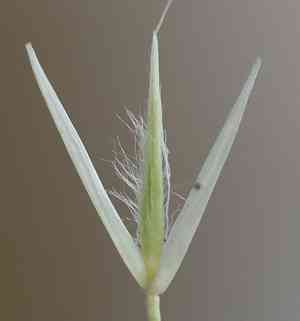
Psammochloa villosa (Psammochloa villosa)
Also known as: Sand Rice Grass
**Psammochloa villosa** is a grass species commonly found in desert environments, playing a crucial role in sand binding, stabilization, and acting as a windbreak. This ecological significance is vital for its native habitat. The grass is easily identifiable by its seed ears, which are visible from late spring to fall.
In This Article
Attributes of Psammochloa villosa
Lifespan
Perennial
Plant Type
Herb
Plant Height
1 m to 2 m
Spread
Approximately 50 cm
Leaf Color
Gray-green
Flower Size
3 cm to 4.5 cm
Flower Color
Yellow Purple Green Brown
Quickly Identify Psammochloa villosa
1
Psammochloa villosa can be identified by its long, slender stems and narrow, rolled leaves. The plant typically has a characteristic sandy texture on its leaf surface and flower heads that appear as loose, airy panicles.
Scientific Classification of Psammochloa villosa
Phylum
Vascular plants
Class
Monocotyledons
Order
Grasses, sedges and allies
Family
Grass
Genus
Psammochloa
Species
Psammochloa villosa
Planting and Growing of Psammochloa villosa
Care Difficulty
Easy
Watering Schedule
Every 2 days
Sunlight Requirements
Partial sun
Sunshine Duration
6-10 hours
Ideal Temperature
64-77℉
Soil Type
Potting Mix, Peat Mix
Soil pH
6.5-7.5
Fertilizer Type
Balanced
Pruning Season
Spring, Summer
Pruning Area
Branches, Leaves
Pruning Frequency
Once a year
Repotting Season
Spring
Pot Type
Plastic, Terracotta
 How to Water Psammochloa villosa?
Psammochloa villosa requires careful attention to watering. Each watering session should aim to provide around 250ml of water. The soil should be evenly moist but not soggy. Watering should mimic a gentle rain, thoroughly moistening the root zone without flooding it.
What are the symptoms of an underwatered Psammochloa villosa?
›
What should I do if my Psammochloa villosa is not getting enough water?
›
What are the symptoms of an overwatered Psammochloa villosa?
›
How to save an overwatered Psammochloa villosa?
›
 What Are the Sunlight Requirements for Psammochloa villosa?
Partial sunlight helps Psammochloa villosa thrive, balancing sunlight exposure enhances its ability to photosynthesize efficiently, supports robust growth, and strengthens resilience.
Optimal Growth Question
›
Effective Solution
›
Effects of Ideal Lighting
›
 What Is the Ideal Temperature Range for Psammochloa villosa?
The ideal temperature range for Psammochloa villosa ensures optimal growth and vitality. Maintaining temperatures between 64°F and 77°F provides the right conditions for photosynthesis and nutrient uptake, leading to healthy and robust plants. In this range, the plant can efficiently carry out metabolic processes, ensuring sturdy growth and disease resistance.
 What Soil is Best for Psammochloa villosa?
Psammochloa villosa thrives in well-drained soils as they prevent waterlogging, which can lead to root rot. Drainage ensures the roots receive adequate oxygen, promoting healthy growth. This plant benefits from soils rich in essential nutrients. Sufficient nutrients support healthy foliage and robust root systems, enhancing the plant's resilience against environmental stress. While good drainage is key, soils should retain some moisture to keep roots hydrated in drier periods. Sandy loam provides this balance naturally.
 How to Fertilize Psammochloa villosa?
Psammochloa villosa requires balanced fertilization to thrive. Use a well-balanced NPK fertilizer, ideally with a ratio such as 10-10-10. For liquid fertilizers, apply at a concentration of 1/4 to 1/2 strength compared to the usual recommendation, tailored specifically for grasses.
 How to Prune Psammochloa villosa?
Start by inspecting the Psammochloa villosa for any dead or diseased foliage. Using a sharp pair of shears, carefully cut back these portions down to the base, ensuring not to damage healthy growth. This will facilitate new, healthy growth as the season progresses. Once the dead parts are removed, focus on shaping the plant. Trim any excessively long or unruly shoots to maintain a tidy, clump-like appearance. Ensure the overall balance is maintained, so it doesn't become lopsided or sparse on one side.
More About Pruning Techniques→
 How to Propagate Psammochloa villosa plant?
1
Ensure seeds are sown on the surface of compost and lightly covered. Maintain humidity and consistent moisture for successful germination over several weeks.
2
Carefully remove the entire plant from its pot. Divide the rootball into sections, each with established roots and shoots, using a sharp knife.
3
Plant each divided section into its own container with fresh potting mix. Ensure good drainage and place in a suitable environment to reduce transplant shock.
 How to Repot Psammochloa villosa plant?
1
Psammochloa villosa signals its need for repotting when its roots begin to emerge from the drainage holes or when growth appears stunted. This typically happens after a couple of growing seasons in the same pot.
2
Select a pot that is slightly larger than the current one, offering 1-2 inches of additional space for root expansion. Ensure the pot has adequate drainage holes to prevent waterlogging, which can cause root rot.
3
Opt for a sandy, well-draining soil mix to mimic its natural environment. This type of soil helps prevent water accumulation while providing adequate support and nutrient flow to the roots.



