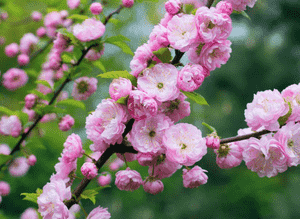
Flowering almond (Prunus triloba)
Also known as: Rose tree of China, China rose tree
A notable deciduous shrub, the Weigela, showcases an abundance of light pink and white flowers during the spring. These blossoms can add a charming touch to any courtyard or garden. Additionally, the shrub produces red fruits that are often enjoyed by squirrels and other small wildlife.
Attributes of Flowering almond
Images of Flowering almond
Quickly Identify Flowering almond
Scientific Classification of Flowering almond
Planting and Growing of Flowering almond
 How to Water Flowering almond?
 What Are the Sunlight Requirements for Flowering almond?
 What Is the Ideal Temperature Range for Flowering almond?
 What Soil is Best for Flowering almond?
 How to Fertilize Flowering almond?
 How to Prune Flowering almond?
 How to Propagate Flowering almond plant?
 How to Repot Flowering almond plant?
Toxicity of Flowering almond
Is Flowering almond toxic to humans?
Several reports indicate that flowering almond possesses toxic characteristics capable of harming humans upon ingestion, whether intentional or accidental. Consuming this plant can reportedly result in severe symptoms, potentially culminating in fatality in extreme cases. The twigs, leaves, and seeds are frequently cited as the hazardous components due to their content of harmful hydrogen cyanide. Manifestations of toxicity may include difficulty breathing, fatigue, elevated heart rate, and in certain instances, may unfortunately lead to death. It is possible for individuals to mistakenly consume the seeds, confusing them with safe wild edibles.



