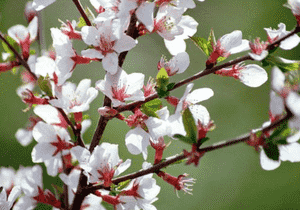
Nanking cherry(Prunus tomentosa)

Nanking cherry (Prunus tomentosa)

Also known as: Korean cherry, Nanjing cherry, Ando cherry, Chinese bush cherry

Planting a Nanking cherry (Prunus tomentosa) in your garden provides several advantages:

1. **Aesthetic Appeal**: This shrub boasts beautiful spring blossoms and distinctive bark, adding visual interest throughout the year.
2. **Wildlife Support**: Its fragrant flowers and bright red fruit attract birds and pollinators, offering them nourishment and shelter.
3. **Garden Versatility**: The Nanking cherry's compact size makes it an excellent choice for various garden spaces, from small yards to larger landscapes.
4. **Resilience**: Known for its hardiness, it can thrive in diverse soil conditions and withstand periods of drought.
5. **Edible Benefits**: The tart cherries are perfect for making preserves, jams, and other culinary delights.

Attributes of Nanking cherry

Lifespan
Perennial
Plant Type
Tree, Shrub
Plant Height
2.5 m to 3 m
Spread
3 m to 4.5 m
Leaf Color
Green
Flower Size
2.5 cm
Flower Color
White Pink

ForwardPlant - Identify plants with a snap

Identify and diagnose plants, get toxicity alerts, and explore safety guides for all types of fungi.

Try for Free

Images of Nanking cherry

Nanking cherry(Prunus tomentosa)

Quickly Identify Nanking cherry

1
Deciduous, bushy plant reaching 5-6 feet (1.5-1.8 meters) in height and spread.
2
Ovoid, serrated leaves with fuzzy texture and downy underside distinguish it.
3
White to pale pink flowers with five petals, around 3/4 inch (2 cm) across.
4
Small, round fruits turning red to purple when ripe, under 1 inch (2.5 cm).
5
Spring bloom of flowers, either solitary or in pairs, creating an attractive display.

Scientific Classification of Nanking cherry

Phylum
Vascular plants
Class
Dicotyledons
Order
Roses, elms, figs, and allies
Family
Rose
Genus
Prunus
Species
Nanking cherry

Planting and Growing of Nanking cherry

Care Difficulty
Easy
Watering Schedule
Every 4 days
Sunlight Requirements
Full sun
Sunshine Duration
6-10 hours
Ideal Temperature
60-75℉
Soil Type
Potting Mix, Peat Mix
Soil pH
6.5-7.5
Fertilizer Type
Balanced
Pruning Season
Spring, Summer
Pruning Area
Branches, Leaves
Pruning Frequency
2 times a year
Repotting Season
Spring
Pot Type
Plastic, Ceramic

water icon How to Water Nanking cherry?

Prunus tomentosa prefers a consistent and moderate watering schedule. Ensure that each watering session supplies approximately 500 milliliters of water, enough to saturate the soil without pooling. This amount encourages healthy root development and maintains optimal soil moisture.
What are the symptoms of an underwatered Nanking cherry?
What should I do if my Nanking cherry is not getting enough water?
What are the symptoms of an overwatered Nanking cherry?
How to save an overwatered Nanking cherry?
More About Watering Techniques

sunlight icon What Are the Sunlight Requirements for Nanking cherry?

Sunlight Requirements: Full sun, Partial sun
Duration of light: 6 to 8 hours
Prunus tomentosa benefits from full sun to partial sun exposure, particularly with 6 to 8 hours of light daily. Ideal light improves health and productivity, ensuring vibrant growth and a bountiful fruit harvest.
What is the best sunlight duration for Prunus tomentosa?
What are the suitable lighting solutions for this plant?
What benefits does ideal lighting bring to Prunus tomentosa?
More About Sunlight Requirements Techniques

temperature icon What Is the Ideal Temperature Range for Nanking cherry?

Ideal Temperature: 60 ~ 75℉
For Prunus tomentosa, maintaining an ideal temperature range between 60°F and 75°F is crucial for optimal growth and fruit production. Within this range, the plant can effectively conduct photosynthesis and maintain a steady metabolic rate, ensuring vibrancy and resilience. This temperature supports active root growth and efficient nutrient uptake, making it essential for healthy development.

soil icon What Soil is Best for Nanking cherry?

Soil type: Sandy loam, Loam
Soil PH: 6.5 ~ 7.5
Prunus tomentosa thrives in well-drained soil, preventing root rot by ensuring excess moisture can escape. This allows the plant’s roots to access the necessary oxygen. A fertile soil rich in organic matter supports the growth of Prunus tomentosa by providing essential nutrients & fostering beneficial microbial activity, thus promoting healthy development. Maintaining consistent moisture levels without waterlogging is essential for Prunus tomentosa to support its water and nutrient absorption, crucial for its overall health and productivity. More About Soil

fertilize icon How to Fertilize Nanking cherry?

Fertilizer type: Balanced
For Prunus tomentosa, the appropriate amount of fertilizer is crucial. Generally, apply about 100-150 grams of a balanced fertilizer like 10-10-10 around the base of the plant, avoiding direct contact with the stem. Liquid fertilizers should be mixed as per the manufacturer's instructions, typically diluting until a pale color is achieved. More About Fertilizing Techniques

prune icon How to Prune Nanking cherry?

Pruning Time: Spring, Summer
Begin by removing any dead or diseased branches to preserve the health of the plant. This also improves airflow and reduces the chance of pest infestations. Thin out branches that are too close together to increase sunlight penetration and encourage air circulation. This helps prevent fungal diseases and supports robust growth. Prune to shape the canopy by cutting back longer branches to maintain a balanced and attractive structure. This helps in managing the plant’s size and facilitates easier maintenance. Remove any suckers growing at the base of the plant or from the roots, as these can drain energy from the main plant and interfere with its growth. More About Pruning Techniques

propagate icon How to Propagate Nanking cherry plant?

Propagate Time: Spring, Early spring, Late spring
1
Collect seeds from ripe Prunus tomentosa fruits and clean them to remove any pulp. Dry the seeds and subject them to cold stratification by storing them in the refrigerator for a few weeks before planting.
2
Choose healthy, semi-hardwood sections of the plant for cuttings, typically from the current year’s growth. Cut them with clean, sharp shears, ensuring that each cutting is about 4-6 inches long with several leaves.
3
Place the prepared cuttings in a sandy or perlite-based growing medium. Ensure that at least one node is below the surface and keep the soil consistently moist without waterlogging.
More About Propagating Techniques

repot icon How to Repot Nanking cherry plant?

Repotting frequency: Every 2-3 years
1
Prunus tomentosa should be repotted when you see roots emerging from the drainage holes or when growth seems stunted despite adequate care. During the spring or autumn, the plant is generally more resilient, making it the ideal time for repotting.
2
Choose a pot that is one size larger than the previous one, ideally with good drainage holes. This allows excess water to escape, preventing root rot. Additionally, a larger pot provides more space for root growth, supporting robust plant development.
3
Opt for a well-drained loamy soil mix to ensure proper aeration and moisture retention. Such a soil mix is beneficial as it offers optimal conditions for root health and prevents waterlogged conditions that could harm the plant.

ForwardPlant - Identify plants with a snap

Find the best spots for them to optimize their health, simply using your phone.

Try for Free

Toxicity of Nanking cherry

Is Nanking cherry toxic to humans?

Nanking cherry presents a moderate level of toxicity to humans, mainly through consumption. The entire plant contains cyanide, a highly toxic substance that can result in poisoning. Ingesting any part of the nanking cherry may lead to a variety of symptoms, such as difficulty in breathing, dizziness, headaches, and severe respiratory failure that could potentially be fatal. The intensity of these symptoms can fluctuate based on the quantity consumed. It is essential to recognize the dangers linked to nanking cherry, as every part of the plant, notwithstanding their edible potential, can be dangerous if not appropriately treated to eliminate toxins. Special caution should be exercised to prevent accidental ingestion and the subsequent emergence of these serious health issues.

Is Nanking cherry toxic to cat?

Nanking cherry exhibits a moderate toxicity level towards cats, posing a risk of harm if any part of the plant is ingested. All sections of the plant hold toxic components, and felines can be poisoned if they unintentionally consume it. This ingestion may trigger the release of cyanide within the cat's body, leading to signs of physical distress and possible poisoning. Due to the hazardous nature of nanking cherry, it is essential for cat owners to keep a close watch on their pets and act swiftly by consulting a veterinarian if their cat comes into contact with or consumes this plant.

Is Nanking cherry toxic to dog?

Nanking cherry presents a moderate risk of toxicity to dogs. Canines may unintentionally consume various parts of this plant, resulting in a risk of poisoning. The entire plant is toxic if ingested, potentially leading to harmful health effects. Symptoms of poisoning in dogs might include vomiting, diarrhea, abdominal discomfort, difficulty in breathing, and lethargy. The presence of cyanide in nanking cherry is the source of these toxic reactions. It is essential for dog owners to keep a watchful eye on their pets and restrict their access to nanking cherry. If a dog does consume any portion of nanking cherry, it is vital to obtain immediate veterinary attention to secure the best possible outcome for the affected pet.

Identify toxic plants for your safety

Learn which plants are harmful to you and your pets, and make informed choices for a safer home!

Try for Free
WARNING
The judgment on toxicity and danger is for reference only. We DO NOT GUARANTEE any accuracy of such judgment. Therefore, you SHALL NOT rely on such judgment. It is IMPORTANT TO SEEK PROFESSIONAL ADVICE in advance when necessary.
More About Toxic Techniques

