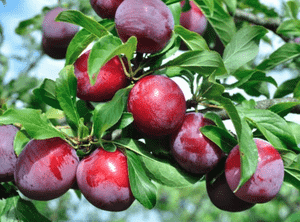
Chinese plum(Prunus salicina)

Chinese plum (Prunus salicina)

Also known as: Japanese Plum, Chinese Plum

The Chinese plum, originating from China, is also cultivated in countries such as Japan, Korea, Vietnam, Australia, and the United States. This fruit, known scientifically as Prunus salicina, produces a drupe that is edible in its raw form. Various cultivars and hybrid species of this plum are grown in China, and many fresh plums available in North American markets are derived from these Chinese plum varieties.

Attributes of Chinese plum

Lifespan
Perennial
Plant Type
Tree
Plant Height
9 m to 12 m
Spread
4.5 m to 9 m
Leaf Color
Green
Flower Size
1.5 cm to 2 cm
Flower Color
White

PlantJoy - Identify plants with a snap

Identify and diagnose plants, get toxicity alerts, and explore safety guides for all types of fungi.

Try for Free

Images of Chinese plum

Chinese plum(Prunus salicina)

Quickly Identify Chinese plum

1
Petite deciduous tree with abundant white or pink blossoms before leaves emerge.
2
Leaves are glossy green, 2-5 inches (5-12 cm) long, serrated, and ovate to elliptic.
3
Fruit is a smooth-skinned drupe, red to yellow, 1-3 inches (2.5-7.6 cm) in diameter.
4
Flowers have 5 white star-shaped petals, 1 inch (2.5 cm) in diameter, with yellow stamens.
5
Distinctive mild fragrance attracts pollinators, marking start of growing season.

Scientific Classification of Chinese plum

Phylum
Vascular plants
Class
Dicotyledons
Order
Roses, elms, figs, and allies
Family
Rose
Genus
Prunus
Species
Chinese plum

Planting and Growing of Chinese plum

Care Difficulty
Easy
Watering Schedule
Every 3 days
Sunlight Requirements
Full sun
Sunshine Duration
4-8 hours
Ideal Temperature
60-75℉
Soil Type
Potting Mix, Peat Mix
Soil pH
6.5-7.5
Fertilizer Type
Balanced
Pruning Season
Spring, Summer
Pruning Area
Branches, Leaves
Pruning Frequency
2 times a year
Repotting Season
Spring
Pot Type
Plastic, Ceramic

water icon How to Water Chinese plum?

Prunus salicina, or Japanese plum, requires thorough watering to ensure the soil remains consistently moist but not waterlogged. Each watering session should deliver approximately 300 milliliters of water, enough to soak the soil up to a depth of 15-20 centimeters to ensure proper hydration.
What are the symptoms of an underwatered Chinese plum?
What should I do if my Chinese plum is not getting enough water?
What are the symptoms of an overwatered Chinese plum?
How to save an overwatered Chinese plum?
More About Watering Techniques

sunlight icon What Are the Sunlight Requirements for Chinese plum?

Sunlight Requirements: Full sun, Partial sun
Duration of light: 6 to 8 hours
Prunus salicina thrives in full sun to partial sun environments, ideally receiving 6 to 8 hours of sunlight. This light exposure boosts photosynthesis, promotes flowering, and strengthens overall plant health.
How does Prunus salicina respond to sunlight?
What is the best method to ensure ideal lighting for Prunus salicina?
What are the benefits of providing optimal lighting to Prunus salicina?
More About Sunlight Requirements Techniques

temperature icon What Is the Ideal Temperature Range for Chinese plum?

Ideal Temperature: 60 ~ 75℉
For optimal growth, Prunus salicina thrives best in temperatures ranging from 60°F to 75°F. This range ensures adequate photosynthesis and energy production, facilitating vigorous growth and fruit development. When temperatures are maintained within this range, the plant's cellular activities are optimized, which leads to healthier foliage and more bountiful fruiting seasons.

soil icon What Soil is Best for Chinese plum?

Soil type: Loam, Sandy loam
Soil PH: 6.5 ~ 7.5
Prunus salicina thrives in nutrient-rich soils that support vigorous growth and fruit production. The presence of organic matter enhances soil fertility, ensuring the tree receives essential nutrients. Opting for such soil types leads to healthier trees and bountiful harvests. This plant requires well-draining soil to prevent root rot, a common issue in overly saturated conditions. Ensuring good drainage allows oxygen to reach the roots, promoting healthy root development and overall plant vitality. A moderate moisture retention in soil is crucial to meet the water needs of Prunus salicina without causing waterlogging. This balance provides continuous hydration, crucial for sustained growth, and reduces plant stress during dry periods. More About Soil

fertilize icon How to Fertilize Chinese plum?

Fertilizer type: Balanced
Prunus salicina, commonly known as the Japanese plum, requires moderate fertilization to thrive. For liquid fertilizer, use a balanced 10-10-10 or 20-20-20 formula, diluted to half strength. Apply about 1 gallon of solution per mature tree each time you fertilize. For solid, slow-release fertilizer, use about 1 pound per inch of trunk diameter annually. More About Fertilizing Techniques

prune icon How to Prune Chinese plum?

Pruning Time: Winter
Begin by scouting for any dead, diseased, or damaged branches. Use clean, sharp pruning shears to carefully remove these branches, cutting back to the healthy wood to prevent any potential infection from spreading. Trim back any crossing or rubbing branches to maintain an open canopy. An open structure allows light and air to penetrate, reducing the risk of disease and promoting better fruit quality. After removing problem branches, focus on shaping the tree. Aim for a balanced structure with a strong central leader and evenly spaced lateral branches. Trim back excessively long branches to encourage bushier growth and a more compact tree. More About Pruning Techniques

propagate icon How to Propagate Chinese plum plant?

Propagate Time: Spring, Early spring, Late spring
1
To propagate by seed, collect mature seeds from the fruit of Prunus salicina in late summer. It is vital to choose seeds from healthy and disease-free trees for better germination success.
2
For cutting propagation, select healthy semi-hardwood branches during late spring. Cut these branches at a node and remove any lower leaves to prevent rot and promote better root development.
3
Grafting is often used to propagate Prunus salicina to maintain desirable fruit characteristics. Perform grafting during early spring using the cleft grafting method for best results.
More About Propagating Techniques

repot icon How to Repot Chinese plum plant?

Repotting frequency: Every 2-3 years
1
Prunus salicina should be repotted in early spring before new growth begins. Signs that your plant needs repotting include roots circling the pot's bottom, slowed growth, or water sitting on the surface.
2
Select a pot that is one size larger than the current one, with drainage holes for proper water flow. A larger pot allows for root expansion, promotes healthier growth, and reduces the risk of root rot.
3
Use a loamy, well-draining soil mix. This type of soil retains moisture without waterlogging the roots and allows for optimal nutrient absorption, supporting strong root and plant health.

PlantJoy - Identify plants with a snap

Find the best spots for them to optimize their health, simply using your phone.

Try for Free

Toxicity of Chinese plum

Is Chinese plum toxic to humans?

The Chinese plum presents a mild toxicity risk to humans mainly through the consumption of its seeds. These seeds contain hydrogen cyanide, a highly toxic compound that can cause poisoning. When the seeds are crushed or chewed, they release this hazardous substance, potentially leading to symptoms such as headache, dizziness, confusion, shortness of breath, and in severe cases, convulsions if ingested in large amounts. It is essential for individuals to refrain from eating the seeds of the Chinese plum to avoid accidental poisoning. The pulp of the fruit is generally safe to consume, but care must be taken to prevent accidental ingestion of the seeds, particularly by children who may not recognize the danger.

Is Chinese plum toxic to cat?

The Chinese plum presents a slight toxic risk to felines. Cats may become poisoned primarily through unintentional consumption. The seeds of the Chinese plum are the toxic components, containing hydrogen cyanide. If a cat consumes this part, it may exhibit symptoms of physical distress or illness. If poisoning is suspected, it's crucial to seek immediate care from a veterinary clinic for appropriate treatment.

Is Chinese plum toxic to dog?

The Chinese plum presents a moderate toxicity risk for dogs. Dogs may inadvertently consume various parts of the plant, particularly the seeds, which are known to be poisonous. Ingestion of these seeds could expose a dog to hydrogen cyanide, a toxic compound that may result in poisoning. Signs of poisoning in dogs may encompass vomiting, diarrhea, abdominal discomfort, and in more severe cases, symptoms like breathing difficulties or lethargy. Therefore, it is essential for dog owners to supervise their pets diligently and to keep the Chinese plum plant out of their access. Should a dog consume any part of the Chinese plum, particularly the seeds, it is vital to seek immediate veterinary assistance to effectively address the risk of poisoning.

Identify toxic plants for your safety

Learn which plants are harmful to you and your pets, and make informed choices for a safer home!

Try for Free
WARNING
The judgment on toxicity and danger is for reference only. We DO NOT GUARANTEE any accuracy of such judgment. Therefore, you SHALL NOT rely on such judgment. It is IMPORTANT TO SEEK PROFESSIONAL ADVICE in advance when necessary.
More About Toxic Techniques

