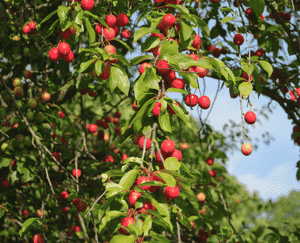
Cherry plum(Prunus cerasifera)

Cherry plum (Prunus cerasifera)

Also known as: Purple leaf plum

Cherry plum (Prunus cerasifera) is a small deciduous tree or shrub originating from southeastern Europe and western Asia. It is widely found in its native region and is known for its abundant sweet, juicy fruits that come in yellow, red, or burgundy shades during the summer and autumn months. Additionally, cherry plum is often cultivated for ornamental purposes and serves as rootstock for other Prunus species.

Attributes of Cherry plum

Lifespan
Perennial
Plant Type
Shrub, Tree
Plant Height
8 m to 12 m
Spread
9 m
Leaf Color
Green Red Yellow Purple
Flower Size
2 cm to 2.5 cm
Flower Color
White Pink

PlantJoy - Identify plants with a snap

Identify and diagnose plants, get toxicity alerts, and explore safety guides for all types of fungi.

Try for Free

Images of Cherry plum

Cherry plum(Prunus cerasifera)

Quickly Identify Cherry plum

1
Ovate leaves with serrated edges, shiny dark green with paler hairy undersides, 2-3 inches (5-7.5 cm) long.
2
Fragrant white flowers, 5-petaled, 1 inch (2.5 cm) in diameter, blooming in clusters in April.
3
Round drupes, reddish to yellow, 1.25 inches (3.2 cm) across, containing a single hard seed inside.
4
Thin stem, dark reddish-brown to gray, 0.2 to 0.5 inches (5 to 12 mm) in diameter, with small buds.
5
Distinctive bark transitioning from smooth with lenticels to furrowed and ridged, offering age cues.

Scientific Classification of Cherry plum

Phylum
Vascular plants
Class
Dicotyledons
Order
Roses, elms, figs, and allies
Family
Rose
Genus
Prunus
Species
Cherry plum

Planting and Growing of Cherry plum

Care Difficulty
Easy
Watering Schedule
Every 4 days
Sunlight Requirements
Full sun
Sunshine Duration
4-8 hours
Ideal Temperature
60-70℉
Soil Type
Potting Mix, Peat Mix
Soil pH
6.5-7.5
Fertilizer Type
Balanced
Pruning Season
Spring, Summer
Pruning Area
Branches, Leaves
Pruning Frequency
2 times a year
Repotting Season
Spring
Pot Type
Plastic, Ceramic

water icon How to Water Cherry plum?

Ensure each watering session provides enough water to reach the root zone, approximately 2-3 inches deep. This usually equates to around 2000 milliliters of water, but the exact amount may vary depending on soil drainage and local conditions.
What are the symptoms of an underwatered Cherry plum?
What should I do if my Cherry plum is not getting enough water?
What are the symptoms of an overwatered Cherry plum?
How to save an overwatered Cherry plum?
More About Watering Techniques

sunlight icon What Are the Sunlight Requirements for Cherry plum?

Sunlight Requirements: Full sun, Partial sun
Duration of light: 6 to 10 hours
Prunus cerasifera thrives in full to partial sun, ideally receiving 6 to 10 hours of sunlight daily. Adequate sunlight aids in robust growth and rich, deep foliage coloration.
What is the best location for planting Prunus cerasifera?
How can we ensure it receives ideal light?
What benefits does ideal lighting provide?
More About Sunlight Requirements Techniques

temperature icon What Is the Ideal Temperature Range for Cherry plum?

Ideal Temperature: 60 ~ 70℉
Prunus cerasifera thrives best in a temperature range between 60 and 70°F. This range ensures optimal growth and flowering, as these temperatures provide a conducive environment for physiological processes such as photosynthesis, respiration, and nutrient uptake. Ensuring this temperature range can support robust plant development and enhance overall aesthetic appeal.

soil icon What Soil is Best for Cherry plum?

Soil type: Loam, Sandy loam, Clay soil
Soil PH: 6.5 ~ 7.5
Prunus cerasifera thrives in well-draining soils that prevent waterlogging, which can lead to root rot. This ensures that the roots receive enough oxygen and the plant remains healthy. This plant benefits from a soil rich in organic matter. Nutrient-rich soil provides essential minerals and nutrients, promoting vibrant foliage and successful flowering. Maintaining moderate soil moisture is crucial for its growth, as it ensures the plant does not dry out yet avoids excess water. This balance helps in stabilizing plant metabolism and sustaining its growth. More About Soil

fertilize icon How to Fertilize Cherry plum?

Fertilizer type: Balanced
For Prunus cerasifera, the appropriate amount of fertilizer is vital to ensure its proper growth. Ideally, when using liquid fertilizer, apply about 10-15 ounces per plant per application, considering its size and age. When using slow-release fertilizer, follow the manufacturer's instructions but generally administer around 1 to 2 ounces of granules per square foot of soil surface annually. More About Fertilizing Techniques

prune icon How to Prune Cherry plum?

Pruning Time: Spring, Summer
Although light pruning can be done in summer to shape the tree, the main pruning should be done in late winter to early spring when the tree is dormant. This minimizes stress and allows the tree to recover before the growing season. After pruning, check for any branches that need additional trimming. Ensure the tree is well watered and consider applying a slow-release fertilizer to boost its recovery and growth. Wear gloves and goggles to protect yourself from sharp branches and falling debris. Ensure ladders or other equipment are stable before starting work at height. More About Pruning Techniques

propagate icon How to Propagate Cherry plum plant?

Propagate Time: Spring, Early spring, Late spring
1
Choose healthy, disease-free plant material for cuttings or grafting. This ensures that your new plants will be robust and have a higher chance of thriving.
2
Use a well-draining, sterile substrate like a mix of perlite and peat. This helps in reducing the risk of fungal infections and provides good rooting conditions.
3
Place cuttings in a warm, humid environment, ideally in a greenhouse or under a plastic cover to maintain moisture levels. This microenvironment is crucial for root development.
More About Propagating Techniques

repot icon How to Repot Cherry plum plant?

Repotting frequency: Every 2-3 years
1
Prunus cerasifera should be repotted when its roots start to show through the drainage holes of its current container or when growth slows significantly. These are clear signals that it's outgrowing its space and needs a larger pot.
2
Select a pot that is 2-4 inches larger in diameter than the current one. A pot of this size allows room for growth without overwhelming the plant. Ensure it has drainage holes to prevent waterlogging, which is crucial for plant health.
3
Opt for a well-draining loamy soil mix rich in organic matter. This kind of soil provides essential nutrients, promotes good drainage, and helps prevent root rot, ensuring a healthy environment for your plant.

PlantJoy - Identify plants with a snap

Find the best spots for them to optimize their health, simply using your phone.

Try for Free

Toxicity of Cherry plum

Is Cherry plum toxic to humans?

The cherry plum, similar to nearly all species in the *Prunus* genus, contains cyanogenic compounds throughout its entirety, including its seeds, with the only exception being its fruit. When an individual consumes the seeds, leaves, or any other portion of the plant, these cyanotoxins transform into cyanide gas upon encountering stomach acid. This gas penetrates through mucous membranes and proves toxic to the person. Symptoms escalate from agitation to general weakness, impaired coordination, muscle spasms, challenges in movement or speech, as well as slowed respiration and heart rate, ultimately leading to death.

Is Cherry plum toxic to cat?

The cherry plum plant poses a toxicity risk to cats. If felines inadvertently consume any sections of the plant, especially the leaves and seeds, they may become poisoned. Symptoms of distress or physical discomfort may arise following the consumption of cherry plum. It is vital to seek prompt veterinary attention if poisoning is suspected to reduce adverse effects and safeguard the cat’s health and well-being. Timely medical response from a veterinary clinic is crucial for a cat that may have ingested a toxic substance.

Is Cherry plum toxic to dog?

The cherry plum is recognized as toxic to dogs. Canines may inadvertently consume various parts of this plant, including the leaves and seeds, which are acknowledged to be harmful. If a dog ingests these components of cherry plum, they could display symptoms such as vomiting, diarrhea, abdominal discomfort, or even more severe reactions like breathing difficulties or alterations in heart rhythm. It is essential for dog owners to remain alert and prevent their pets from accessing cherry plum. Should a dog ingest any portion of this plant, it is vital to seek immediate veterinary assistance to secure the best possible outcome for the animal.

Identify toxic plants for your safety

Learn which plants are harmful to you and your pets, and make informed choices for a safer home!

Try for Free
WARNING
The judgment on toxicity and danger is for reference only. We DO NOT GUARANTEE any accuracy of such judgment. Therefore, you SHALL NOT rely on such judgment. It is IMPORTANT TO SEEK PROFESSIONAL ADVICE in advance when necessary.
More About Toxic Techniques

