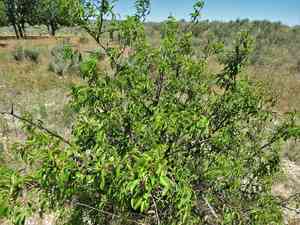
Chickasaw plum(Prunus angustifolia)

Chickasaw plum (Prunus angustifolia)

Also known as: Florida sand plum, Sand plum

Planting a Chickasaw plum tree in your garden comes with several advantages:

1. **Wildlife Magnet**: This tree attracts birds, bees, and butterflies, enhancing your garden's ecosystem.
2. **Versatile Fruit**: It yields small, flavorful plums suitable for fresh consumption or making jams and jellies.
3. **Ornamental Value**: The tree features lovely spring blossoms and striking fall colors, adding aesthetic charm to your landscape.
4. **Easy Care**: Chickasaw plums are resilient and require minimal upkeep once they are established.
5. **Soil Stabilization**: With its robust root system, the tree is effective in preventing soil erosion, especially on slopes.

Attributes of Chickasaw plum

Lifespan
Perennial
Plant Type
Shrub
Plant Height
1.2 m to 4.5 m
Spread
4 m
Leaf Color
Green
Flower Size
2.5 cm
Flower Color
White

PlantJoy - Identify plants with a snap

Identify and diagnose plants, get toxicity alerts, and explore safety guides for all types of fungi.

Try for Free

Images of Chickasaw plum

Chickasaw plum(Prunus angustifolia)

Quickly Identify Chickasaw plum

1
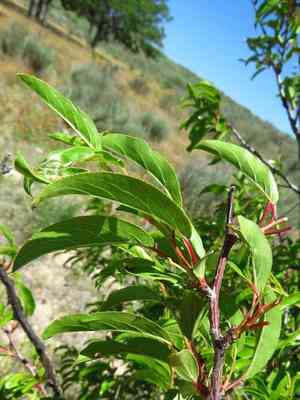
Narrow oval-lanceolate leaves, 1-3 inches (2.5-7.5 cm) long, with toothed margins and prominent veins.
2
Reddish-brown stem with thorny branchlets, slender twigs, and complex branching patterns.
3
Smooth, red bark with pale lenticels transitioning to scaly, ridged texture as plant matures.
4
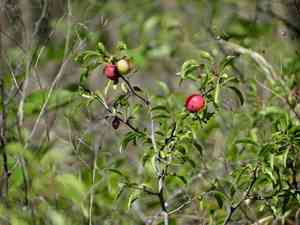
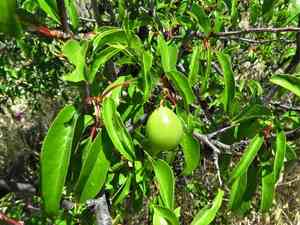
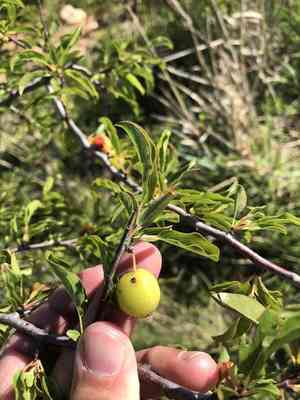
Clusters of small, white 5-petaled flowers in spring and yellow-to-red drupes in summer.
5
Delicate white flowers with 5 broad petals, 0.5 inches (1.3 cm) in diameter, emitting a sweet fragrance.

Scientific Classification of Chickasaw plum

Phylum
Vascular plants
Class
Dicotyledons
Order
Rosales
Family
Rose
Genus
Prunus
Species
Chickasaw plum

Planting and Growing of Chickasaw plum

Care Difficulty
Easy
Watering Schedule
Every 8 days
Sunlight Requirements
Full sun
Sunshine Duration
6-10 hours
Ideal Temperature
65-75℉
Soil Type
Potting Mix, Peat Mix
Soil pH
6.5-7.5
Fertilizer Type
Balanced
Pruning Season
Spring, Summer
Pruning Area
Branches, Leaves
Pruning Frequency
2 times a year
Repotting Season
Spring
Pot Type
Plastic, Ceramic

water icon How to Water Chickasaw plum?

For Prunus angustifolia, it's best to water deeply until the soil is thoroughly moistened, approximately 500 ml per session. The goal is to ensure moisture penetrates deeply into the root zone, aiding in robust growth. Be sure that water reaches at least 6 inches deep into the soil.
What are the symptoms of an underwatered Chickasaw plum?
What should I do if my Chickasaw plum is not getting enough water?
What are the symptoms of an overwatered Chickasaw plum?
How to save an overwatered Chickasaw plum?
More About Watering Techniques

sunlight icon What Are the Sunlight Requirements for Chickasaw plum?

Sunlight Requirements: Full sun, Partial sun
Duration of light: 6 to 8 hours
Prunus angustifolia thrives in a range of full to partial sunlight. Ideal lighting catalyzes efficient photosynthesis, leading to vigorous growth, rich foliage, and prolific flowering, enhancing both plant aesthetics and health.
Optimal Light Environment
Solutions for Ideal Lighting
Benefits of Ideal Light
More About Sunlight Requirements Techniques

temperature icon What Is the Ideal Temperature Range for Chickasaw plum?

Ideal Temperature: 65 ~ 75℉
For optimal growth, Prunus angustifolia ideally thrives in a temperature range of 65-75°F. It is during this range that the plant can carry out photosynthesis and other cellular processes most efficiently. Maintaining this range helps the plant to flourish without stress, supporting fruit production and healthy foliage.

soil icon What Soil is Best for Chickasaw plum?

Soil type: Sandy soil, Loam, Clay soil
Soil PH: 6.5 ~ 7.5
Prunus angustifolia thrives in well-drained soil that allows excess water to flow away quickly, preventing root rot and promoting healthy root development. This ensures robustness against diseases associated with over-watering. This plant benefits from soil with moderate fertility, which means it doesn't require overly rich or nutrient-depleted soil, striking a balance that supports sustained growth without excess pruning. While it prefers well-drained soil, maintaining adequate moisture is crucial. Sandy loam and loam soil types provide the right texture to keep the soil moist but not soggy. More About Soil

fertilize icon How to Fertilize Chickasaw plum?

Fertilizer type: Balanced
For Prunus angustifolia, it is recommended to apply a balanced liquid fertilizer with an NPK ratio of 10-10-10. Use approximately 1 tablespoon per gallon of water for container plants, or 1 pound per 100 square feet for in-ground applications. Adjust the dosage depending on the specific needs of your plant. More About Fertilizing Techniques

prune icon How to Prune Chickasaw plum?

Pruning Time: Spring, Summer, Autumn
Always ensure that your pruning tools, such as shears and saws, are sharp and sterilized. This helps to make clean cuts, reducing the risk of disease transmission and promoting faster wound healing in the plant. Make your cuts just above a healthy bud at a slight angle, which encourages water runoff and prevents moisture from sitting on the cut surface, reducing the chance of rot and disease. Understanding and maintaining the natural shape of Prunus angustifolia during pruning helps keep the plant balanced. Avoid cutting too much, which can stress the plant, making it susceptible to pests and diseases. More About Pruning Techniques

propagate icon How to Propagate Chickasaw plum plant?

Propagate Time: Early spring, Spring
1
Collect seeds from ripe fruits and clean off any pulp. Stratify the seeds by chilling them for a few weeks to break dormancy, which helps in germination.
2
During early spring, choose healthy, semi-hardwood cuttings. Cut several inches from the parent plant, ensuring there are multiple nodes in each cutting.
3
Plant the seeds or prepared cuttings in well-draining soil, maintaining consistent moisture. Ensure they are in a location with indirect sunlight and monitor soil moisture.
More About Propagating Techniques

repot icon How to Repot Chickasaw plum plant?

Repotting frequency: Every 2-3 years
1
Recognizing the right time to repot Prunus angustifolia involves looking for signs like slowed growth, roots emerging from the bottom of the pot, or the plant becoming top-heavy. These indicators suggest that the plant has outgrown its current pot and is ready for a new space.
2
Select a pot that is approximately 2-3 inches larger in diameter than the current one. Opt for a container with drainage holes to prevent waterlogging, which can lead to root rot. The additional space will promote root expansion, thus encouraging healthy plant growth.
3
Use a well-drained sandy loam to ensure proper aeration and drainage. This type of soil prevents water from accumulating, reducing the risk of root rot while maintaining the necessary nutrients and moisture for Prunus angustifolia.

PlantJoy - Identify plants with a snap

Find the best spots for them to optimize their health, simply using your phone.

Try for Free

Toxicity of Chickasaw plum

Is Chickasaw plum toxic to humans?

The chickasaw plum, much like almost all species within the *Prunus* genus, contains cyanide precursors in every component, including its seeds, with the only exception being the fruit itself. When a person consumes the seeds, leaves, or any other portion of the plant except for the fruit’s flesh, these cyanotoxins will transform into cyanide gas upon contact with stomach acid. This toxic gas is absorbed through mucous membranes, leading to poisoning. Symptoms evolve from restlessness to extreme fatigue, impaired coordination and muscle spasms, difficulties in movement or speech, decreased respiration and heart rate, ultimately culminating in death.

Identify toxic plants for your safety

Learn which plants are harmful to you and your pets, and make informed choices for a safer home!

Try for Free
WARNING
The judgment on toxicity and danger is for reference only. We DO NOT GUARANTEE any accuracy of such judgment. Therefore, you SHALL NOT rely on such judgment. It is IMPORTANT TO SEEK PROFESSIONAL ADVICE in advance when necessary.
More About Toxic Techniques