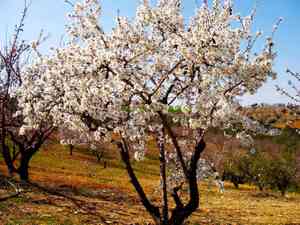
Prunus amygdalus(Prunus amygdalus)

Prunus amygdalus (Prunus amygdalus)

Also known as: Almond, Sweet almond

The almond tree, scientifically known as Prunus amygdalus or Prunus dulcis, is a variety of the Prunus genus. Its distinct feature is the corrugations on the shell or endocarp that contains the almond seed. It is situated in the same subgenus as the peach, known as Amygdalus. Despite its appearance, the almond is not a true nut but a drupe, having an exterior hull and a rigid shell protecting the seed. The phrase 'shelling almonds' means eliminating the hard shell to show the seed. Almonds are either sold with or without their shell. A particular type, blanched almonds, are shelled almonds softened with hot water to remove the seedcoat and reveal the white embryo. Once almonds have been properly cleaned and processed, they can be stored for lengthy periods. They are a prominent ingredient in various cuisines, more so in desserts like marzipan. The almond tree thrives in moderate Mediterranean climates with cool winter conditions and is scarcely seen in its original habitat. Almonds are among the first fruit trees that were domesticated, as its quality offspring could be produced solely from seeds, even without needing suckers or cuttings. Archaeological evidence from the Early Bronze Age shows that domesticated almonds were found across the Middle East, then throughout the Mediterranean and similar arid climates having cool winters. California is responsible for about 80% of the global supply of almonds. The large land area required for almond farming, coupled with high water consumption and pesticide use raises sustainability concerns. With the added pressure from continuous drought and climate change, California almond farming may be increasingly unsustainable. Some farmers have even exited the industry due to drought conditions resulting in decreased supply and increased prices.

Attributes of Prunus amygdalus

Lifespan
Deciduous Tree
Plant Height
4-10 m
Spread
4-10 m
Leaf Color
Green
Flower Size
3-5 cm
Flower Color
White or pale pink

ForwardPlant - Identify plants with a snap

Identify and diagnose plants, get toxicity alerts, and explore safety guides for all types of fungi.

Try for Free

Images of Prunus amygdalus

Prunus amygdalus(Prunus amygdalus)

Quickly Identify Prunus amygdalus

1
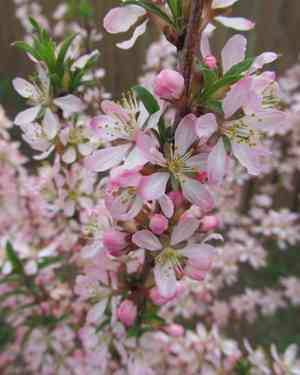
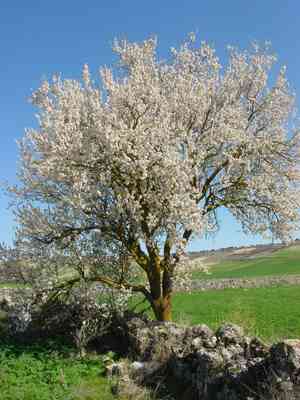
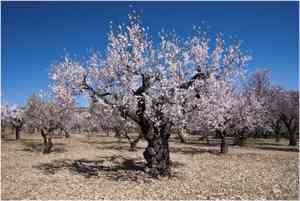
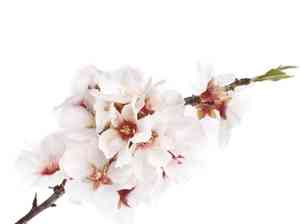
The almond is a deciduous tree, growing up to 4-10 m in height, with a trunk diameter can reach up to 30 cm. The young twigs are green at first, becoming purplish where exposed to sunlight, then grey in their second year. Leaf shape are long, serrated, and lanceolate. The flowers are white or pale pink, with five petals.

Scientific Classification of Prunus amygdalus

Phylum
Tracheophyta
Class
Magnoliopsida
Order
Rosales
Family
Rosaceae
Genus
Prunus
Species
P. amygdalus

Planting and Growing of Prunus amygdalus

Care Difficulty
Moderate
Watering Schedule
Every 2 days
Sunlight Requirements
Full sun
Sunshine Duration
6-10 hours
Ideal Temperature
59-77℉
Soil Type
Potting Mix, Peat Mix
Soil pH
6.5-7.5
Fertilizer Type
Balanced
Pruning Season
Spring, Summer
Pruning Area
Branches, Leaves
Pruning Frequency
2 times a year
Repotting Season
Spring
Pot Type
Plastic, Ceramic

water icon How to Water Prunus amygdalus?

When watering Prunus amygdalus, aim to provide around 1000 ml per session, ensuring the soil is moist but not waterlogged. The roots should be evenly saturated, leaving no dry pockets.
What are the symptoms of an underwatered Prunus amygdalus? ›
What should I do if my Prunus amygdalus is not getting enough water? ›
What are the symptoms of an overwatered Prunus amygdalus? ›
How to save an overwatered Prunus amygdalus? ›

sunlight icon What Are the Sunlight Requirements for Prunus amygdalus?

Sunlight Requirements: Full sun, Partial sun
Duration of light: 6 to 8 hours daily
Prunus amygdalus flourishes best in full sun for 6 to 8 hours a day, which is necessary for abundant flowering and fruit setting, ultimately ensuring a robust and healthy plant.
What is the best sun exposure? ›
How to achieve ideal sunlight exposure? ›
Benefits of adequate sunlight for almonds? ›

temperature icon What Is the Ideal Temperature Range for Prunus amygdalus?

Ideal Temperature: 59 ~ 77℉
The ideal temperature range for growing Prunus amygdalus, or almond trees, is between 59°F and 77°F. Within this range, the plant experiences optimal growth and development. It ensures efficient photosynthesis and metabolic activity, leading to healthy foliage and fruit production.

soil icon What Soil is Best for Prunus amygdalus?

Soil type: Loam, Sandy loam, Calcareous soil
Soil PH: 6.5 ~ 7.5
Prunus amygdalus thrives in well-drained soil as it prevents waterlogging, which can lead to root rot. This ensures the roots get enough air to breathe and absorb nutrients effectively, promoting healthy growth and abundant fruit production. This plant prefers slightly alkaline conditions, supporting microbial activity that breaks down organic matter. Such pH levels enable efficient nutrient uptake, crucial for robust flowering and fruiting. A nutrient-dense soil provides the essential minerals needed for Prunus amygdalus to thrive. Nitrogen, phosphorus, and potassium readily available in the soil ensure strong root development, luscious leaf growth, and prolific fruiting cycles.

fertilize icon How to Fertilize Prunus amygdalus?

Fertilizer type: Balanced
For Prunus amygdalus, the recommended amount of fertilizer is about 0.5 pounds of nitrogen per 100 square feet annually. This helps ensure balanced growth, healthy foliage, and optimal nut production without overburdening the soil.

prune icon How to Prune Prunus amygdalus?

Pruning Time: Spring, Summer
In early spring, focus on removing any dead or diseased wood. This helps the tree divert energy to healthy growth. Make cuts just above a bud, angling away slightly to promote upward growth. During summer, perform light shaping to maintain the tree’s structure and airflow. Trim back overly long branches and clear the canopy to allow sunlight to penetrate, fostering better fruit development.

propagate icon How to Propagate Prunus amygdalus plant?

Propagate Time: Spring,Early spring
1
To ensure seed germination, begin by soaking seeds in water overnight. This mimics the natural processes that break down seed dormancy. After soaking, store seeds in a cold, moist environment for a few weeks before planting.
2
Select healthy scion and rootstock plants for grafting. Make sure that the scion wood is of similar diameter to the rootstock. Cut the scion and rootstock with a clean grafting knife to make precise matching cuts.
3
Once seeds have been prepared, plant them in seed trays filled with a quality potting mix. Cover seeds lightly with soil and water gently to ensure they are moistened but not soaked. Place trays in a warm, sunny location.

repot icon How to Repot Prunus amygdalus plant?

Repotting frequency: Every 2-3 years
1
Prunus amygdalus, also known as the almond tree, signals its need for repotting when roots start to circle the pot's perimeter or grow out of drainage holes. Another sign is if water stands on the surface longer than usual. Repotting in spring allows the tree to establish its roots before the growing season.
2
Select a pot that is 2 to 4 inches larger in diameter than the current one. Opt for clay or ceramic pots with adequate drainage holes. These materials allow air exchange and prevent waterlogging, reducing the risk of root rot, which is crucial for the almond tree's health.
3
Choose a well-draining, loamy soil rich in nutrients. This ensures adequate root penetration and prevents soil compaction, which is essential for healthy root growth and nutrient uptake. Loamy soil retains some moisture while allowing excess water to escape, an ideal condition for growing almond trees.

ForwardPlant - Identify plants with a snap

Find the best spots for them to optimize their health, simply using your phone.

Try for Free