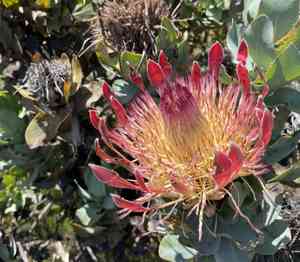
Sugarbushes (Protea) (Protea)
Also known as: Sugarbush
Camellias are a varied group of subtropical flowering plants named by Carl Linnaeus in 1735. This genus is celebrated for its extensive range of forms and strikingly beautiful flowers.
In This Article
Attributes of Sugarbushes (Protea)
Lifespan
Perennial
Plant Height
1.5 m
Spread
1.5 m
Leaf Color
Green to dark green
Flower Size
Up to 30 cm
Flower Color
Pink, red, white, yellow
Images of Sugarbushes (Protea)
Quickly Identify Sugarbushes (Protea)
1
Proteas can be identified by their rounded, leathery leaves, and large flower heads surrounded by colorful bracts. The flowers are typically cone-shaped and can vary in color.
Scientific Classification of Sugarbushes (Protea)
Phylum
Magnoliophyta
Class
Magnoliopsida
Order
Proteales
Family
Proteaceae
Genus
Protea
Planting and Growing of Sugarbushes (Protea)
Care Difficulty
Moderate
Watering Schedule
Every 2 days
Sunlight Requirements
Full sun
Sunshine Duration
6-10 hours
Ideal Temperature
60-75℉
Soil Type
Potting Mix, Peat Mix
Soil pH
5.5-7.5
Fertilizer Type
Balanced
Pruning Season
Spring, Summer
Pruning Area
Branches, Leaves
Pruning Frequency
2 times a year
Repotting Season
Spring
Pot Type
Plastic, Ceramic
 How to Water Sugarbushes (Protea)?
Protea plants prefer their soil to be on the drier side, so it's crucial to allow the topsoil to dry out completely before watering again. Water deeply, ensuring the water reaches the roots, typically around 500 milliliters per session.
What are the symptoms of an underwatered Sugarbushes (Protea)?
›
What should I do if my Sugarbushes (Protea) is not getting enough water?
›
What are the symptoms of an overwatered Sugarbushes (Protea)?
›
How to save an overwatered Sugarbushes (Protea)?
›
 What Are the Sunlight Requirements for Sugarbushes (Protea)?
Protea's ideal light range includes both full sun to partial sun exposure. This range maximizes blooming while bolstering the plant's growth, ensuring vibrant health and longevity.
How much sunlight does Protea need?
›
What happens if Protea receives inadequate light?
›
What are the benefits of optimal light exposure?
›
 What Is the Ideal Temperature Range for Sugarbushes (Protea)?
Protea thrives best in environments where the temperature consistently ranges from 60°F to 75°F. These conditions mimic their native habitats and ensure that the plant's metabolic and physiological processes function optimally. Uniformity in this temperature range supports healthy growth and maximizes blooming potential.
 What Soil is Best for Sugarbushes (Protea)?
Proteas thrive in well-drained soils that allow excess water to flow away quickly. This prevents root rot and encourages healthy root development, essential for optimal growth and flowering. These plants prefer nutrient-poor soils, as high levels of nutrients can lead to excessive foliage growth at the expense of flowers. This condition mimics their native environments and promotes blooming. Proteas often prefer slightly acidic soil conditions with a pH ranging from 5.5 to 7.0. This pH range facilitates optimal nutrient uptake and maintains the plant's health.
 How to Fertilize Sugarbushes (Protea)?
Protea plants are native to nutrient-poor environments, so they don't require heavy fertilization. A small amount of fertilizer goes a long way. Use a balanced organic fertilizer, applying around 1 teaspoon per plant. Avoid high-phosphorus fertilizers, which can harm these plants.
 How to Prune Sugarbushes (Protea)?
After your Protea has finished flowering, cut back the flowering stems to encourage denser growth. Make your cuts just above a node or bud, as this will promote new shoots. Be careful not to cut back into old wood as Proteas don’t regenerate well from old branches. Pruning should also focus on maintaining the desired shape and size of your Protea. Remove any overlapping branches to prevent the plant from becoming too bushy, which could hinder new growth in the center and lead to a scraggly appearance.
 How to Propagate Sugarbushes (Protea) plant?
1
Before sowing, protea seeds benefit from scarification. Gently rubbing the seed coat with sandpaper or soaking them in warm water can improve germination rates by aiding moisture absorption.
2
Select semi-hardwood cuttings with a length of about 10-15 cm. Cut just below a node with a clean knife for optimal rooting potential. Remove any flower buds and lower leaves to focus energy on root development.
3
Insert the prepared cutting into a well-draining substrate, such as a mix of sand and peat. Ensure the node is below the substrate surface, and maintain consistent moisture without waterlogging, to encourage root growth.
 How to Repot Sugarbushes (Protea) plant?
1
It's time to repot your Protea when its roots start to overcrowd the current pot or grow out of the drainage holes. Another strong signal is if soil compaction is evident, which could hinder essential water and air circulation. Spring and autumn are ideal periods due to moderate temperatures and less plant stress.
2
Select a pot slightly larger than the previous one, with adequate drainage holes to prevent waterlogging. A terracotta pot is often preferred due to its breathability and weight, which keeps taller Proteas stable. This setup aids in moisture control and supports healthy root development.
3
Select a well-draining, sandy soil mix that mimics Protea's native South African environment. This type of soil ensures roots don't sit in water, reducing the risk of root rot. Adding perlite or coarse sand can enhance drainage, creating a healthy growth medium.
Learn More About Sugarbushes (Protea) Diseases
Anthracnose
Bacterial Leaf Spot
Bacterial Soft Rot
Crown Gall
Cyst Nematode
Damping-off
Downy Mildew
Drought Stress
Fusarium Wilt
Gray Mold
Leaf Spot
Mosaic
Nutrient Deficiency
Nutrient Toxicity
Powdery Mildew
Root Rot
Root-knot Nematode
Rusts
Sooty Mold
Spider Mites
Temperature Stress
Thrips Damage
White Mold
Chemical Injury

