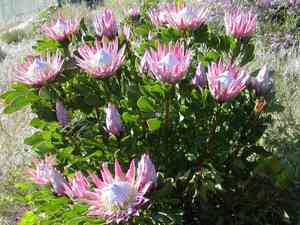
King protea (Protea cynaroides)
Also known as: King sugar bush
The king protea is a striking shrub with a flower that appears almost otherworldly. Its large, globe-like buds resemble giant artichokes before they bloom. The scientific name *Protea cynaroides* nods to Proteus, the shape-shifting Greek sea-god, highlighting the remarkable variety within this species.
In This Article
Attributes of King protea
Lifespan
Perennial
Plant Type
Shrub
Plant Height
35 cm to 2 m
Spread
90 cm to 1.2 m
Leaf Color
Green
Flower Size
12 cm to 30 cm
Flower Color
Pink Red Cream White
Images of King protea

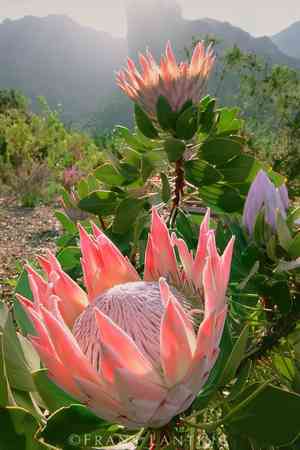
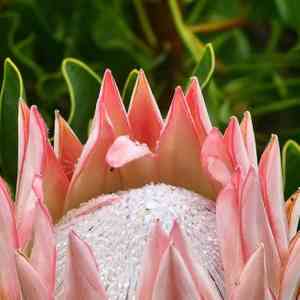
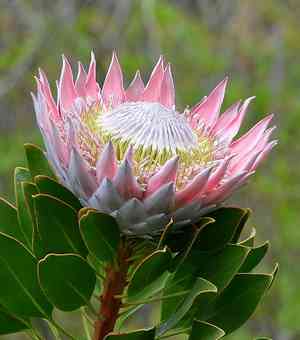
Quickly Identify King protea
1
Robust reddish stems distinguish king protea
2
Broad, rounded green leaves, 3 to 5 feet (0.9 to 1.5 meters)
3
Large bloom heads, 5 to 10 inches (12.5 to 25 cm) in diameter
4
Central mass of flowers encircled by darker pink bracts
5
Flowering period from autumn to spring, sporadic year-round blossoms
Scientific Classification of King protea
Phylum
Vascular plants
Class
Dicotyledons
Order
Proteas, lotuses, planes, and allies
Family
Protea
Genus
Sugarbushes
Species
King protea
Planting and Growing of King protea
Care Difficulty
Hard
Watering Schedule
Every 3 days
Sunlight Requirements
Full sun
Sunshine Duration
4-6 hours
Ideal Temperature
60-75℉
Soil Type
Potting Mix, Peat Mix
Soil pH
5.5-7.5
Fertilizer Type
Balanced
Pruning Season
Spring, Summer
Pruning Area
Branches, Leaves
Pruning Frequency
2 times a year
Repotting Season
Spring
Pot Type
Plastic, Ceramic
 How to Water King protea?
Protea cynaroides, or the King Protea, requires a careful balance when it comes to watering. Water deeply, allowing approximately 500 milliliters at each session. The goal is to ensure the soil is moist but not waterlogged, allowing the plant to absorb necessary moisture without suffocating the roots.
More About Watering Techniques→
What are the symptoms of an underwatered King protea?
›
What should I do if my King protea is not getting enough water?
›
What are the symptoms of an overwatered King protea?
›
How to save an overwatered King protea?
›
 What Are the Sunlight Requirements for King protea?
Protea cynaroides flourishes best under full sun conditions. The ideal light encourages vibrant blooms and a healthy overall plant structure, crucial for its decorative appeal and long-term vitality.
More About Sunlight Requirements Techniques→
What is the ideal light condition?
›
How can I ensure ideal sunlight exposure?
›
What benefits does ideal light provide to Protea cynaroides?
›
 What Is the Ideal Temperature Range for King protea?
The ideal temperature range for growing Protea cynaroides is between 60°F to 75°F. Within this range, the plant can thrive and reach its full flower potential. Protea cynaroides is native to warmer, Mediterranean-like climates and benefits from a consistently warm environment that promotes healthy growth and development. Maintaining this range helps ensure that the water and nutrients are efficiently used and that photosynthesis occurs optimally.
 What Soil is Best for King protea?
Protea cynaroides thrives best in well-drained soils. Excess water retention can lead to root rot, severely harming the plant. Well-drained soils allow roots to access necessary moisture while preventing waterlogging, supporting healthy growth. This plant has adapted to survive in nutrient-poor conditions, typical of its native habitats. Providing a rich soil can be detrimental as it may encourage excessive foliage growth rather than the vibrant blooms Proteas are known for. Protea cynaroides prefers slightly acidic to neutral pH levels ranging from 5.5 to 7.5. Maintaining this pH range ensures nutrient availability and optimal plant health, minimizing the risk of nutrient lockout.
More About Soil→
 How to Fertilize King protea?
For Protea cynaroides, it is crucial to use a balanced fertilizer with low phosphorus content. Too much phosphorus can harm this plant. Typically, apply a quarter to half the recommended dose, as Proteas prefer a lean diet.
More About Fertilizing Techniques→
 How to Prune King protea?
Start by identifying the sections that need pruning. Focus on removing spent blooms, dead or diseased wood, and any branches that cross or rub against each other, as these can cause wounds and allow disease entry. Make your cuts just above a node (the point where leaves attach to the stem) to encourage new growth. Always cut at an angle to prevent water from pooling on the cut surfaces, which can lead to rot.
More About Pruning Techniques→
 How to Propagate King protea plant?
1
Soak Protea cynaroides seeds in lukewarm water for 24 hours to soften the seed coat, which helps in breaking dormancy and improves germination rates. Ensure water is changed regularly to prevent fungal growth.
2
Plant the soaked seeds in seed trays filled with a well-draining soil mix. Cover lightly with sand and keep the soil consistently moist but not waterlogged to prevent rot while awaiting germination.
3
In early spring or late summer, collect semi-hardwood cuttings from a healthy Protea cynaroides plant. Trim leaves from the bottom half of the cutting and dip the cut end in rooting hormone to promote root initiation.
 How to Repot King protea plant?
1
Repotting should be done when Protea cynaroides shows signs of being root-bound, such as roots protruding from the drainage holes or growing in a tight circle. The best time is during its growing season, ensuring the plant is actively acquiring nutrients and energy to adapt to its new environment.
2
Select a pot that is 2-3 inches larger in diameter than the current one to allow root expansion. The pot should have adequate drainage holes to prevent waterlogging, which can lead to root rot. This ensures the plant remains healthy and reduces the chance of overwatering.
3
Choose well-draining, sandy soil with low nutrient levels to replicate Protea cynaroides' natural conditions. This soil helps prevent root rot and mimics the protea's native environment, which is essential for optimal growth and blooming.
Learn More About King protea Diseases
Anthracnose
Bacterial Leaf Spot
Bacterial Soft Rot
Bacterial Wilt
Crown Gall
Cyst Nematode
Damping-off
Downy Mildew
Drought Stress
Fusarium Wilt
Gray Mold
Leaf Spot
Mosaic
Nutrient Deficiency
Nutrient Toxicity
Powdery Mildew
Root Rot
Root-knot Nematode
Sooty Mold
Spider Mites
Temperature Stress
Thrips Damage
White Mold



