Prosopis (Prosopis)(Prosopis)

Prosopis (Prosopis) (Prosopis)

Also known as: Mesquite, Algarrobo

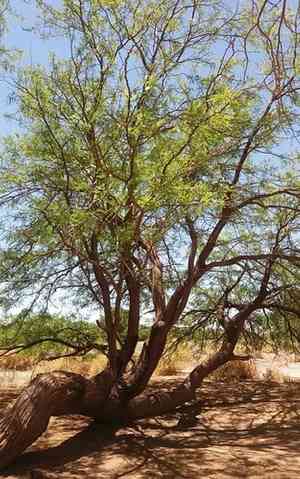
Prosopis species, commonly known as mesquite, are native to arid and semi-arid regions of the Americas, particularly in areas such as the southwestern United States, Mexico, and parts of South America like Argentina and Peru. These resilient trees and shrubs are well-adapted to dry environments, thanks to their deep tap-roots.

Prosopis trees and shrubs have multiple uses:
1. **Wood**: Known for its durability, ideal for making furniture, flooring, and as a source of firewood.
2. **Food**: Pods can be ground into flour for baking, and their seeds are edible.
3. **Animal Feed**: Pods and leaves are used as fodder for livestock.
4. **Medicinal Uses**: Employed in traditional medicine for treating various ailments.
5. **Environmental Benefits**: Useful in controlling erosion and improving soil fertility through nitrogen fixation.

Attributes of Prosopis (Prosopis)

Lifespan
Perennial
Plant Height
4 to 9 meters
Spread
5 to 10 meters
Leaf Color
Green
Flower Size
Small, about 0.5 cm
Flower Color
Yellowish to creamy white

ForwardPlant - Identify plants with a snap

Identify and diagnose plants, get toxicity alerts, and explore safety guides for all types of fungi.

Try for Free

Images of Prosopis (Prosopis)

Prosopis (Prosopis)(Prosopis)

Quickly Identify Prosopis (Prosopis)

1
Identifying Prosopis involves looking for their compound leaves with numerous small leaflets, sharp paired spines at the nodes, and elongated seed pods. They often have a twisted and thorny appearance.

Scientific Classification of Prosopis (Prosopis)

Phylum
Tracheophyta
Class
Magnoliopsida
Order
Fabales
Family
Fabaceae
Genus
Prosopis

Planting and Growing of Prosopis (Prosopis)

Care Difficulty
Moderate
Watering Schedule
Every 2 days
Sunlight Requirements
Full sun
Sunshine Duration
10-12 hours
Ideal Temperature
68-86℉
Soil Type
Potting Mix, Peat Mix
Soil pH
6.5-8
Fertilizer Type
Balanced
Pruning Season
Spring, Summer
Pruning Area
Branches, Leaves
Pruning Frequency
2 times a year
Repotting Season
Spring
Pot Type
Plastic, Ceramic

water icon How to Water Prosopis (Prosopis)?

For Prosopis, also known as mesquite, watering needs to mimic its native arid environment. It's vital to ensure the soil is completely dry between waterings. Water sparingly, about 250 milliliters each time, enough to just moisten the top layer of soil while allowing the deeper roots to remain relatively untouched.
What are the symptoms of an underwatered Prosopis (Prosopis)?
What should I do if my Prosopis (Prosopis) is not getting enough water?
What are the symptoms of an overwatered Prosopis (Prosopis)?
How to save an overwatered Prosopis (Prosopis)?

sunlight icon What Are the Sunlight Requirements for Prosopis (Prosopis)?

Sunlight Requirements: Full sun, Partial sun
Duration of light: 6 to 8 hours
Prosopis ideally flourishes in full sun to partial sun, ensuring desirably vigorous growth, dense foliage, and better blossom production. Adequate light exposure keeps the plant healthy and optimally functioning.
How much sunlight does Prosopis need?
What are the benefits of providing Prosopis with ideal lighting?
How can I ensure my Prosopis gets enough light indoors?

temperature icon What Is the Ideal Temperature Range for Prosopis (Prosopis)?

Ideal Temperature: 68 ~ 86℉
Prosopis plants thrive best in warm temperatures typically ranging between 68°F and 86°F. These conditions mimic their natural habitat, promoting healthy foliage and facilitating optimal growth rates.

soil icon What Soil is Best for Prosopis (Prosopis)?

Soil type: Sandy soil, Loam, Sandy loam
Soil PH: 6.5 ~ 8
Prosopis species thrive best in nutrient-rich soil that aids in robust growth and development. The richness in nutrients provides the essential minerals required for the plant's metabolism and overall health. Well-drained soil prevents waterlogging, which could be detrimental to Prosopis. It ensures the roots receive adequate air, reducing the risk of root rot and encouraging healthy root development. Although drought-tolerant, Prosopis benefits from soil with moderate levels of moisture, facilitating optimal nutrient uptake and maintaining plant vitality during dry spells.

fertilize icon How to Fertilize Prosopis (Prosopis)?

Fertilizer type: Balanced
Prosopis species require a moderate amount of fertilizer. Ensure not to over-apply as they are adapted to nutrient-poor environments. A balanced fertilizer mixed at half the recommended dosage is generally sufficient.

prune icon How to Prune Prosopis (Prosopis)?

Pruning Time: Spring, Autumn
Start with a thorough inspection of the Prosopis tree. First, remove any dead or damaged branches using sharp pruning shears, ensuring clean cuts close to the main trunk or branch base. Next, thin out the canopy by trimming crowded branches, allowing better air circulation and light penetration. Always cut back to a branch crotch or node to promote healthy regrowth. Use loppers or a pruning saw for thicker branches, always ensuring tools are sanitized to prevent disease spread. After addressing health cuts, focus on the tree's shape. Prosopis can benefit from shaping to enhance its natural form. Aim to maintain a balanced, symmetrical shape that complements its surroundings. Trim overhanging lower branches that may interfere with pathways while ensuring enough foliage remains for the tree's sustenance. Regular shaping helps in maintaining the desired size and aesthetic and prevents invasive growth.

propagate icon How to Propagate Prosopis (Prosopis) plant?

Propagate Time: Spring, Early summer, Late summer
1
Before sowing, soak Prosopis seeds in warm water for 24 hours. This helps to soften the hard seed coat, increasing the chances of successful germination. Scarification, gently nicking the seed coat, can also improve germination rates.
2
Select healthy, semi-hardwood cuttings from the Prosopis plant during the growing season. Trim them to 6-8 inches long. Remove the leaves from the lower half and dip the cut end in rooting hormone to stimulate root growth.
3
For successful grafting of Prosopis, use a compatible rootstock and scion. Implement a cleft graft method by cutting both to fit snugly. Secure with grafting tape to ensure the cambium layers align, promoting successful fusion.

repot icon How to Repot Prosopis (Prosopis) plant?

Repotting frequency: Every 2-3 years
1
Signs that your Prosopis needs repotting include roots circling the pot's inside, decreased growth, or water draining too quickly. These indicators mean the plant has outgrown its current space and needs more room to thrive.
2
Select a pot that's one size larger with sufficient drainage holes to prevent waterlogging. A larger pot provides more room for root growth, enhancing the plant's development without restricting its water intake or causing root rot.
3
Opt for a sandy, well-draining soil mix. This type of soil ensures that your Prosopis doesn't retain excess moisture, reducing the risk of root rot and allowing air circulation for healthy root development.

ForwardPlant - Identify plants with a snap

Find the best spots for them to optimize their health, simply using your phone.

Try for Free
