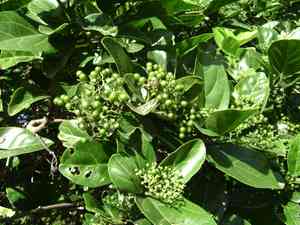
Premna (Premna) (Premna)
Also known as: Premna, Headache Tree, Agarbati
Premna plants are diverse tropical flowering species that can grow as trees, shrubs, or occasionally as lianas. They are widely distributed within their native habitats and were initially documented by scientists in the 18th century. Recent research has identified up to 250 different chemical compounds in Premna species.
In This Article
Attributes of Premna (Premna)
Lifespan
Perennial
Plant Height
Up to 8 meters
Spread
3 to 5 meters
Leaf Color
Green
Flower Size
0.5 to 1 cm
Flower Color
White or pale yellow
Images of Premna (Premna)
Quickly Identify Premna (Premna)
1
Premna can be identified by their woody stems, opposite leaves, and aromatic foliage. The leaves are often simple and ovate, sometimes with serrated edges. The small flowers are usually arranged in clusters, and the fruits are small drupes.
Scientific Classification of Premna (Premna)
Phylum
Magnoliophyta
Class
Magnoliopsida
Order
Lamiales
Family
Lamiaceae
Genus
Premna
Planting and Growing of Premna (Premna)
Care Difficulty
Moderate
Watering Schedule
Every 4 days
Sunlight Requirements
Partial sun
Sunshine Duration
4-6 hours
Ideal Temperature
68-77℉
Soil Type
Potting Mix, Peat Mix
Soil pH
6-7.5
Fertilizer Type
Balanced
Pruning Season
Spring, Summer
Pruning Area
Branches, Leaves
Pruning Frequency
2 times a year
Repotting Season
Spring
Pot Type
Plastic, Ceramic
 How to Water Premna (Premna)?
For Premna, it is crucial to provide a moderate amount of water each time. Aim for approximately 250 milliliters per watering session. It's important that the soil is evenly moist without being soggy or waterlogged, as Premna prefers soil that is neither too dry nor overly damp. The principle is to mimic the natural environment where moisture levels are balanced.
What are the symptoms of an underwatered Premna (Premna)?
›
What should I do if my Premna (Premna) is not getting enough water?
›
What are the symptoms of an overwatered Premna (Premna)?
›
How to save an overwatered Premna (Premna)?
›
 What Are the Sunlight Requirements for Premna (Premna)?
Partial sun is ideal for Premna, providing a balance of sunlight needed for optimal growth and photosynthesis without risking damage from prolonged direct exposure.
What is the ideal lighting condition for Premna?
›
How to achieve ideal light conditions?
›
What benefits does Premna gain from ideal lighting?
›
 What Is the Ideal Temperature Range for Premna (Premna)?
For optimal growth of Premna plants, maintaining the temperature between 68°F and 77°F is essential. This range encourages healthy physiological functions and maximizes photosynthesis rates, leading to robust and vibrant growth. Keeping the plant within this temperature gamut ensures better resistance against diseases and pest infestations.
 What Soil is Best for Premna (Premna)?
Premna flourishes in soil that allows for good drainage. This is essential to prevent waterlogging, which can lead to root rot. Well-draining soil helps in maintaining the right moisture levels, ensuring healthy root growth and an overall robust plant. Incorporating organic matter like compost or well-rotted manure can significantly enhance soil fertility. This enriches the soil, providing essential nutrients that promote vigorous growth and offer resilience against diseases and pests. Premna plants thrive in soil that retains moderate moisture. It's important not to let the soil dry out completely, nor to overwater. Maintaining this moisture balance supports the plant's metabolic processes and ensures optimal nutrient uptake.
 How to Fertilize Premna (Premna)?
For Premna plants, it's essential to provide the right amount of fertilizer to ensure optimal growth. Use a balanced liquid fertilizer at half strength for every application, about 10-15 milliliters per liter of water. When applying slow-release fertilizers, distribute about 50 grams evenly around the base of the plant each time, ensuring it gets absorbed well into the soil.
 How to Prune Premna (Premna)?
When pruning Premna, always start by sterilizing your pruning shears to prevent disease transmission. Begin by removing dead or damaged branches, which can help direct the plant's energy towards new growth. Focus on pruning just above nodes to encourage branching. To shape your Premna, aim to create an open canopy that allows for light and air penetration. Avoid heavy pruning in one session; instead, gradually reduce the size or shape over several weeks to avoid stress to the plant.
 How to Propagate Premna (Premna) plant?
1
Choose healthy, disease-free stems that are semi-hardwood for the most successful cuttings. Cut about 4-6 inches from the tip of the stem, making sure there are at least four leaves.
2
Strip the lower leaves away from the cutting, leaving only a couple at the top. Dip the cut end in rooting hormone to enhance the chances of root development.
3
Plant the cutting in a well-draining mix such as perlite or sand combined with peat. Water the medium lightly to settle it around the base of the cutting.
 How to Repot Premna (Premna) plant?
1
You should consider repotting your Premna plant when you notice it becoming root-bound, indicated by roots poking out of the drainage holes. Another signal is when the plant's growth has significantly slowed down despite optimal care. Ideally, repotting should be done in spring or summer when the plant is actively growing, ensuring that it can recover quickly.
2
Select a pot that is only slightly larger than the current one, with ample drainage holes. A pot that's too big can lead to excessive moisture retention, risking root rot. Ideal pots are made from materials like terracotta that allow soil to 'breathe,' promoting healthy root development.
3
For Premna, a well-draining, loamy soil mix is perfect. This type of soil prevents waterlogging, a common issue that can suffocate roots. The right soil will support strong growth by providing adequate nutrients and maintaining appropriate moisture levels.
Learn More About Premna (Premna) Diseases
Anthracnose
Bacterial Leaf Spot
Bacterial Soft Rot
Bacterial Wilt
Crown Gall
Damping-off
Downy Mildew
Fusarium Wilt
Gray Mold
Leaf Spot
Mosaic
Powdery Mildew
Root Rot
Root-knot Nematode
Rusts
Sooty Mold
White Mold
Chemical Injury
Drought Stress
Nutrient Deficiency
Nutrient Toxicity
Temperature Stress
Spider Mites
Thrips Damage

