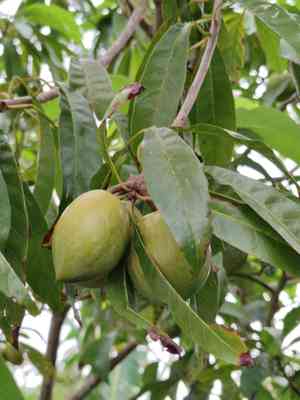
Canistel(Pouteria campechiana)

Canistel (Pouteria campechiana)

Also known as: Yellow Sapote, Eggfruit, Canistel

The Canistel tree (Pouteria campechiana), native to Central and South America, offers a variety of uses:

1. **Culinary Applications**: The fruit's sweet, custard-like flesh is enjoyed fresh or incorporated into desserts, smoothies, and baking recipes like pies and cakes.

2. **Nutritional Value**: Rich in vitamins A and C, dietary fiber, and niacin, the fruit provides significant health benefits.

3. **Traditional Remedies**: Various parts of the tree, such as the leaves and seeds, are utilized in traditional medicine for treating different conditions.

4. **Wood Utilization**: The tree's dense, durable wood is ideal for furniture making and other wooden products.

5. **Ornamental Planting**: Due to its attractive foliage and fruit, the Canistel tree is also grown as an ornamental plant.

6. **Latex Extraction**: Latex can be harvested from the tree and has various applications.

Attributes of Canistel

Lifespan
Perennial
Plant Type
Tree
Plant Height
10 m
Spread
6 m
Leaf Color
Green Blue
Flower Size
4.5 mm to 1.1 cm
Flower Color
White

ForwardPlant - Identify plants with a snap

Identify and diagnose plants, get toxicity alerts, and explore safety guides for all types of fungi.

Try for Free

Images of Canistel

Canistel(Pouteria campechiana)

Quickly Identify Canistel

1
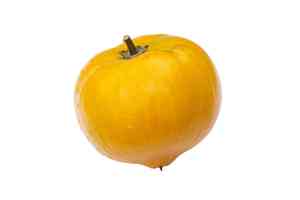
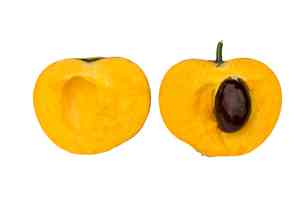
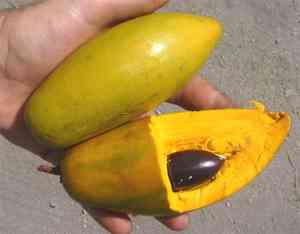
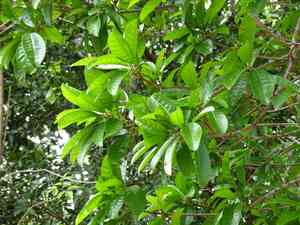
To identify Pouteria campechiana, look for an evergreen tree with dense, dark green foliage. The leaves are elongated and leathery. The fruit is typically yellow to orange with a smooth, thin skin and an egg-like shape. When ripe, the flesh is creamy and sweet, somewhat like a cooked egg yolk.

Scientific Classification of Canistel

Phylum
Vascular plants
Class
Dicotyledons
Order
Heathers and allies
Family
Sapodilla
Genus
Pouteria
Species
Canistel

Planting and Growing of Canistel

Care Difficulty
Moderate
Watering Schedule
Every 3 days
Sunlight Requirements
Full sun
Sunshine Duration
6-12 hours
Ideal Temperature
68-86℉
Soil Type
Potting Mix, Peat Mix
Soil pH
6.5-7.5
Fertilizer Type
Balanced
Pruning Season
Spring, Summer
Pruning Area
Branches, Leaves
Pruning Frequency
2 times a year
Repotting Season
Spring
Pot Type
Plastic, Ceramic

water icon How to Water Canistel?

When watering Pouteria campechiana, the goal is to moisten the soil thoroughly without causing waterlogging. The typical requirement is around 250 ml per watering session, ensuring the soil is evenly moist but not soggy. This helps maintain a healthy root system.
What are the symptoms of an underwatered Canistel?
What should I do if my Canistel is not getting enough water?
What are the symptoms of an overwatered Canistel?
How to save an overwatered Canistel?

sunlight icon What Are the Sunlight Requirements for Canistel?

Sunlight Requirements: Full sun, Partial sun
Duration of light: 6 to 10 hours
Pouteria campechiana flourishes in full to partial sun, with 6 to 10 hours being optimal. Plenty of sunlight ensures healthy leaf development, ample flower production, and a bountiful harvest.
How much sunlight does Pouteria campechiana need?
How can I ensure ideal light for Pouteria campechiana?
What are the benefits of ideal lighting for Pouteria campechiana?
More About Sunlight Requirements Techniques

temperature icon What Is the Ideal Temperature Range for Canistel?

Ideal Temperature: 68 ~ 86℉
Pouteria campechiana thrives best within a temperature range of 68°F to 86°F. This range supports optimal growth and fruit production, ensuring the plant's metabolic processes occur efficiently. At these temperatures, the plant can facilitate photosynthesis and nutrient uptake effectively, leading to robust health and consistent yields.

soil icon What Soil is Best for Canistel?

Soil type: Loam, Sandy loam
Soil PH: 6.5 ~ 7.5
Pouteria campechiana thrives in well-draining soil, ensuring that its roots do not sit in water which can lead to root rot. Good drainage is crucial for healthy plant growth and helps in aeration. This plant benefits from a nutrient-rich soil medium that provides essential minerals for growth. Incorporating organic matter like compost can enhance nutrient content and improve soil structure. While the soil should be well-draining, it also needs to retain adequate moisture to support the plant's needs, especially during dry spells. Mulching can help in moisture retention for this purpose.

fertilize icon How to Fertilize Canistel?

Fertilizer type: Balanced
For Pouteria campechiana, it's crucial to not over-fertilize. Use a balanced liquid fertilizer at half strength for young plants. For mature trees, use 1 pound (approximately 450 grams) per inch of trunk diameter, divided into equal portions distributed over the fertilization period.

prune icon How to Prune Canistel?

Pruning Time: Spring
Begin by removing any dead, diseased, or damaged branches to clear the plant of potential infections. Working from the bottom up, start by trimming any suckers or water sprouts that divert energy from the main growth. Focus on creating an open center to improve airflow and sunlight penetration. During the early years of the plant's life, shape the tree to develop a strong, central leader with evenly spaced lateral branches. This structure not only supports the weight of the fruit but also promotes easier harvesting as the tree matures. To maintain a manageable size for easy maintenance and harvesting, regularly shorten the outer growth by cutting just above a node. Avoid cutting back too severely, as this can lead to a surge of weak growth. More About Pruning Techniques

propagate icon How to Propagate Canistel plant?

Propagate Time: Spring, Early spring
1
Collect ripe seeds from mature fruits, clean them thoroughly to remove any pulp, and let them dry for a few days before planting. Ensure the seeds are viable by performing a float test.
2
Use a light and well-draining soil mix, typically combining peat moss, perlite, and compost to create an ideal environment for seed germination or rooting of cuttings.
3
Select healthy stock and scion plants, make precise cuts with a grafting knife, and secure the graft using grafting tape. Ensure proper alignment of the vascular tissues for successful grafts.
More About Propagating Techniques

repot icon How to Repot Canistel plant?

Repotting frequency: Every 2-3 years
1
Pouteria campechiana should be repotted when you notice the roots are circling the pot or protruding from drainage holes. Additionally, a noticeable decline in plant health despite regular care might be a sign. This typically occurs every two to three years, indicating it's time to give your plant a fresh start.
2
Choose a pot that is 1-2 inches larger in diameter than the current one. The pot should have adequate drainage holes to prevent waterlogging, which can lead to root rot. A well-chosen pot facilitates better water management and provides sufficient space for root expansion, promoting healthier growth.
3
Opt for a well-draining potting mix that provides aeration and retains necessary moisture. Ideally, it should include components like perlite, peat, and some organic matter. This soil combination avoids water stagnation, promoting robust root health and preventing issues like root rot.

ForwardPlant - Identify plants with a snap

Find the best spots for them to optimize their health, simply using your phone.

Try for Free