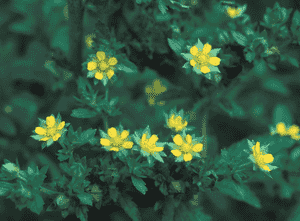
Rough cinquefoil (Potentilla norvegica)
Also known as: Ternate-leaved cinquefoil
Rough cinquefoil (Potentilla norvegica) is a flowering plant found widely across North America. The genus name "Potentilla" derives from the Latin term "potens," signifying "powerful," likely due to its medicinal qualities. The species name "norvegica" indicates its association with settlers who introduced the plant to North America.
In This Article
Attributes of Rough cinquefoil
Lifespan
Annual, Biennial, Perennial
Plant Type
Herb
Plant Height
5 cm to 90 cm
Spread
15 cm to 30 cm
Leaf Color
Green Blue
Flower Size
2 mm to 4 mm
Flower Color
Yellow
Images of Rough cinquefoil
Quickly Identify Rough cinquefoil
1
Identification can be done by looking for its trifoliate leaves and yellow, five-petaled flowers. The plant has a tooth-edged margin on the leaves and the foliage and stems are hairy.
Scientific Classification of Rough cinquefoil
Phylum
Vascular plants
Class
Dicotyledons
Order
Rosales
Family
Rose
Genus
Cinquefoils
Species
Rough cinquefoil
Planting and Growing of Rough cinquefoil
Care Difficulty
Easy
Watering Schedule
Every 4 days
Sunlight Requirements
Partial sun
Sunshine Duration
6-10 hours
Ideal Temperature
60-75℉
Soil Type
Potting Mix, Peat Mix
Soil pH
6.5-7.5
Fertilizer Type
Balanced
Pruning Season
Spring, Summer
Pruning Area
Branches, Leaves
Pruning Frequency
2 times a year
Repotting Season
Spring
Pot Type
Plastic, Ceramic
 How to Water Rough cinquefoil?
When watering Potentilla norvegica, aim to give it around 250 ml per session. This amount ensures the soil stays moist but not waterlogged, promoting healthy root development. It's important to let the top inch of the soil dry between waterings to avoid damping off.
What are the symptoms of an underwatered Rough cinquefoil?
›
What should I do if my Rough cinquefoil is not getting enough water?
›
What are the symptoms of an overwatered Rough cinquefoil?
›
How to save an overwatered Rough cinquefoil?
›
 What Are the Sunlight Requirements for Rough cinquefoil?
Potentilla norvegica flourishes in partial sun to full sun environments. Proper light exposure facilitates optimal photosynthesis, ensuring dense foliage and abundant flowering.
What is the best sunlight exposure?
›
How do I ensure it gets optimal sunlight?
›
Why is adequate sunlight important?
›
 What Is the Ideal Temperature Range for Rough cinquefoil?
Potentilla norvegica thrives best in temperatures between 60 and 75°F. These conditions mimic its natural habitat, allowing optimal growth and development. Such temperatures facilitate efficient photosynthesis and overall plant health.
 What Soil is Best for Rough cinquefoil?
Potentilla norvegica thrives in soils with good drainage to prevent root rot, ensuring the roots have ample oxygen and reducing disease risk. A moderately fertile soil enhances growth by providing essential nutrients, resulting in lush foliage and better flowering. Maintaining adequate soil moisture helps prevent wilting during dry spells, promoting consistent growth and vigor.
 How to Fertilize Rough cinquefoil?
For Potentilla norvegica, it is essential to use a balanced fertilizer with equal parts of nitrogen, phosphorus, and potassium. Typically, a 10-10-10 NPK fertilizer is ideal. Apply liquid fertilizers at a concentration of 1 tablespoon per gallon of water, ensuring even distribution over the soil. For slow-release fertilizers, follow the manufacturer's guidelines, usually about 1 to 2 pounds per 100 square feet.
 How to Prune Rough cinquefoil?
To prune Potentilla norvegica effectively, start by identifying and removing any dead or damaged stems. Use clean, sharp pruning shears to make clean cuts near the base of the plant. Trim any overly long branches to maintain a compact shape, cutting just above a leaf node to promote fuller growth. Regular trimming encourages vigorous flowering and keeps the plant tidy and healthy.
 How to Propagate Rough cinquefoil plant?
1
Harvest mature seeds from the plant by waiting until they turn a darker color, indicating readiness. Clean them of any debris to prevent mold during the storage or germination process.
2
Select healthy stems for cuttings, cut below a node, and remove any leaves from the lower part. Dip the cutting in rooting hormone powder to encourage root development.
3
Carefully dig up the mature plant, taking caution not to damage the root system. Gently separate the root clumps with your hands or a knife and replant them individually.
 How to Repot Rough cinquefoil plant?
1
Potentilla norvegica shows signs of needing repotting when you notice roots growing out of the drainage holes or the soil drying out faster than usual. Another signal is if the plant appears stunted or stops growing. Spring or early summer is the best time to repot, as the plant is in its active growth phase.
2
Select a pot that is slightly larger, with good drainage. This prevents waterlogging and allows root expansion. A clay pot can be beneficial as it absorbs moisture, preventing oversaturation of the soil. Ensure the pot matches your plant’s growing habits and aesthetic needs.
3
Opt for a well-draining loamy soil mix that retains moisture but doesn't compact around the roots. A mix with organic matter and sand helps in nutrient retention and aeration, promoting healthy root development and preventing root rot in Potentilla norvegica.
Learn More About Rough cinquefoil Diseases
Anthracnose
Bacterial Leaf Spot
Black Spot
Chemical Injury
Crown Gall
Damping-off
Downy Mildew
Drought Stress
Fusarium Wilt
Gray Mold
Leaf Curl
Leaf Spot
Mosaic
Nutrient Deficiency
Nutrient Toxicity
Powdery Mildew
Root Rot
Root-knot Nematode
Rusts
Sooty Mold
Spider Mites
Temperature Stress
Thrips Damage
White Mold



