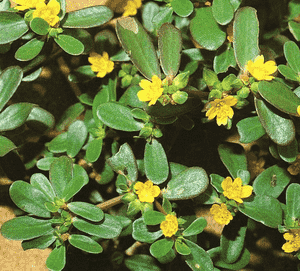
Common purslane (Portulaca oleracea)
Also known as: Pigweed, Red root
Portulaca oleracea, colloquially known as common purslane, is an annual succulent species with reddish stems and tiny yellow, five-petal flowers. It is used for culinary purposes in various parts of the world, most often raw, in salads. Common purslane is also a good companion plant for crops that thrive in moist soils.
Attributes of Common purslane
Images of Common purslane
Quickly Identify Common purslane
Scientific Classification of Common purslane
Planting and Growing of Common purslane
 How to Water Common purslane?
 What Are the Sunlight Requirements for Common purslane?
 What Is the Ideal Temperature Range for Common purslane?
 What Soil is Best for Common purslane?
 How to Fertilize Common purslane?
 How to Prune Common purslane?
 How to Propagate Common purslane plant?
 How to Repot Common purslane plant?
Toxicity of Common purslane
Is Common purslane toxic to cat?
Common purslane (Portulaca oleracea) may appear juicy and appealing to cats, but it's essential to prevent them from nibbling on its leaves, as it is notably toxic! Ingesting even minor quantities of this plant can result in symptoms like stomach discomfort, excessive drooling, and diarrhea. To prevent severe health issues such as kidney failure, promptly seek advice and treatment from a veterinary specialist.
Is Common purslane toxic to dog?
Common purslane is highly poisonous to dogs. If you suspect that your dog has consumed any portion of this plant, it is crucial to take them to a veterinarian immediately. Every part of the common purslane harbors toxins, with the highest concentration found in the leaves, which are the parts most frequently consumed. Signs of toxicity can include profuse salivation, lethargy, dizziness, and muscle tremors. These toxins have the potential to induce serious kidney failure, which can be life-threatening.



