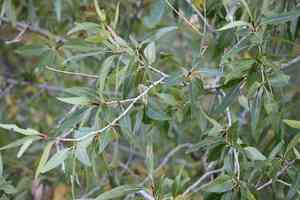
Narrowleaf cottonwood (Populus angustifolia)
Also known as: Narrow-leaved poplar
The tree features a slender form and has the ability to grow closely together in dense groups. Its leaves are a lance shape, displaying a yellow-green hue with edges that are scalloped. In early spring, it generates catkins. The tree's fruit appears as white, fluffy capsules.
In This Article
Attributes of Narrowleaf cottonwood
Lifespan
Perennial
Plant Type
Tree
Plant Height
11 m to 22 m
Spread
6-15 meters
Leaf Color
Green
Flower Size
N/A
Flower Color
N/A (catkins)
Images of Narrowleaf cottonwood
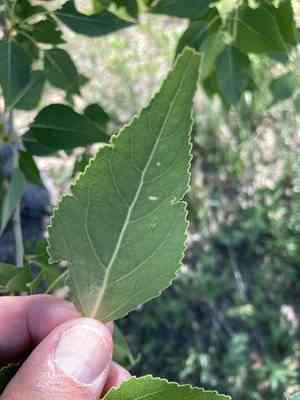
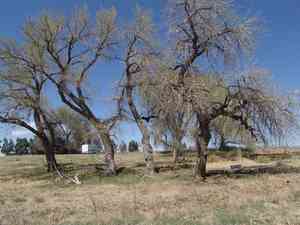
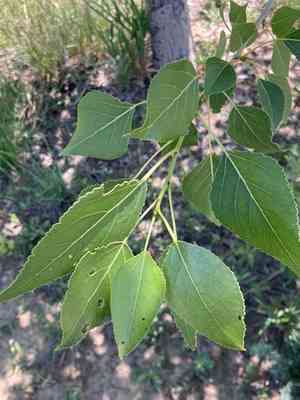
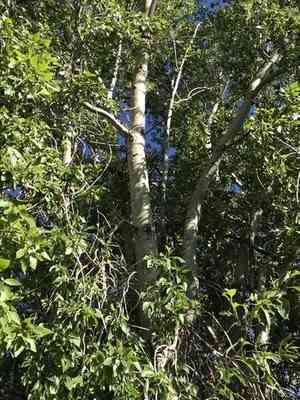
Quickly Identify Narrowleaf cottonwood
1
Populus angustifolia can be identified by its lance-shaped leaves, which are typically 4 to 10 cm long and have finely serrated edges. The bark is smooth and gray on young trees, becoming deeply furrowed on older trees. The tree also produces cottony seeds in late spring to early summer.
Scientific Classification of Narrowleaf cottonwood
Phylum
Vascular plants
Class
Dicotyledons
Order
Malpighiales
Family
Willow
Genus
Populus
Species
Narrowleaf cottonwood
Planting and Growing of Narrowleaf cottonwood
Care Difficulty
Easy
Watering Schedule
Every 3 days
Sunlight Requirements
Full sun
Sunshine Duration
6-10 hours
Ideal Temperature
50-75℉
Soil Type
Potting Mix, Peat Mix
Soil pH
6.5-7.5
Fertilizer Type
Balanced
Pruning Season
Spring, Summer
Pruning Area
Branches, Leaves
Pruning Frequency
Once a year
Repotting Season
Spring
Pot Type
Plastic, Ceramic
 How to Water Narrowleaf cottonwood?
When watering Populus angustifolia, aim to thoroughly soak the soil to a depth where the roots predominantly lie. This typically means delivering about 500 milliliters of water per session, ensuring the soil is moist but not waterlogged. As a deep-rooting tree, it's crucial to avoid letting the water merely surface without penetrating deeply.
What are the symptoms of an underwatered Narrowleaf cottonwood?
›
What should I do if my Narrowleaf cottonwood is not getting enough water?
›
What are the symptoms of an overwatered Narrowleaf cottonwood?
›
How to save an overwatered Narrowleaf cottonwood?
›
 What Are the Sunlight Requirements for Narrowleaf cottonwood?
For optimal growth, Populus angustifolia is best suited to environments with full or partial sun exposure. Ideal lighting boosts photosynthesis, strengthens structures, and enhances the plant's natural resilience against pests and environmental stressors.
How much sunlight does Populus angustifolia need daily?
›
What are some solutions to achieve ideal lighting?
›
What are the benefits of optimal sunlight for the tree?
›
 What Is the Ideal Temperature Range for Narrowleaf cottonwood?
For the growth of Populus angustifolia, an optimal temperature range between 50°F and 75°F is recommended. This range supports active growth, photosynthesis, and overall plant vitality in this species.
 What Soil is Best for Narrowleaf cottonwood?
Populus angustifolia thrives in well-drained soils that prevent waterlogging, promoting healthy root growth and reducing disease risks. Rich in organic matter, this ensures that the Narrowleaf Cottonwood has an ample supply of nutrients for vigorous growth and sustainability. The ability of the soil to retain moisture without becoming waterlogged is crucial for Populus angustifolia, as it prefers consistent moisture levels.
 How to Fertilize Narrowleaf cottonwood?
For Populus angustifolia, it is important to apply fertilizers in moderation. During the growing season, about 100 grams of balanced 10-10-10 fertilizer per mature tree is sufficient. Be cautious not to exceed this amount as over-fertilization can harm the plant.
 How to Prune Narrowleaf cottonwood?
Begin by identifying any dead, diseased, or crossing branches that might impede the growth of healthy limbs. Removing these keeps the tree strong and vibrant. Cut branches at a 45-degree angle, just above a leaf bud or branch junction. This encourages new growth and minimizes the risk of water pooling, which can lead to rot. Periodically step back and evaluate the tree’s form as you prune. This helps ensure you maintain a balanced shape and don't remove too much foliage from one side.
More About Pruning Techniques→
 How to Propagate Narrowleaf cottonwood plant?
1
Collect seeds from mature pods in early spring when they are fully developed but not yet dispersed by wind. Ensure seeds are dry and store them in a cool, dry place until ready to sow.
2
Select healthy stems and cut sections of about 6-8 inches long in early spring. Remove leaves from the lower part to minimize moisture loss and dip into rooting hormone before planting.
3
Plant cuttings in a prepared pot with a mix of peat and perlite. Water them thoroughly and cover with a plastic bag to maintain humidity. Place in a warm, bright area but avoid direct sunlight.
 How to Repot Narrowleaf cottonwood plant?
1
Repotting should occur when you notice the roots circling inside the container or protruding from drainage holes. These signs indicate that the plant has become root-bound, a criterion signaling the necessity to repot. Additionally, if the soil dries out too quickly or the plant’s growth is stunted, it may be time for repotting.
2
Opt for a pot that is one size larger than the current one, ideally with adequate drainage holes. This extra space allows the roots to expand while preventing waterlogging. A pot made from breathable materials such as terracotta can be beneficial, as it helps regulate the moisture content and prevent root rot.
3
Select a loamy, well-draining soil mix to ensure proper root aeration and moisture retention without waterlogging. This soil type helps facilitate nutrient uptake, enriches the plant’s growth, and reduces the risk of diseases often associated with poor drainage.



