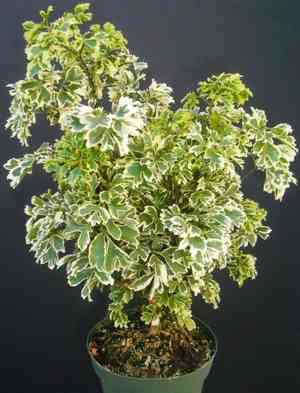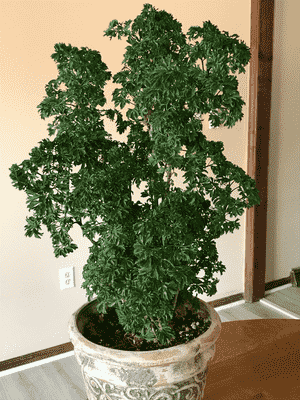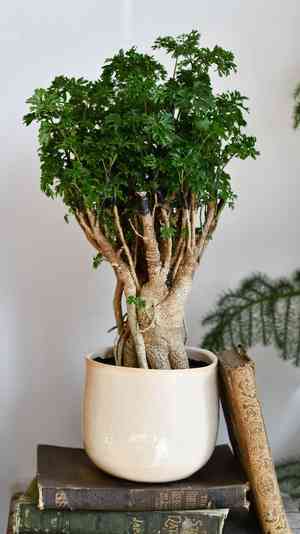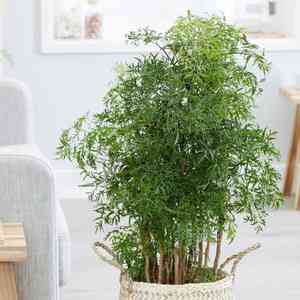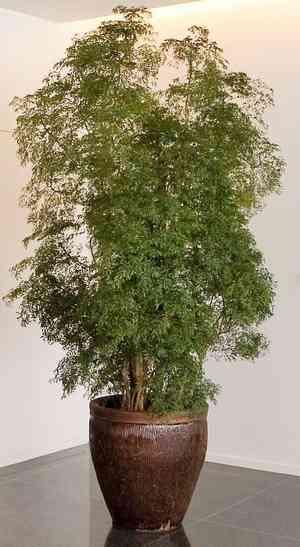
Ming aralia(Polyscias fruticosa)

Ming aralia (Polyscias fruticosa)

Also known as: Ming Aralia, Chinese Panax, Parsley Aralia

The Ming Aralia (Polyscias fruticosa) is a slow-growing houseplant that can attain a height of 1 to 2 meters. It features dark green, glossy leaves and is admired for its intricate, interwoven foliage. Additionally, the plant develops distinct gnarls on its trunk, often where older branches have withered away, adding to its unique charm.

Attributes of Ming aralia

Lifespan
Perennial
Plant Type
Shrub
Plant Height
1 m to 2 m
Spread
60 cm to 90 cm
Leaf Color
Green
Flower Size
15 cm
Flower Color
White Yellow Green Cream Gold

PlantJoy - Identify plants with a snap

Identify and diagnose plants, get toxicity alerts, and explore safety guides for all types of fungi.

Try for Free

Images of Ming aralia

Ming aralia(Polyscias fruticosa)

Quickly Identify Ming aralia

1
Tripennate leaves with serrated edges and lobed margins.
2
Pale yellow to white flowers in small terminal umbels.
3
Distinct elliptic drupes, flattened on both sides.
4
Smooth, flexible stem, reddish-brown with sparse branching.
5
Moderately smooth trunk with even brown bark, lacking texture.

Scientific Classification of Ming aralia

Phylum
Vascular plants
Class
Dicotyledons
Order
Apiales
Family
Ivy
Genus
Aralia
Species
Ming aralia

Planting and Growing of Ming aralia

Care Difficulty
Hard
Watering Schedule
Every 2 days
Sunlight Requirements
Partial sun
Sunshine Duration
4-6 hours
Ideal Temperature
65-75℉
Soil Type
Potting Mix, Peat Mix
Soil pH
6.5-7.5
Fertilizer Type
Balanced
Pruning Season
Spring, Summer
Pruning Area
Branches, Leaves
Pruning Frequency
2 times a year
Repotting Season
Spring
Pot Type
Ceramic, Plastic

water icon How to Water Ming aralia?

Polyscias fruticosa requires approximately 500 milliliters of water per session, ensuring the soil is adequately moist but not waterlogged. This plant thrives in moderate moisture levels, so always let the top inch of soil dry out before the next watering.
What are the symptoms of an underwatered Ming aralia?
What should I do if my Ming aralia is not getting enough water?
What are the symptoms of an overwatered Ming aralia?
How to save an overwatered Ming aralia?
More About Watering Techniques

sunlight icon What Are the Sunlight Requirements for Ming aralia?

Sunlight Requirements: Partial sun
Duration of light: 4 to 6 hours
Polyscias fruticosa thrives best in partial sun conditions, with 4 to 6 hours of diffused or filtered sunlight daily. This balance provides the necessary energy for photosynthesis without risking leaf damage.
What is the ideal lighting condition?
How can I achieve the ideal lighting condition?
What are the benefits of achieving ideal lighting?
More About Sunlight Requirements Techniques

temperature icon What Is the Ideal Temperature Range for Ming aralia?

Ideal Temperature: 65 ~ 75℉
The ideal temperature range for Polyscias fruticosa is between 65°F and 75°F. Within this range, the plant thrives and exhibits optimal growth. The temperatures should be consistent to mimic their natural tropical environment, which provides the stability needed for healthy development.

soil icon What Soil is Best for Ming aralia?

Soil type: Loam, Sandy loam
Soil PH: 6.5 ~ 7.5
Polyscias fruticosa thrives in well-draining soil that prevents waterlogging, which can cause root rot. A soil mix containing a balance of loam and sandy loam caters to this need by allowing excess water to drain away while still retaining enough moisture for the plant's roots. This plant prefers a nutrient-rich soil environment that can support its growth and health. It benefits from soils that are rich in organic matter, providing necessary nutrients and improving soil structure for better root development. While this plant requires good drainage, it also benefits from soil that retains moderate moisture. This balance ensures that the roots have access to water during dry periods without becoming waterlogged, thereby supporting consistent growth. More About Soil

fertilize icon How to Fertilize Ming aralia?

Fertilizer type: Balanced
For Polyscias fruticosa, it's crucial to apply a balanced fertilizer at a rate of 1/4 teaspoon per gallon of water for liquid fertilizers. Solid or slow-release fertilizers should follow package instructions, but generally use around 1/2 tablespoon per square foot of soil. More About Fertilizing Techniques

prune icon How to Prune Ming aralia?

Pruning Time: Spring, Summer, Autumn
Examine the plant for any dead, diseased, or otherwise unhealthy branches and remove these first. Look for branches that are crossing or growing inwards, as these can be cut to improve airflow and aesthetics. Position your pruning shears at a 45-degree angle close to a leaf node, where the branch meets the main stem, and make a clean cut. This encourages fresh growth and minimizes damage to surrounding tissues. Periodically step back from the plant during pruning to assess its shape. This ensures an even, balanced appearance that enhances the plant’s natural form and appeals to the eye. More About Pruning Techniques

propagate icon How to Propagate Ming aralia plant?

Propagate Time: Spring, Early summer
1
Choose a healthy stem with several leaves, ideally about 4-6 inches long. Avoid stems that are flowering, as these may not root as effectively.
2
Trim away the lower leaves from the stem, leaving a few at the top. Dip the cut end in rooting hormone, tapping off excess powder to encourage faster rooting.
3
Insert the cut end into a pot filled with damp potting mix. Push it in about 2-3 inches deep, ensuring the mixture stays lightly moist but not waterlogged.
More About Propagating Techniques

repot icon How to Repot Ming aralia plant?

Repotting frequency: Every 2-3 years
1
Polyscias fruticosa should be repotted when you notice roots growing out of the drainage holes, soil compressing heavily, or when the plant looks like it is consuming water more quickly than usual. These signs indicate that the roots have outgrown their current space, needing a new pot for optimal growth.
2
Select a pot that is 1-2 inches larger in diameter than the current one. Ensure it has sufficient drainage holes to prevent water from sitting at the bottom, which can lead to root rot. A properly sized and well-draining pot will help your plant develop a healthier root system and thrive.
3
Choose a well-draining potting mix that retains some moisture but does not become soggy. Look for blends with peat, perlite, or sand, which provide the ideal environment for Polyscias fruticosa by promoting good root aeration and growth.
More About Repotting Techniques

PlantJoy - Identify plants with a snap

Find the best spots for them to optimize their health, simply using your phone.

Try for Free

Toxicity of Ming aralia

Is Ming aralia toxic to cat?

Ming aralia represents a significant danger to the health of cats, as every part of this plant is poisonous to them. Should a cat accidentally ingest any portion, it may experience physical discomfort as a result. It is crucial to seek immediate veterinary assistance if a cat comes into contact with ming aralia. Quick action can avert more serious health issues, emphasizing the importance for pet owners to respond swiftly when ingestion is suspected.

Is Ming aralia toxic to dog?

Ming aralia is identified as harmful to dogs. When dogs accidentally consume any part of this plant or do so out of curiosity, they risk being poisoned. Given that every part of the ming aralia is toxic, it is essential for dog owners to keep their pets away from the plant entirely. Symptoms of poisoning in dogs may manifest as vomiting, diarrhea, excessive drooling, weakness, and alterations in behavior. Should a dog display any of these symptoms after being exposed to ming aralia, it is crucial to obtain prompt veterinary attention to secure the best possible outcome for the pet.

Identify toxic plants for your safety

Learn which plants are harmful to you and your pets, and make informed choices for a safer home!

Try for Free
WARNING
The judgment on toxicity and danger is for reference only. We DO NOT GUARANTEE any accuracy of such judgment. Therefore, you SHALL NOT rely on such judgment. It is IMPORTANT TO SEEK PROFESSIONAL ADVICE in advance when necessary.
More About Toxic Techniques