
Moving polemonium (Polemonium californicum)
Also known as: California Jacob's ladder
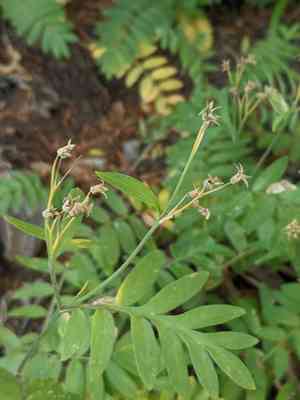
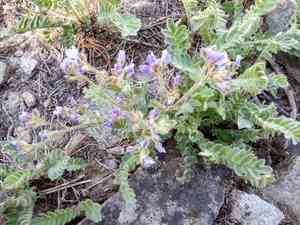
The hairy, glandular rhizomatous perennial herb grows in clumps with several decumbent to erect stems reaching up to 50 centimeters tall. The leaves, which can be as long as 20 centimeters, are compound and consist of multiple pairs of oval to lance-shaped leaflets. Typically, the terminal leaflet is often fused with the preceding pair.
In This Article
Attributes of Moving polemonium
Lifespan
Perennial
Plant Type
Herb
Plant Height
30 cm
Spread
Not typically measured, plant spreads via clusters
Leaf Color
Green
Flower Size
1.5 to 2.5 cm (0.6 to 1 inch)
Flower Color
Blue to purple
Images of Moving polemonium


Quickly Identify Moving polemonium
1
The plant can be identified by its deeply lobed, fern-like leaves and clusters of blue to purple flowers. The flowers typically have five petals and yellow stamens.
Scientific Classification of Moving polemonium
Phylum
Vascular plants
Class
Dicotyledons
Order
Ericales
Family
Phlox
Genus
Jacob's ladders
Species
Moving polemonium
Planting and Growing of Moving polemonium
Care Difficulty
Easy
Watering Schedule
Every 4 days
Sunlight Requirements
Full sun
Sunshine Duration
4-8 hours
Ideal Temperature
65-75℉
Soil Type
Potting Mix, Peat Mix
Soil pH
6.5-7.5
Fertilizer Type
Balanced
Pruning Season
Spring, Summer
Pruning Area
Branches, Leaves
Pruning Frequency
2 times a year
Repotting Season
Spring
Pot Type
Plastic, Ceramic
 How to Water Moving polemonium?
Polemonium californicum thrives with moderate watering. Ensure the soil is evenly moist but not soggy—around 300 milliliters should suffice per watering. Water until the moisture reaches about 3-4 inches deep into the root zone, allowing the plant to access necessary hydration without waterlogging.
What are the symptoms of an underwatered Moving polemonium?
›
What should I do if my Moving polemonium is not getting enough water?
›
What are the symptoms of an overwatered Moving polemonium?
›
How to save an overwatered Moving polemonium?
›
 What Are the Sunlight Requirements for Moving polemonium?
Partial to full sun exposure is ideal, promoting healthy leaf development and vibrant blooms. It ensures better growth metrics and resilience against diseases.
Optimal Light Exposure
›
Implementing Ideal Conditions
›
Benefits of Ideal Lighting
›
 What Is the Ideal Temperature Range for Moving polemonium?
The ideal temperature range for cultivating Polemonium californicum is between 65°F and 75°F. This range provides a comfortable environment for optimal growth, ensuring that the plant can photosynthesize efficiently without undergoing stress induced by temperature fluctuations. Within this range, the plant exhibits robust foliage, vibrant blooms, and healthy root development.
 What Soil is Best for Moving polemonium?
Polemonium californicum thrives in well-draining soil, ensuring that excess water flows away quickly to prevent root rot. This soil type helps maintain healthy root systems by providing proper aeration and moisture balance. This plant prefers soil that retains moderate moisture without becoming waterlogged. Such conditions help maintain plant vitality and promote robust growth, as the roots can easily access both water and oxygen. Enriched soil with abundant organic matter is ideal for this plant. Nutrient-rich substrates support its growth by supplying essential minerals and elements required for photosynthesis and metabolism.
 How to Fertilize Moving polemonium?
Polemonium californicum generally requires a balanced fertilizer with equal parts nitrogen, phosphorus, and potassium. A good rule of thumb is to use a liquid fertilizer diluted to half its strength, applying about 1/4 cup for each plant to avoid unnecessary stress on the roots.
 How to Prune Moving polemonium?
Start by removing any dead or damaged stems with clean, sharp scissors or shears. Focus on the areas that are overcrowded to promote better air and light exposure. Cut just above a leaf node to encourage bushier growth. Avoid cutting too close to the base as it may harm the plant.
More About Pruning Techniques→
 How to Propagate Moving polemonium plant?
1
Start by either collecting seeds from existing plants or purchasing them from a reliable supplier. Ensure seeds are dry and clean before planting to promote healthy germination.
2
Use a well-draining soil mix suitable for seedlings. This typically involves a mix of potting soil, sand, and perlite. Make sure the soil is moistened but not waterlogged to encourage seed sprouting.
3
Scatter seeds over the prepared soil surface and lightly press them in. Keep seeds about an inch apart to give them space to grow. Cover lightly with soil or vermiculite, then water gently.
 How to Repot Moving polemonium plant?
1
Look for signs such as roots protruding from drainage holes, soil compacting, or stunted growth; these indicate that it's time to give your Polemonium californicum a roomier home.
2
Opt for a pot 1-2 inches larger in diameter than the current one. This will provide ample space for root expansion without overwhelming the plant, ensuring steady growth and stability.
3
Choose a sandy loam soil with excellent drainage properties. This type of soil prevents waterlogging and promotes healthy root development, which is crucial for a thriving plant.
Learn More About Moving polemonium Diseases
Anthracnose
Bacterial Leaf Spot
Bacterial Wilt
Crown Gall
Cyst Nematode
Damping-off
Downy Mildew
Drought Stress
Fusarium Wilt
Gray Mold
Leaf Curl
Leaf Spot
Mosaic
Nutrient Deficiency
Nutrient Toxicity
Powdery Mildew
Root Rot
Root-knot Nematode
Rusts
Sooty Mold
Spider Mites
Temperature Stress
Thrips Damage
White Mold



