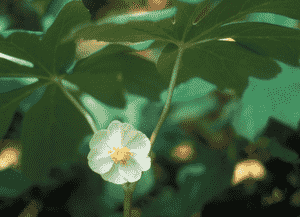
Mayapple(Podophyllum peltatum)

Mayapple (Podophyllum peltatum)

Also known as: American mandrake, Ground lemon

The mayapple (Podophyllum peltatum) is a distinctive perennial plant native to North America, characterized by its umbrella-like leaves and single white flower. This plant typically blooms in the spring, and its name reflects its early blooming period in the Northern Hemisphere and the apple-like appearance of its flowers.

**Characteristics:**
- **Leaves:** Large, umbrella-shaped, typically two per plant, can be toxic.
- **Flower:** A solitary white bloom, appearing in spring.
- **Fruit:** Yellow when fully ripe, edible in this state, but toxic when unripe.

**Potential Uses:**
- **Culinary:** The ripe fruit can be used in jams and jellies.
- **Medicinal:** Contains podophyllotoxin, utilized in anti-cancer therapies and wart treatments.

**Dangers:**
- **Toxicity:** Unripe fruit and other plant parts are poisonous, potentially causing symptoms like vomiting, diarrhea, and even coma.
- **Skin Irritation:** The sap can cause skin irritation upon contact.

Proper identification and careful handling are essential to safely use the mayapple plant, given its toxic properties.

Attributes of Mayapple

Lifespan
Perennial
Plant Type
Herb
Plant Height
30 cm to 61 cm
Spread
25 cm to 30 cm
Leaf Color
Green
Flower Size
2 cm to 6 cm
Flower Color
White Pink

PlantJoy - Identify plants with a snap

Identify and diagnose plants, get toxicity alerts, and explore safety guides for all types of fungi.

Try for Free

Images of Mayapple

Mayapple(Podophyllum peltatum)

Quickly Identify Mayapple

1
Palmately lobed leaves akin to an umbrella, 12 inches (30 cm) across.
2
Solitary white flowers with 6-9 waxy petals, 3 inches (7.6 cm) wide, difficult to spot.
3
Green fruit maturing to golden yellow, oval, 1.5-2 inches (3.8-5.1 cm) long.
4
Smooth, erect stem from underground rhizomes, 12-18 inches (30-45 cm) tall.
5
Fleshy, greenish fruit resembling a small lemon in size when ripe.

Scientific Classification of Mayapple

Phylum
Vascular plants
Class
Dicotyledons
Order
Ranunculales
Family
Barberry
Genus
Mayapple
Species
Mayapple

Planting and Growing of Mayapple

Care Difficulty
Easy
Watering Schedule
Every 3 days
Sunlight Requirements
Full shade
Sunshine Duration
4-8 hours
Ideal Temperature
60-75℉
Soil Type
Potting Mix, Peat Mix
Soil pH
5.5-7
Fertilizer Type
Balanced
Pruning Season
Spring, Summer
Pruning Area
Branches, Leaves
Pruning Frequency
2 times a year
Repotting Season
Spring
Pot Type
Plastic, Ceramic

water icon How to Water Mayapple?

For Podophyllum peltatum, when watering, ensure the soil is moist but not waterlogged. Aim for approximately 250 ml of water per session, which allows the water to reach the plant's roots efficiently and maintain adequate hydration without causing root rot.
What are the symptoms of an underwatered Mayapple?
What should I do if my Mayapple is not getting enough water?
What are the symptoms of an overwatered Mayapple?
How to save an overwatered Mayapple?
More About Watering Techniques

sunlight icon What Are the Sunlight Requirements for Mayapple?

Sunlight Requirements: Full shade, Partial sun
Duration of light: 2 to 6 hours daily
Podophyllum peltatum ideally grows in partial sun to full shade environments, mimicking forest floors. This ensures well-balanced growth, vigorous foliage, and a healthy lifecycle.
What is the ideal lighting for Podophyllum peltatum?
What are solutions to achieve ideal lighting?
What are the benefits of providing ideal lighting?
More About Sunlight Requirements Techniques

temperature icon What Is the Ideal Temperature Range for Mayapple?

Ideal Temperature: 60 ~ 75℉
Podophyllum peltatum thrives best in temperatures between 60°F and 75°F. This range allows for optimal physiological functions, such as photosynthesis and nutrient uptake. Maintaining these temperatures ensures robust growth and an extended growing season for the plant.

soil icon What Soil is Best for Mayapple?

Soil type: Loam, Sandy loam
Soil PH: 5.5 ~ 7
Podophyllum peltatum thrives in soil that retains moisture well. Loamy and sandy loam soils provide the perfect balance of draining excess water while maintaining necessary moisture levels, ensuring the plant remains hydrated without drowning its roots. This plant flourishes in nutrient-rich soil that consistently supplies the essential minerals. Loamy soil naturally possesses high organic content, enhancing fertility which supports healthy growth and a more robust plant stature. Effective drainage prevents root rot in Podophyllum peltatum. Sandy loam's structure allows just enough porosity to let excess water escape, reducing the risk of waterlogged roots while maintaining adequate moisture levels. More About Soil

fertilize icon How to Fertilize Mayapple?

Fertilizer type: Balanced
For Podophyllum peltatum, apply a diluted liquid fertilizer mix at one-quarter strength to ensure that you don't overwhelm the plant’s sensitive root system. Similarly, when using slow-release granules, apply lightly around the base, ensuring not to over-saturate the soil with nutrients. More About Fertilizing Techniques

prune icon How to Prune Mayapple?

Pruning Time: Spring, Summer
Start by identifying any dead or diseased leaves. These can be removed first as they offer no benefit to the plant and can potentially harbor pests or diseases. Use your shears to cut back stems that have grown too long or are crowding other plants. Aim for a balanced shape, allowing all foliage to receive sufficient sunlight and air. After pruning, gather all trimmed leaves and stems to maintain a tidy garden and reduce the risk of pest infestations around the plant's base. More About Pruning Techniques

propagate icon How to Propagate Mayapple plant?

Propagate Time: Spring, Late spring
1
To propagate by seed, collect ripe seeds in late summer and store them in a cool, dry place until spring. In early spring, soak seeds overnight to encourage germination before planting them in trays filled with well-drained potting mix.
2
For division propagation, wait until early spring when the plant is still dormant. Carefully dig up the rhizome clumps and use a sharp knife or spade to divide them into sections, each containing at least one bud. Plant the divisions in well-prepared soil immediately.
3
Once seedlings have developed a few leaves, they should be transplanted into larger pots or directly into the garden, ensuring they have partial shade and well-drained soil to thrive.
More About Propagating Techniques

repot icon How to Repot Mayapple plant?

Repotting frequency: Every 2-3 years
1
Look for signs like roots peeking through drainage holes or slowed growth. It's ideal to repot Podophyllum peltatum in spring or autumn when the plant is not under stress from extreme temperatures. These times allow the plant to establish roots before peak growing season or dormancy.
2
Select a pot that is one size larger than the current one. Ensure it has adequate drainage holes to prevent waterlogging and support healthy root growth. The slight size increase provides room for roots to expand without excess soil retaining too much moisture.
3
Use rich, well-drained soil to support healthy growth. A mix with compost and sand helps provide nutrients while ensuring proper drainage. This blend mimics Podophyllum's natural habitat, promoting robust development and preventing root rot.

PlantJoy - Identify plants with a snap

Find the best spots for them to optimize their health, simply using your phone.

Try for Free

Toxicity of Mayapple

Is Mayapple toxic to humans?

Mayapple, a fascinating plant frequently discovered in wooded areas, possesses leaves and roots that are extremely poisonous.

Is Mayapple toxic to cat?

Every part of the mayapple (Podophyllum peltatum) harbors potent toxins that can cause serious illness in cats upon ingestion. Therefore, it's crucial to prevent your cat from roaming in wooded regions where these plants might thrive. Severe vomiting and diarrhea may result in dehydration, so it's advisable to contact your veterinarian if your cat appears unwell after exploring areas populated by mayapple.

Is Mayapple toxic to dog?

Mayapples possess a moderate level of toxicity for canines. Every component of the plant harbors a compound that can induce intense irritation upon ingestion or physical contact. Dogs that come into contact with its foliage may suffer from skin rashes or swelling around the muzzle and eyes. Consuming mayapples can lead to symptoms such as profuse drooling, vomiting, diarrhea, and abdominal cramping. Fortunately, instances of mayapple poisoning are seldom lethal, as a substantial quantity of the plant needs to be consumed to provoke a serious reaction, and its taste is notably bitter.

Identify toxic plants for your safety

Learn which plants are harmful to you and your pets, and make informed choices for a safer home!

Try for Free
WARNING
The judgment on toxicity and danger is for reference only. We DO NOT GUARANTEE any accuracy of such judgment. Therefore, you SHALL NOT rely on such judgment. It is IMPORTANT TO SEEK PROFESSIONAL ADVICE in advance when necessary.
More About Toxic Techniques

