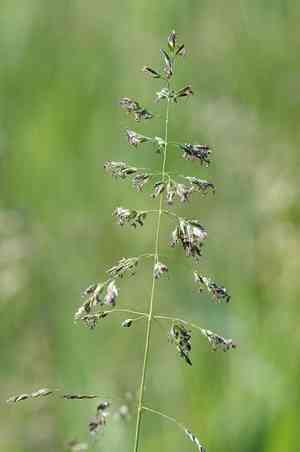
Rough bluegrass (Poa trivialis)
Also known as: Rough meadow-grass, Roughstalk bluegrass
Rough bluegrass (*Poa trivialis*) is a perennial grass well-suited to cool, moist environments. It commonly inhabits floodplains, forests, meadows, fields, and the edges of rivers and lakes. This grass is notable for its flowers, which appear from late winter to early spring. Unlike Kentucky bluegrass, rough bluegrass is distinguished by its rougher sheaths, giving it its name.
In This Article
Attributes of Rough bluegrass
Lifespan
Perennial
Plant Type
Grass
Plant Height
8 cm to 8 cm
Spread
3 m
Leaf Color
Green
Flower Size
0.2-0.3 cm
Flower Color
White Green Purple
Images of Rough bluegrass
Quickly Identify Rough bluegrass
1
Smooth, glossy leaves measuring 2-6 inches (5-15 cm) with boat-shaped tips.
2
Distinctive purple-green spikelets in pyramidal inflorescence.
3
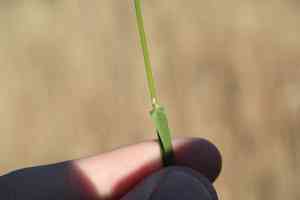
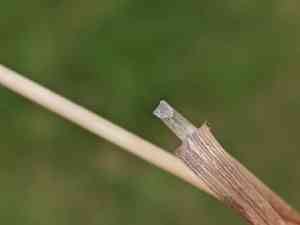
Membranous, prominent ligule crucial for identification.
4
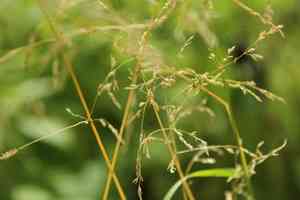
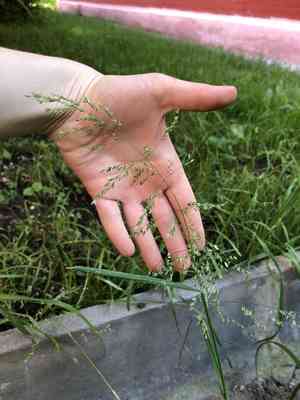
Delicate, minute greenish or purplish flowers in open panicles.
5
Dry, papery caryopses within slightly flattened spikelet fruit structure.
Scientific Classification of Rough bluegrass
Phylum
Vascular plants
Class
Monocotyledons
Order
Poales
Family
Grass
Genus
Meadow-grasses
Species
Rough bluegrass
Planting and Growing of Rough bluegrass
Care Difficulty
Easy
Watering Schedule
Every 4 days
Sunlight Requirements
Partial sun
Sunshine Duration
4-6 hours
Ideal Temperature
60-75℉
Soil Type
Potting Mix, Peat Mix
Soil pH
6.5-7.5
Fertilizer Type
Balanced
Pruning Season
Spring, Summer
Pruning Area
Branches, Leaves
Pruning Frequency
2 times a year
Repotting Season
Spring
Pot Type
Plastic, Ceramic
 How to Water Rough bluegrass?
Poa trivialis thrives best with consistent and moderate watering. Each time you water it, aim for about 250 milliliters. The goal is to moisten the soil uniformly without letting it get soggy. Ensuring the soil is evenly moist but not drenched prevents root rot and promotes healthy growth.
What are the symptoms of an underwatered Rough bluegrass?
›
What should I do if my Rough bluegrass is not getting enough water?
›
What are the symptoms of an overwatered Rough bluegrass?
›
How to save an overwatered Rough bluegrass?
›
 What Are the Sunlight Requirements for Rough bluegrass?
Partial sun to full shade suits Poa trivialis, providing benefits such as optimal growth, rich color, and reduced stress. It maintains plant vitality and creates scenic verdant spaces when well-lit but not sun-drenched.
What is the ideal lighting condition?
›
How can you achieve the ideal lighting condition?
›
What benefits does the ideal lighting condition provide?
›
 What Is the Ideal Temperature Range for Rough bluegrass?
The ideal temperature range for growing Poa trivialis is between 60°F and 75°F. This range provides optimal conditions for seed germination, root development, and healthy foliage. In these temperatures, the plant efficiently carries out photosynthesis, respiration, and nutrient uptake, leading to vigorous growth and establishing a dense turf.
 What Soil is Best for Rough bluegrass?
Poa trivialis thrives in soil that retains moisture well. Loam and clay soils are ideal because they have balanced water retention capacities, ensuring the plant remains hydrated without becoming waterlogged. This helps in maintaining lush, green foliage. The grass requires a nutrient-rich soil that provides essential minerals such as nitrogen, phosphorus, and potassium. This nutrient availability promotes vigorous growth and helps the plant develop a strong root system. Though Poa trivialis prefers moist conditions, it should also be planted in well-draining soils to prevent root rot. Sandy loam ensures good drainage while still maintaining adequate moisture for the plant.
 How to Fertilize Rough bluegrass?
For Poa trivialis, use a balanced liquid fertilizer diluted to half strength, applying approximately 10-15 ml per square meter. For solid, slow-release fertilizers, apply about 50 grams per square meter annually.
 How to Prune Rough bluegrass?
Begin by adjusting your mower to a height of 1 to 2 inches to prevent stress on the grassroots. Mow in varying patterns each time to avoid soil compaction and always use sharp blades for clean cuts. Collect the grass clippings unless you're employing a mulching mower to return nutrients to the soil. Ensure your trimmer reaches the difficult-to-mow areas for a uniform appearance.
 How to Propagate Rough bluegrass plant?
1
Fill the seed tray with a finely mixed soil. Ensure that the soil is evenly spread and slightly moistened to create an optimal environment for seed germination.
2
Scatter the Poa trivialis seeds thinly over the surface of the prepared tray. Aim to distribute them evenly to avoid overcrowding, which can hinder germination and growth.
3
Once the seeds are sown, lightly cover them with a thin layer of soil. Regularly mist the soil surface to keep it moist but avoid waterlogging, which can cause the seeds to rot.
 How to Repot Rough bluegrass plant?
1
Repot Poa trivialis when you notice roots emerging from drainage holes or the plant is becoming crowded in its current pot. These are clear signals that the plant's growth is restricted and it needs more room. Spring and early summer are ideal times as the plant enters its active growth phase.
2
Select a pot that is 1-2 inches larger in diameter than the current one to allow space for growth. Ensure the pot has adequate drainage holes to prevent waterlogging, which can lead to root rot. A pot that matches the aesthetic of your space can also enhance the beauty of your Poa trivialis.
3
Opt for a well-draining loamy mix to ensure that excess water does not linger around the roots, which can cause rot. The soil's ability to retain moisture yet drain efficiently is crucial for maintaining root health and promoting vigorous growth.


