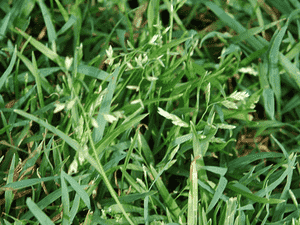
Annual bluegrass (Poa annua)
Also known as: Wintergrass, Low spear grass
Annual bluegrass, scientifically named Poa annua, is a low-growing species native to Europe and Asia. The term "Poa" comes from the Greek word for fodder grass, while "annua" indicates its annual growth cycle. Commonly referred to as both annual bluegrass and simply poa, it reflects its origins and characteristics.
In This Article
Attributes of Annual bluegrass
Lifespan
Annual, Biennial
Plant Type
Grass
Plant Height
15 cm to 25 cm
Spread
20 cm
Leaf Color
Green
Flower Size
2.5 cm
Flower Color
White Green Yellow
Images of Annual bluegrass
Quickly Identify Annual bluegrass
1
Prow-shaped leaf tip distinguishes annual bluegrass from other grass species.
2
Whitish inflorescence atop slender stalks enhances annual bluegrass's recognition.
3
Stalked, awnless spikelets with pale green flowers characterize annual bluegrass's blooms.
4
Distinctive 'tramlines' and 'boat-shaped tips' mark annual bluegrass's smooth, green leaves.
5
Transverse wrinkles and smooth texture highlight annual bluegrass's keeled leaves.
Scientific Classification of Annual bluegrass
Phylum
Vascular plants
Class
Monocotyledons
Order
Poales
Family
Grass
Genus
Meadow-grasses
Species
Annual bluegrass
Planting and Growing of Annual bluegrass
Care Difficulty
Easy
Watering Schedule
Every 8 days
Sunlight Requirements
Full sun
Sunshine Duration
6-8 hours
Ideal Temperature
50-75℉
Soil Type
Potting Mix, Peat Mix
Soil pH
6.5-7.5
Fertilizer Type
Balanced
Pruning Season
Spring, Summer
Pruning Area
Branches, Leaves
Pruning Frequency
2 times a year
Repotting Season
Spring
Pot Type
Plastic, Ceramic
 How to Water Annual bluegrass?
The bluegrass, Poa annua, thrives on consistent moisture, but not saturation. Aim for 100 ml of water per session, ensuring the soil is moist but never waterlogged. The key is to maintain even moisture throughout its root zone without allowing water to pool.
What are the symptoms of an underwatered Annual bluegrass?
›
What should I do if my Annual bluegrass is not getting enough water?
›
What are the symptoms of an overwatered Annual bluegrass?
›
How to save an overwatered Annual bluegrass?
›
 What Are the Sunlight Requirements for Annual bluegrass?
Poa annua prefers a range of partial to full sun exposure. Ideal light promotes vigorous growth, lush green color, and enhances disease resistance, ensuring the lawn remains healthy and visually appealing.
More About Sunlight Requirements Techniques→
What is the ideal amount of sunlight for Poa annua?
›
How can I ensure Poa annua gets the perfect amount of light?
›
What are the benefits of providing ideal lighting for Poa annua?
›
 What Is the Ideal Temperature Range for Annual bluegrass?
Poa annua thrives best in temperatures ranging from 50°F to 75°F. Within this range, the plant exhibits robust growth, lush foliage, and resilience against pests and diseases. The moderate temperatures promote efficient photosynthesis and nutrient uptake, ensuring a healthy development.
 What Soil is Best for Annual bluegrass?
Poa annua thrives in well-draining soils, which prevent waterlogging. Good drainage promotes healthy root development and reduces the risk of root rot, ensuring the plant's overall vigor. A nutrient-rich soil provides essential macro and micronutrients crucial for the growth and health of Poa annua. A well-fed plant exhibits lush green leaves and robust growth. Poa annua requires soil that retains adequate moisture without becoming overly saturated. Consistent moisture levels support the plant during dry spells and promote continuous growth.
 How to Fertilize Annual bluegrass?
For Poa annua, ensure a balanced nitrogen-rich fertilizer is used, typically at a rate of 0.1 pounds of nitrogen per 1,000 square feet. It’s essential to avoid excessive application as this can harm the plant and the surrounding ecosystem.
 How to Prune Annual bluegrass?
Prune Poa annua every two weeks for optimal growth, focusing on the primary growing seasons of spring, summer, and autumn. Regular pruning at these times encourages denser turfs and prevents excessive seeding. Begin by removing any damaged or diseased leaves first. Hold the scissors or clippers at a slight angle to ensure clean cuts. Gradually prune across the patch using steady and even strokes, following the curvature of the ground for an even appearance.
More About Pruning Techniques→
 How to Propagate Annual bluegrass plant?
1
Fill the seed tray with a mixture of potting soil and compost. Level the surface and gently press down to create a firm base for the seeds. Ensure the soil is well-draining to prevent mold and fungus.
2
Scatter the Poa annua seeds evenly over the surface of the soil in the seed tray. Cover them lightly with a thin layer of soil, approximately 1/8 inch thick. This will protect the seeds while allowing them to receive sufficient light.
3
Use a spray bottle to mist the newly sown seeds gently. Avoid pouring water directly onto the soil to prevent displacing the seeds. Keep the soil consistently moist but not saturated until the seeds germinate.
 How to Repot Annual bluegrass plant?
1
Poa annua indicates its need for repotting through overcrowded roots pushing against the pot's sides. Another sign is if water drains too quickly, signalling depleted soil. Ideally, repot during spring or early summer when growth is active, ensuring the plant adapts swiftly.
2
Select a pot that is one size larger than the current one with good drainage holes. This encourages healthy root growth and prevents waterlogging, which could potentially harm Poa annua.
3
Use a well-draining potting mix rich in organic matter. This ensures adequate aeration and prevents root rot, providing Poa annua with a stable environment for optimal growth.



