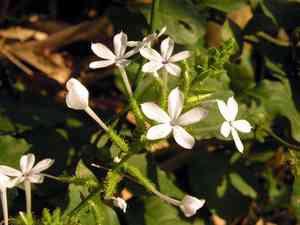
Plumbago (Plumbago) (Plumbago)
Also known as: Leadwort, Skyflower
Plumbago plants, belonging to a small group of warm temperate and tropical species, vary from small herbaceous forms to large shrubs. Known for their attractive clusters of vibrant flowers, plumbago are popular ornamental choices in gardens and parks, especially in regions with mild climates. They flourish in full sun, well-drained soil, and moderate to high humidity, and can tolerate light frost but require protection from severe cold.
In This Article
Attributes of Plumbago (Plumbago)
Lifespan
Perennial
Plant Height
3-10 feet
Spread
2-4 feet
Leaf Color
Green
Flower Size
1 inch
Flower Color
Sky blue, white
Images of Plumbago (Plumbago)
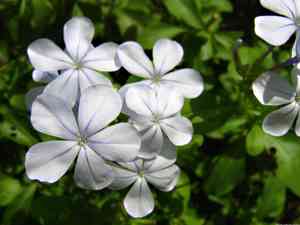
Quickly Identify Plumbago (Plumbago)
1
Plumbago can be identified by its sky blue or white flowers that form in clusters, alongside its long, thin stems and green, oblong leaves.
Scientific Classification of Plumbago (Plumbago)
Phylum
Magnoliophyta
Class
Magnoliopsida
Order
Caryophyllales
Family
Plumbaginaceae
Genus
Plumbago
Planting and Growing of Plumbago (Plumbago)
Care Difficulty
Easy
Watering Schedule
Every 4 days
Sunlight Requirements
Full sun
Sunshine Duration
4-6 hours
Ideal Temperature
65-75℉
Soil Type
Potting Mix, Peat Mix
Soil pH
6.5-7.5
Fertilizer Type
Balanced
Pruning Season
Spring, Summer
Pruning Area
Branches, Leaves
Pruning Frequency
2 times a year
Repotting Season
Spring
Pot Type
Plastic, Ceramic
 How to Water Plumbago (Plumbago)?
Plumbago, or leadwort, thrives with a balance of moisture. Watering should saturate the root zone without leaving standing water. Ensure the potting mix is uniformly damp, but not soggy, allowing the soil to dry slightly between cycles.
What are the symptoms of an underwatered Plumbago (Plumbago)?
›
What should I do if my Plumbago (Plumbago) is not getting enough water?
›
What are the symptoms of an overwatered Plumbago (Plumbago)?
›
How to save an overwatered Plumbago (Plumbago)?
›
 What Are the Sunlight Requirements for Plumbago (Plumbago)?
Plumbago grows best in full to partial sun, ideally 6 to 8 hours per day, fostering prolific flowering and robust health. Adequate sunlight reduces stress and pest problems, enhancing overall plant resilience.
Optimal Sun Exposure
›
Achieving Ideal Lighting
›
Benefits of Ideal Sunlight
›
 What Is the Ideal Temperature Range for Plumbago (Plumbago)?
The ideal temperature range for growing Plumbago is between 65°F and 75°F. This range supports optimal growth and blooming conditions by providing the warmth necessary for photosynthesis and energy production without stressing the plant. Maintaining temperatures in this range ensures that Plumbago thrives in a stable environment that mimics its natural Mediterranean climate.
 What Soil is Best for Plumbago (Plumbago)?
Plumbago thrives best in well-draining soil as it prevents waterlogging around the roots, which can lead to root rot. Ensuring the soil drains efficiently helps maintain optimal root health and vigorous growth. This plant benefits from moderate fertility levels in the soil, providing essential nutrients that support vibrant flowering. Fertile soil enhances plank vitality without overwhelming it with excessive nutrients. Maintaining a soil pH between 6.5 and 7.5 allows Plumbago to optimally absorb essential nutrients, ensuring lush growth and prolific blooming. Suitable pH levels aid in keeping the plant healthy and robust.
 How to Fertilize Plumbago (Plumbago)?
For Plumbago, apply a balanced liquid fertilizer diluted to half strength every two weeks during the growing season. For slow-release granular fertilizers, use approximately 1/4 cup per plant annually. This provides a steady supply of nutrients without overwhelming the plant.
 How to Prune Plumbago (Plumbago)?
Start by removing any dead or diseased branches with clean, sharp pruning shears. Trim back any overly long or leggy stems to maintain a neat shape. Always cut just above a leaf node or a branching point to encourage new growth. Ensure not to remove more than one-third of the plant at any single time to prevent stress. To shape your Plumbago, think about the desired form and systematically trim around the plant to achieve symmetry. Plumbago can be shaped into bushes, hedges, or even trellises, so adjust your approach based on your desired outcome. Regular shaping will help maintain its structure and promote a lush, full appearance. After pruning, water the Plumbago adequately to help it recover. This ensures that the plant gets enough moisture to support new growth. Applying a balanced fertilizer can also boost regrowth, helping the plant to quickly recover from the pruning session.
 How to Propagate Plumbago (Plumbago) plant?
1
Select healthy, non-flowering stems and cut segments around 4-6 inches long. Remove the leaves from the lower half of the cutting to reduce water loss and promote growth. Dip the cut end in rooting hormone before planting.
2
Plant the prepared cuttings into a pot filled with a well-draining growing medium. Ensure that at least 2-3 nodes are below the surface of the medium. Water the cuttings lightly to settle the soil around them.
3
Place the potted cuttings in a warm, bright location away from direct sunlight. Maintain humidity around the cuttings by covering the pot with a plastic bag. Monitor soil moisture and avoid waterlogging the medium.
 How to Repot Plumbago (Plumbago) plant?
1
Plumbago should be repotted when you notice roots growing through the drainage holes or the plant appears top-heavy, signaling the pot is overcrowded. Alternatively, slower growth and wilting can indicate that the roots have run out of room to expand. Spring, when the plant resumes active growth, is an ideal time.
2
Select a pot that is one size larger than the current one for Plumbago. Ensure it has good drainage holes to prevent waterlogging, which can lead to root rot. A pot that provides stability to an otherwise top-heavy plant will offer the best support and encourage healthy growth.
3
Opt for a well-draining potting mix rich in organic matter to keep Plumbago thriving. A sandy soil mix or one with added perlite or vermiculite will improve drainage, preventing the roots from sitting in water and promoting healthy development.
Toxicity
ingestion, skin contact
WARNING
The judgment on toxicity and danger is for reference only. We DO NOT GUARANTEE any accuracy of such judgment. Therefore, you SHALL NOT rely on such judgment. It is IMPORTANT TO SEEK PROFESSIONAL ADVICE in advance when necessary.
Learn More About Plumbago (Plumbago) Diseases
Anthracnose
Bacterial Leaf Spot
Black Spot
Chemical Injury
Crown Gall
Damping-off
Downy Mildew
Drought Stress
Fusarium Wilt
Gray Mold
Leaf Curl
Leaf Spot
Mosaic
Nutrient Deficiency
Nutrient Toxicity
Powdery Mildew
Root Rot
Root-knot Nematode
Rusts
Sooty Mold
Spider Mites
Temperature Stress
Thrips Damage
White Mold

