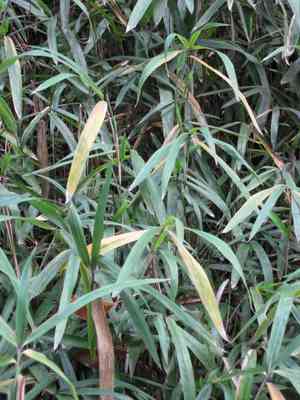
Dwarf white-stripe bamboo (Pleioblastus fortunei)
Also known as: Pygmy bamboo, Running bamboo, Pigmy bamboo
The stalks typically grow to a height ranging from 10 to 30 centimeters, though they can occasionally reach up to 80 centimeters. They have a diameter of about 1 to 2 millimeters. The internodes are short and smooth, while the nodes are either flat or slightly thicker. The culm sheaths remain on the plant and are hairless. Generally, branches are either absent or there is one branch per node. Each branch or stalk usually produces four to seven leaves.
In This Article
Attributes of Dwarf white-stripe bamboo
Lifespan
Perennial
Plant Type
Grass
Plant Height
61 cm to 1.2 m
Spread
90 cm to 1.2 m
Leaf Color
Variegated Green White Brown
Flower Size
N/A, not known for its flowers
Flower Color
N/A, not known for its flowers
Images of Dwarf white-stripe bamboo
Quickly Identify Dwarf white-stripe bamboo
1
Distinctive variegated leaves with green and white stripes.
2
Zig-zag pattern on smooth stems that may turn yellow.
3
Leaves measure 4-7 inches (10-18 cm) with pointed tips.
4
Small, yellowish-green flowers in inconspicuous clusters.
5
Smooth textured leaves with prominent parallel veins.
Scientific Classification of Dwarf white-stripe bamboo
Phylum
Vascular plants
Class
Monocotyledons
Order
Grasses, sedges and allies
Family
Grass
Genus
Dwarf bamboo
Species
Dwarf white-stripe bamboo
Planting and Growing of Dwarf white-stripe bamboo
Care Difficulty
Easy
Watering Schedule
Every 4 days
Sunlight Requirements
Partial sun
Sunshine Duration
4-8 hours
Ideal Temperature
60-75℉
Soil Type
Potting Mix, Peat Mix
Soil pH
6.5-7.5
Fertilizer Type
Balanced
Pruning Season
Spring, Summer
Pruning Area
Branches, Leaves
Pruning Frequency
2 times a year
Repotting Season
Spring
Pot Type
Plastic, Ceramic
 How to Water Dwarf white-stripe bamboo?
Pleioblastus fortunei, commonly known as Dwarf Bamboo, requires a moderate amount of water. Ensure that each watering session results in the soil being thoroughly moist, to a depth of several inches, without causing waterlogging. A good rule of thumb is to provide around 500 ml of water per session, adjusting based on temperature and humidity.
What are the symptoms of an underwatered Dwarf white-stripe bamboo?
›
What should I do if my Dwarf white-stripe bamboo is not getting enough water?
›
What are the symptoms of an overwatered Dwarf white-stripe bamboo?
›
How to save an overwatered Dwarf white-stripe bamboo?
›
 What Are the Sunlight Requirements for Dwarf white-stripe bamboo?
Partial sun to full shade, where the plant avoids direct midday sun. Enjoying this light range enhances its foliage color and growth rate, allowing Pleioblastus fortunei to thrive.
More About Sunlight Requirements Techniques→
What is the best environment?
›
How to ensure optimal exposure?
›
What are the benefits of ideal lighting?
›
 What Is the Ideal Temperature Range for Dwarf white-stripe bamboo?
For Pleioblastus fortunei, maintaining an ideal temperature range is crucial to ensure optimal growth and development. This plant thrives best in environments where the temperature remains comfortably between 60 and 75 degrees Fahrenheit. This temperature range allows for effective photosynthesis and nutrient absorption, promoting healthy foliage and stem growth. Ensuring temperatures do not fall below or rise above these levels can help prevent stress and damage to the plant.
 What Soil is Best for Dwarf white-stripe bamboo?
Pleioblastus fortunei thrives in well-drained soils, preventing root rot and waterlogging. A soil mix preventing compaction allows the roots to access needed oxygen, promoting healthy growth. This plant favors soils with moderate fertility. Nutritious soil provides essential nutrients, supporting vibrant foliage and robust structure without the risk of nutrient burn. The ability to retain adequate moisture while ensuring excess water drains away is crucial. This balance keeps the plant hydrated and nourished, enhancing resilience against drought.
 How to Fertilize Dwarf white-stripe bamboo?
For Pleioblastus fortunei, apply a balanced liquid fertilizer diluted to half strength during the growing season. Use approximately 1 to 2 gallons per 100 square feet. Over-fertilizing can lead to salt build-up in the soil, so it’s best to err on the side of caution.
 How to Prune Dwarf white-stripe bamboo?
Begin by identifying dead or damaged canes and cutting them back to ground level to maintain the plant’s vitality. Use sharp, clean pruning shears to avoid disease transmission. Focus on thinning out crowded areas by removing the oldest canes to allow sunlight and air to penetrate the interior. Aim for a tidy, uniform appearance by following the natural contour of the plant.
More About Pruning Techniques→
 How to Propagate Dwarf white-stripe bamboo plant?
1
Choose a mature, healthy clump of Pleioblastus fortunei that is free from disease and pest issues. This helps ensure the vitality of the new divisions.
2
Carefully use a spade to dig around the perimeter of the plant, loosening the root ball from the soil. Then, gently lift it out and use the spade or shears to divide the clump into sections, ensuring each section has both roots and shoots.
3
Replant the divisions promptly into their new locations, ensuring they are planted at the same depth as the original plant. Water thoroughly to help settle the soil and reduce transplant stress.
 How to Repot Dwarf white-stripe bamboo plant?
1
Pleioblastus fortunei indicates it's time for repotting when roots begin to grow out of the pot's drainage holes, signifying rootbound conditions. Another sign includes a noticeable reduction in the plant’s growth rate. Additionally, if the plant requires frequent watering as soil seems to dry out quickly, it's a sign the plant may benefit from a repotting session.
2
Select a pot that's only one size larger than the current pot to encourage healthy growth without overwhelming the plant. Ensure the pot has ample drainage holes to prevent waterlogging, which can lead to root rot. The material of the pot, whether ceramic or plastic, must suit your climate, with ceramics promoting breathability and plastics retaining moisture in arid climates.
3
Opt for a rich, well-draining soil mix that accommodates the plant’s nutritional needs while preventing water retention. Incorporate organic matter like compost or peat moss to enhance moisture retention and nutrient content. A well-draining component, like perlite or sand, ensures excess water escapes easily, protecting against root rot and promoting robust root growth.



