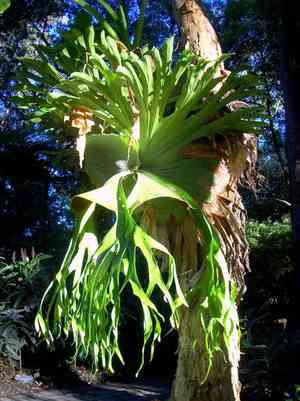
Staghorn fern (Platycerium superbum)
Also known as: Superb staghorn
Staghorn ferns (Platycerium superbum) are unique tropical plants characterized by their antler-like fronds. Mature plants can span 91 to 122 cm in width. The upper fronds serve as shields, trapping debris and insects for nourishment, while the lower fronds generate spores for reproduction. Native to tropical rainforests, these ferns flourish in high humidity environments. They thrive in bright, indirect light and require infrequent watering to avoid root rot. Mounting on wood or growing in hanging baskets is recommended to replicate their natural epiphytic habitat. Regular misting and monthly feeding during the growing season help maintain their health.
In This Article
Attributes of Staghorn fern
Lifespan
Perennial
Plant Type
Herb
Plant Height
75 cm to 1.6 m
Spread
60 cm to 90 cm
Leaf Color
Green Gray Blue Silver
Flower Size
N/A
Flower Color
N/A
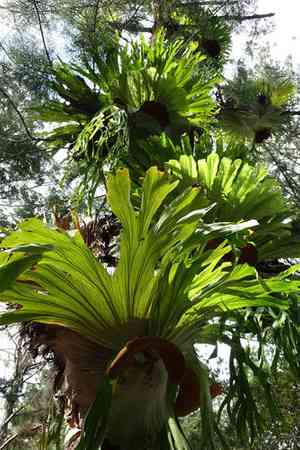
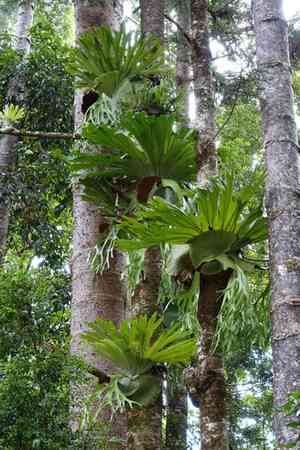
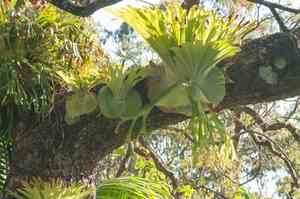
Images of Staghorn fern
Quickly Identify Staghorn fern
1
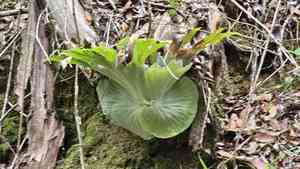
Identify Platycerium superbum by its large, bifurcated fronds that resemble stag antlers. The fronds can either be basal, which help anchor the plant to trees, or foliar, which are the antler-like structures.
Scientific Classification of Staghorn fern
Phylum
Vascular plants
Class
Ferns
Order
Polypodiales
Family
Polypody
Genus
Staghorn ferns
Species
Staghorn fern
Planting and Growing of Staghorn fern
Care Difficulty
Moderate
Watering Schedule
Every 3 days
Sunlight Requirements
Partial sun
Sunshine Duration
4-8 hours
Ideal Temperature
68-77℉
Soil Type
Potting Mix, Peat Mix
Soil pH
5.5-7
Fertilizer Type
Balanced
Pruning Season
Spring, Summer
Pruning Area
Branches, Leaves
Pruning Frequency
2 times a year
Repotting Season
Spring
Pot Type
Plastic, Ceramic
 How to Water Staghorn fern?
For Platycerium superbum, the watering amount should be just enough to keep the root ball slightly moist but not soggy. The key is to maintain a balance where the medium remains damp but never waterlogged. You might need approximately 200 ml per watering, depending on the humidity and temperature of your environment.
More About Watering Techniques→
What are the symptoms of an underwatered Staghorn fern?
›
What should I do if my Staghorn fern is not getting enough water?
›
What are the symptoms of an overwatered Staghorn fern?
›
How to save an overwatered Staghorn fern?
›
 What Are the Sunlight Requirements for Staghorn fern?
Partial sun and full shade conditions are best for Platycerium superbum, helping it to maintain lush, vibrant foliage and a robust growth pattern.
More About Sunlight Requirements Techniques→
What is the optimal light setup for Platycerium superbum?
›
How can I ensure my Platycerium superbum gets the right light daily?
›
What are the benefits of meeting the ideal light conditions?
›
 What Is the Ideal Temperature Range for Staghorn fern?
The ideal temperature range for Platycerium superbum to thrive is between 68°F and 77°F. This range mimics their native habitat in tropical forests where temperatures remain consistent and conducive to robust growth. Ensuring the environment stays within this range helps maintain optimal metabolic rates and nutrient uptake for the plant.
 What Soil is Best for Staghorn fern?
Platycerium superbum requires soil that retains moisture well yet drains efficiently. This balance helps prevent root rot and allows the plant to access the hydration it needs without becoming waterlogged. High organic content in the soil replicates the plant's natural epiphytic environment, providing essential nutrients that can enhance growth and make the foliage more vibrant. A soil pH between 5.5 and 7.0 is ideal for Platycerium superbum, allowing optimal nutrient uptake. Deviations from this pH range could lead to nutrient deficiencies and affect the plant's health.
More About Soil→
 How to Fertilize Staghorn fern?
To keep Platycerium superbum thriving, moderate fertilization is key. Use 1/4 strength of a balanced liquid fertilizer. Too much can harm its delicate fronds, while too little might not support optimal growth. Apply carefully to avoid nutrient hotspots.
More About Fertilizing Techniques→
 How to Prune Staghorn fern?
Before pruning Platycerium superbum, familiarize yourself with its structure. This fern is epiphytic and has fertile and sterile fronds. Only the sterile fronds should be trimmed when necessary, as they provide nutrients and protection. Use clean, sharp scissors or pruning shears for the job. Ensuring your tools are sterilized helps prevent the spread of diseases to your plant. Trim away any dead or damaged sterile fronds at their base, retaining healthy biomass. Avoid cutting the healthy parts, as these are critical to the plant's nutrient absorption and anchoring.
More About Pruning Techniques→
 How to Propagate Staghorn fern plant?
1
To propagate Platycerium superbum from spores, collect the spores from mature fronds. Wait until the brown spore capsules on the fronds turn brown and press them onto a piece of paper to release the spores.
2
Use a well-draining peat-based potting mix. Sterilize the soil mix by microwaving it to eliminate any pathogens that could potentially harm new plant growth.
3
Scatter the spores evenly over the prepared soil, mist them lightly to keep the surface moist, and cover the container with a clear plastic lid to create a humid environment.
 How to Repot Staghorn fern plant?
1
Look for signs such as stunted growth, roots outgrowing the current container, or the plant becoming top-heavy. These are indications that the Platycerium superbum needs a new home to accommodate its growing needs.
2
Select a pot slightly larger than the current one, with good drainage holes. This ensures the roots have room to grow and prevents water from pooling, reducing the risk of root rot.
3
Opt for a well-draining mix, incorporating sphagnum moss or orchid bark. This provides excellent aeration and moisture retention, mimicking the plant's natural epiphytic habitat.



