
California sycamore (Platanus racemosa)
Also known as: California plane tree
The Fremont Cottonwood (Populus fremontii) is a rapidly growing tree species found along riverbanks in the Western US, Central America, and Mexico. It can reach impressive heights of up to 24 meters and widths of up to 15 meters.
In This Article
Attributes of California sycamore
Lifespan
Perennial
Plant Type
Tree
Plant Height
35 m
Spread
8 m to 15 m
Leaf Color
Green Blue Yellow Brown
Flower Size
2.5 cm
Flower Color
Yellow Green Orange
Images of California sycamore
Quickly Identify California sycamore
1
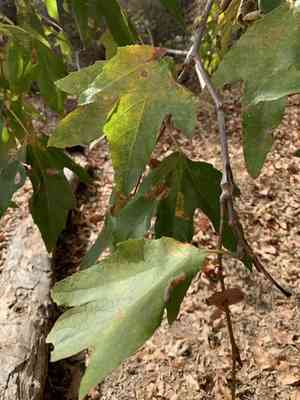
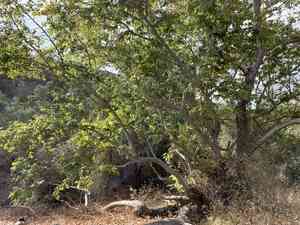
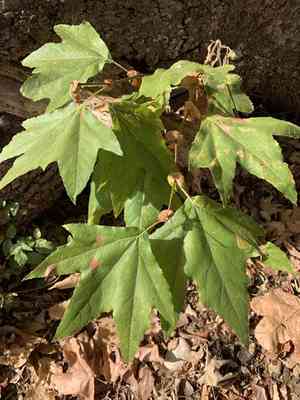
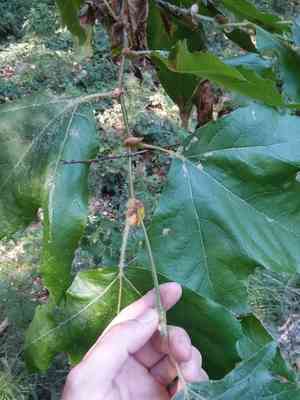
To identify Platanus racemosa, look for clusters of rounded, often lobed leaves with a palmate venation pattern. The tree has a distinctive white and brown patterned bark that peels off in patches. The fruit is a dense, round ball with hairy seeds.
Scientific Classification of California sycamore
Phylum
Vascular plants
Class
Dicotyledons
Order
Proteales
Family
Plane tree
Genus
Plane trees
Species
California sycamore
Planting and Growing of California sycamore
Care Difficulty
Easy
Watering Schedule
Every 2 days
Sunlight Requirements
Full sun
Sunshine Duration
4-8 hours
Ideal Temperature
60-80℉
Soil Type
Potting Mix, Peat Mix
Soil pH
6.5-7.5
Fertilizer Type
Balanced
Pruning Season
Spring, Summer
Pruning Area
Branches, Leaves
Pruning Frequency
2 times a year
Repotting Season
Spring
Pot Type
Plastic, Ceramic
 How to Water California sycamore?
The Platanus racemosa, commonly known as the California sycamore, thrives best when watered deeply, allowing water to penetrate down to the root zone. Aim to deliver around 3000 milliliters per watering session to ensure that the roots receive adequate moisture without leaving the soil soggy.
What are the symptoms of an underwatered California sycamore?
›
What should I do if my California sycamore is not getting enough water?
›
What are the symptoms of an overwatered California sycamore?
›
How to save an overwatered California sycamore?
›
 What Are the Sunlight Requirements for California sycamore?
Platanus racemosa flourishes in full to partial sun, ideally absorbing six to eight hours of sunlight. This range supports optimal leaf coloration and structural integrity, fostering resilience and healthy growth patterns.
More About Sunlight Requirements Techniques→
How much sun is ideal for Platanus racemosa?
›
What solutions ensure optimal sunlight exposure?
›
What benefits arise from ideal sunlight conditions?
›
 What Is the Ideal Temperature Range for California sycamore?
Platanus racemosa thrives in environments where temperatures are consistently between 60°F and 80°F. This range supports optimal growth and metabolic activity, ensuring the plant can photosynthesize effectively and maintain cellular functions without stress.
 What Soil is Best for California sycamore?
Platanus racemosa thrives in nutrient-rich soils that provide essential minerals and nutrients. A fertile soil ensures robust growth, enabling the tree to develop strong branches and a healthy canopy. This plant requires a soil that retains moisture yet drains well, preventing waterlogging while ensuring that the roots have constant access to moisture. This balance helps in maintaining the health and vigor of the tree. Good soil aeration is crucial for Platanus racemosa, as it allows for the easy flow of air to the roots, promoting respiration and efficient nutrient uptake, leading to a more resilient plant.
 How to Fertilize California sycamore?
For Platanus racemosa, it's essential to apply approximately 1 pound of nitrogen per 1000 square feet for optimal growth. Ensure the fertilizer used is balanced in N-P-K ratio, typically 10-10-10, to maintain robust health and abundant foliage.
 How to Prune California sycamore?
Begin by examining the tree thoroughly to identify any dead or diseased branches. These should be removed first to prevent the spread of disease and to promote healthy growth in the remaining parts of the tree. Thinning involves selectively removing some branches to increase air circulation and light penetration. This reduces the risk of fungal diseases and helps the tree develop a strong structure. Focus on removing crossed branches and those growing inwards. Trim back branches that have grown excessively long. This not only maintains the tree's shape but also prevents branches from becoming too heavy and potentially hazardous.
More About Pruning Techniques→
 How to Propagate California sycamore plant?
1
To propagate Platanus racemosa from seeds, collect seeds in the fall when they are mature. Always choose healthy seeds without any signs of disease or damage.
2
Take semi-hardwood cuttings in early spring. Use sharp pruning shears to make a clean cut, preferably just below a node, to ensure maximum growth potential.
3
Cleft grafting during early spring can be effective. Carefully match the cambium layers of the stock and scion for successful graft integration.
 How to Repot California sycamore plant?
1
Platanus racemosa should be repotted when you notice roots growing out of the drainage holes or the soil drains too quickly, indicating root bound. It is also essential if water sits on top of the soil without seeping in. These are classic signs your plant needs more space for its roots.
2
Select a pot that is one size larger than the current one, ideally two to three inches larger in diameter. Ensure it has ample drainage holes to prevent waterlogging, which can lead to root rot. Using a slightly larger pot allows the roots to expand, promoting healthy growth without overwhelming the plant with excessive soil.
3
A well-draining potting mix is ideal for Platanus racemosa. The mix should retain enough moisture to keep the roots hydrated without becoming waterlogged. This balance ensures the plant receives adequate airflow, minimizing the risk of root diseases while fostering strong growth.



