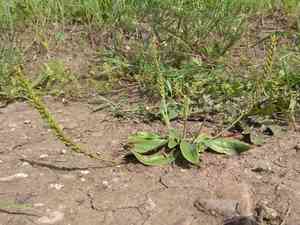
Plantago depressa (Plantago depressa)
Also known as: Flat-stemmed Plantain, Chinese Plantain
Plantago depressa is a hardy, low-lying perennial that forms a rosette of broad, oval leaves close to the ground. Its small, brownish seed capsules emerge from unassuming flowers. This plant flourishes in open, sunny areas and can adapt to compacted soils where many other species cannot. The ground-hugging leaf arrangement helps reduce moisture loss, making it particularly well-suited for dry environments.
In This Article
Attributes of Plantago depressa
Lifespan
Annual, Biennial
Plant Type
Herb
Plant Height
10 cm
Spread
N/A
Leaf Color
Green
Flower Size
2 mm to 3.5 mm
Flower Color
White Green Bronze
Images of Plantago depressa
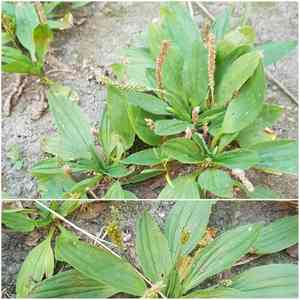
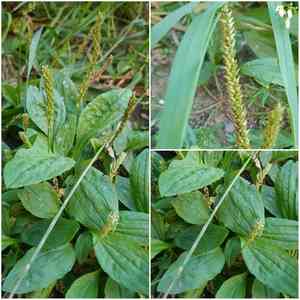
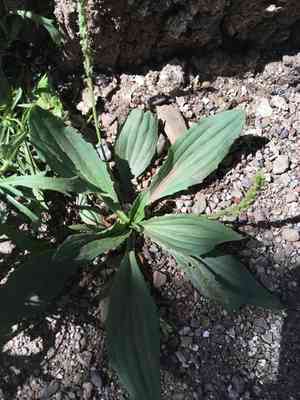
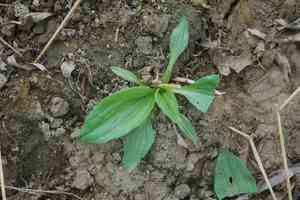
Quickly Identify Plantago depressa
1
Identify Plantago depressa by its flat, rosette-forming leaf arrangement, with narrow, lanceolate leaves. The flower spikes are tall and thin, emerging from the center with small, inconspicuous flowers. The leaves often have prominent parallel veins.
Scientific Classification of Plantago depressa
Phylum
Vascular plants
Class
Dicotyledons
Order
Mints plantains olives and allies
Family
Plantain
Genus
Plantains
Species
Plantago depressa
Planting and Growing of Plantago depressa
Care Difficulty
Easy
Watering Schedule
Every 4 days
Sunlight Requirements
Partial sun
Sunshine Duration
6-8 hours
Ideal Temperature
60-77℉
Soil Type
Potting Mix, Peat Mix
Soil pH
6.5-7.5
Fertilizer Type
Balanced
Pruning Season
Spring, Summer
Pruning Area
Branches, Leaves
Pruning Frequency
2 times a year
Repotting Season
Spring
Pot Type
Terracotta, Plastic
 How to Water Plantago depressa?
Plantago depressa prefers moderate watering. The soil should be kept consistently moist but not waterlogged. Aim for about 250 ml of water per session, ensuring water penetrates deeply into the soil to reach the roots.
What are the symptoms of an underwatered Plantago depressa?
›
What should I do if my Plantago depressa is not getting enough water?
›
What are the symptoms of an overwatered Plantago depressa?
›
How to save an overwatered Plantago depressa?
›
 What Are the Sunlight Requirements for Plantago depressa?
Plantago depressa flourishes best in partial to full sun environments. Ideal light exposure ensures robust growth, vivid coloring, and resilience against diseases, promoting overall plant health and increased flowering potential.
What amount of sunlight does Plantago depressa require?
›
How to ensure it gets the ideal light?
›
What are the benefits of ideal light exposure?
›
 What Is the Ideal Temperature Range for Plantago depressa?
Plantago depressa thrives best in temperatures ranging from 60°F to 77°F. This range provides a balance that supports photosynthesis and cellular respiration, crucial for healthy growth.
 What Soil is Best for Plantago depressa?
Plantago depressa thrives best in well-draining soil, preventing water from stagnating around the roots. This helps avoid root rot and ensures the plant maintains healthy growth and development. The plant prefers nutrient-rich conditions which support vigorous foliage and flower production. Adding organic compost can enhance soil fertility, giving your Plantago depressa the essential nutrients it needs. While Plantago depressa enjoys avoiding overly saturated conditions, a certain level of moisture helps maintain its lushness. Sandy loam can offer the appropriate balance between drainage and moisture retention.
 How to Fertilize Plantago depressa?
Plantago depressa benefits from a balanced nutrition approach. For liquid fertilizers, use a diluted formula to avoid root burn; typically, 1/4 strength of a general-purpose liquid fertilizer is sufficient. Solid fertilizers should be used sparingly, with only light topdressing of granules once every four months, ensuring no accumulation that could lead to nutrient imbalances.
 How to Prune Plantago depressa?
Begin by inspecting the plant thoroughly for any dead or discolored leaves and stems. Removing these parts helps the plant focus its energy on healthy growth and minimizes the risk of disease. Use sharp pruning shears to trim the plant to your desired shape. Focus on creating a natural form that allows sunlight to penetrate the inner parts of the plant, promoting healthier, more robust growth. If the plant exhibits leggy growth, cut back the stems to a point just above a leaf node. This encourages the plant to become bushier and more compact, ensuring it maintains a pleasing appearance and doesn't become unwieldy.
More About Pruning Techniques→
 How to Propagate Plantago depressa plant?
1
Fill seed trays with a well-draining soil mix, leaving about a centimeter from the top to allow space for watering. Ensure that the mixture is evenly distributed and lightly tamped down.
2
Evenly distribute Plantago depressa seeds on the soil surface in seed trays, and gently press them into the soil without burying them too deeply, as these seeds require light to germinate.
3
Mist the seeds lightly with water to ensure the soil remains moist but not soggy. Place the trays in a warm, sunny location, keeping them consistently moist for optimal germination.
 How to Repot Plantago depressa plant?
1
Plantago depressa should be repotted when you notice signs such as roots emerging from the drainage holes, soil compacting inside the pot, or reduced foliage growth. This indicates the plant has outgrown its current container and requires more room.
2
Select a pot that is one size larger than the current pot. It should have drainage holes to prevent waterlogging, which can cause root rot. A pot that is too large may retain too much moisture; hence, a gradual size increase balances root space with moisture control.
3
Opt for a well-draining sandy mix that emulates the plant's natural habitat. Such soil prevents waterlogging and ensures good aeration, supporting root health and promoting robust growth over time.
Learn More About Plantago depressa Diseases
Anthracnose
Bacterial Leaf Spot
Bacterial Wilt
Black Spot
Chemical Injury
Cyst Nematode
Damping-off
Downy Mildew
Drought Stress
Fusarium Wilt
Gray Mold
Leaf Curl
Leaf Spot
Mosaic
Nutrient Deficiency
Nutrient Toxicity
Powdery Mildew
Root Rot
Root-knot Nematode
Rusts
Sooty Mold
Spider Mites
Temperature Stress
Thrips Damage
White Mold



