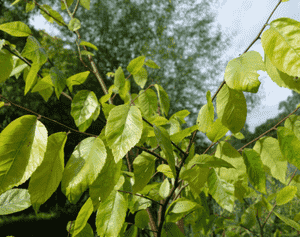
Water elm (Planera aquatica)
Also known as: Common planer
The leaves measure about 3 to 7 cm in length and feature a serrated edge. Although commonly referred to by a name suggesting it's an elm, it is not a true elm but a close relative. This species can be affected by Dutch elm disease, which typically targets Ulmaceae family members. It is native to the southeastern United States and thrives in Zone 7.
In This Article
Attributes of Water elm
Lifespan
Perennial
Plant Type
Tree
Plant Height
11 m to 22 m
Spread
10-15 feet (3-4.5 meters)
Leaf Color
Green
Flower Size
Very small, less than 1/4 inch (0.6 cm)
Flower Color
Greenish
Images of Water elm
Quickly Identify Water elm
1
Distinctive oblong leaves, dark green above and paler beneath, with serrated margins and pronounced veins.
2
Tiny flowers with curling fuzzy stigmas, lacking prominent petals, blooming in late spring to early summer.
3
Stalked leathery drupe fruit, about 1/2 inch in size, with fleshy burr-like projections.
4
Reddish to gray-brown stems, initially hairy and becoming smooth, varying in diameter with a branching pattern.
5
Distinctive trunk bark with rough texture, grayish-brown color, patchy exfoliations, shedding in irregular patterns.
Scientific Classification of Water elm
Phylum
Vascular plants
Class
Dicotyledons
Order
Rosales
Family
Elm
Genus
Planertree
Species
Water elm
Planting and Growing of Water elm
Care Difficulty
Easy
Watering Schedule
Every 3 days
Sunlight Requirements
Partial sun
Sunshine Duration
6-10 hours
Ideal Temperature
60-75℉
Soil Type
Potting Mix, Peat Mix
Soil pH
6-8
Fertilizer Type
Balanced
Pruning Season
Spring, Summer
Pruning Area
Branches, Leaves
Pruning Frequency
2 times a year
Repotting Season
Spring
Pot Type
Plastic, Ceramic
 How to Water Water elm?
For Planera aquatica, the watering should be generous enough to mimic its natural swampy habitat. Each time you water, aim for about 500 milliliters, ensuring the soil stays consistently moist but not waterlogged. This helps maintain the roots' hydration without drowning them.
What are the symptoms of an underwatered Water elm?
›
What should I do if my Water elm is not getting enough water?
›
What are the symptoms of an overwatered Water elm?
›
How to save an overwatered Water elm?
›
 What Are the Sunlight Requirements for Water elm?
Planera aquatica ideally thrives in partial sun conditions, benefiting from 4 to 6 hours of dappled or filtered sunlight daily. Optimal light exposure promotes vibrant foliage, robust growth, and a strong defense against environmental stresses.
Amount of Sunlight
›
Solutions for Ideal Lighting
›
Benefits of Ideal Light
›
 What Is the Ideal Temperature Range for Water elm?
Planera aquatica thrives best in temperatures ranging from 60°F to 75°F. This range provides the optimal condition for photosynthesis and nutrient absorption, allowing the plant to grow robustly. Maintaining this temperature helps in preventing stress and promoting healthy foliage.
 What Soil is Best for Water elm?
Planera aquatica thrives in soil that holds moisture well, ensuring the roots remain hydrated during dry spells. This helps in optimal growth and prevents wilting. Rich, organic soil is crucial for the health of Planera aquatica, supplying essential nutrients that promote vigorous leaf and branch development. A well-structured soil with good aeration supports healthy root expansion and provides stability for Planera aquatica, allowing it to withstand wind forces.
 How to Fertilize Water elm?
For Planera aquatica, it is crucial to use a balanced fertilizer. When applying liquid fertilizer, aim for a solution that provides approximately 1/4 strength compared to the recommended dose for houseplants. When using slow-release fertilizers, space them evenly at the plant's base, ensuring there's no direct contact with the plant's roots.
 How to Prune Water elm?
Begin by removing any dead or overlapping branches to allow sufficient air circulation within the canopy. Focus on branches that are rubbing together, as this can lead to damage and disease entry points. Carefully trim back any overly long branches that disrupt the tree's shape or overhang paths and structures. Use the 'three-cut method' to safely remove larger limbs without causing bark tears. Encourage new growth by trimming back the tips of the branches. This not only fosters fuller foliage but also strengthens the internal structure. Ensure cuts are made at a slight angle and just above a bud.
More About Pruning Techniques→
 How to Propagate Water elm plant?
1
Begin by collecting healthy seeds or taking cuttings from a parent plant. For seeds, ensure they are mature and for cuttings, take them from non-flowering parts of the plant. This initial step sets the foundation for successful propagation.
2
Plant the seeds in a seed tray with potting mix, or place cuttings in water or directly into a mix prepared for rooting. Keep the seeds or cuttings in a location with indirect sunlight to reduce stress. Regularly monitor for any signs of germination or rooting.
3
Once the seeds have germinated or cuttings have developed roots, transfer them to individual pots. Ensure each pot has sufficient space for growth and is placed in a location with the appropriate environmental conditions, such as light and humidity.
 How to Repot Water elm plant?
1
Repot Planera aquatica when you observe roots growing out of the drainage holes or when the plant appears cramped in its current pot. The best time to repot is during its active growth phase in spring or summer to minimize stress on the plant.
2
Select a pot that is one size larger than the current one with ample drainage holes. The ideal pot allows for adequate root expansion and prevents waterlogging, which can lead to root rot and other issues.
3
Opt for a rich, well-draining loam soil to ensure proper aeration and moisture retention. This type of soil provides essential nutrients and promotes a healthy root system, crucial for the plant's growth and stability.
Learn More About Water elm Diseases
Anthracnose
Bacterial Leaf Spot
Crown Gall
Damping-off
Downy Mildew
Drought Stress
Fusarium Wilt
Gray Mold
Leaf Curl
Leaf Spot
Mosaic
Nutrient Deficiency
Nutrient Toxicity
Powdery Mildew
Root Rot
Root-knot Nematode
Rusts
Sooty Mold
Spider Mites
Temperature Stress
Thrips Damage
White Mold
Chemical Injury



