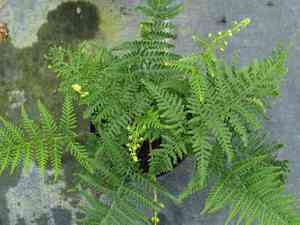
Dixie silverback fern (Pityrogramma calomelanos)
Also known as: Silverback fern
The Dixie silverback fern (*Pityrogramma calomelanos*) is a visually striking fern known for its distinctive variegated leaves. Native to South and Central America, it has spread to various tropical regions where it is often regarded as a weed due to its rapid and invasive growth.
In This Article
Attributes of Dixie silverback fern
Lifespan
Perennial
Plant Type
Herb
Plant Height
25 cm to 90 cm
Spread
1 to 2 feet (30 to 60 cm)
Leaf Color
Green (upper surface), Silvery-white (under surface)
Flower Size
N/A (ferns do not produce flowers)
Flower Color
N/A (ferns do not produce flowers)
Images of Dixie silverback fern
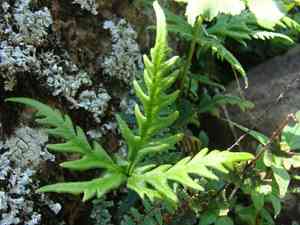
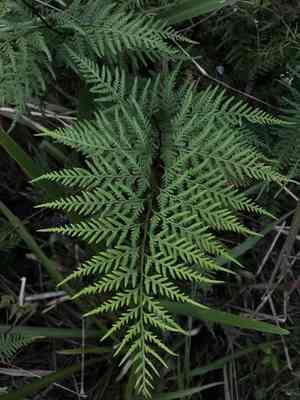
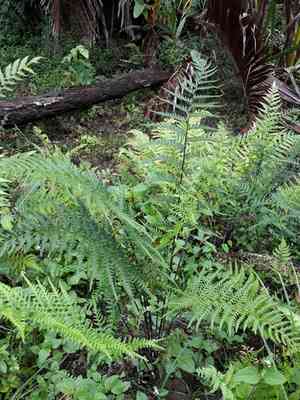
Quickly Identify Dixie silverback fern
1
Identify Pityrogramma calomelanos by its distinctive fronds that are green on the top surface and have a silvery-white powdery coating underneath. The fronds are feather-like, finely divided, and grow in a rosette form. Look for sori (spore-producing structures) that are present on the underside of the fronds.
Scientific Classification of Dixie silverback fern
Phylum
Vascular plants
Class
Ferns
Order
Polypodiales
Family
Brake
Genus
Silverback Ferns
Species
Dixie silverback fern
Planting and Growing of Dixie silverback fern
Care Difficulty
Easy
Watering Schedule
Every 3 days
Sunlight Requirements
Partial sun
Sunshine Duration
6-10 hours
Ideal Temperature
68-77℉
Soil Type
Potting Mix, Peat Mix
Soil pH
6.5-7.5
Fertilizer Type
Balanced
Pruning Season
Spring, Summer
Pruning Area
Branches, Leaves
Pruning Frequency
2 times a year
Repotting Season
Spring
Pot Type
Plastic, Ceramic
 How to Water Dixie silverback fern?
When watering Pityrogramma calomelanos, ensure the soil is evenly moist but not waterlogged. The exact amount typically ranges around 250ml per session, enough to reach the roots but allowing the excess to drain away. This prevents stagnant water, which can lead to root rot.
What are the symptoms of an underwatered Dixie silverback fern?
›
What should I do if my Dixie silverback fern is not getting enough water?
›
What are the symptoms of an overwatered Dixie silverback fern?
›
How to save an overwatered Dixie silverback fern?
›
 What Are the Sunlight Requirements for Dixie silverback fern?
Pityrogramma calomelanos flourishes under partial sun or full shade, making it well-suited for indoor environments where light can be easily controlled. Optimal light aids in maintaining vibrant green fronds and robust plant health.
More About Sunlight Requirements Techniques→
What is the best light for Pityrogramma calomelanos?
›
How do you achieve ideal light exposure?
›
What are the benefits of ideal light conditions?
›
 What Is the Ideal Temperature Range for Dixie silverback fern?
For optimal growth of Pityrogramma calomelanos, it is crucial to maintain an environment with temperatures between 68°F and 77°F. This range supports active cellular processes and ensures the plant maintains its lush foliage.
 What Soil is Best for Dixie silverback fern?
Pityrogramma calomelanos is an avid feeder, thriving in soil that is rich in nutrients. A loamy soil, with its balanced property of silt, sand, and clay, offers the necessary support and nutrient storage. This rich soil milieu encourages robust fern growth and develops its characteristic vibrant foliage. This plant favors soil with good drainage to avoid its roots becoming waterlogged. Sandy loam allows excess water to flow away, preventing root rot while maintaining adequate moisture levels, which is crucial to maintain the lush, delicate fronds of the fern. While drainage is essential, Pityrogramma calomelanos also needs a soil that retains some moisture to provide consistent hydration. The organic matter in loamy soil assists in maintaining this delicate balance, ensuring the plant's continuous hydration without over-wetting the roots.
 How to Fertilize Dixie silverback fern?
For Pityrogramma calomelanos, it’s crucial to use a balanced fertilizer with an N-P-K ratio of 10-10-10 at half strength to avoid over-fertilization. Ensure you adjust the feeding quantity based on seasonality; less in winter and slightly more in the growing seasons.
 How to Prune Dixie silverback fern?
Examine your Pityrogramma calomelanos carefully to identify any fronds that are dead, damaged, or excessively yellowing. These are the fronds that need to be removed to promote the plant's health and improve its appearance. Using sanitized pruning shears, make clean cuts at the base of the frond stem. Ensure you cut as close to the main plant stem as possible without causing any damage to the plant itself. This encourages better recovery and growth. After pruning, observe the Pityrogramma calomelanos for any signs of stress or pest problems. Regularly check the plant's moisture levels, light exposure, and overall health to ensure a conducive growth environment.
More About Pruning Techniques→
 How to Propagate Dixie silverback fern plant?
1
Collect spores by cutting mature fronds and placing them in a paper bag, where they'll release spores as they dry. Ensure the collected spores are not disturbed during the drying process, as they are tiny and can be easily lost.
2
Use a sterilized mix of peat moss and perlite as the growing medium. This combination is lightweight and retains moisture, providing an ideal environment for the spores to develop. Ensure the medium is evenly moistened before sowing the spores.
3
Evenly sprinkle the spores on the surface of the prepared growing medium. Avoid covering them with soil, as they need light to germinate. Cover the container with a transparent lid or plastic wrap to maintain humidity and place it in a warm, well-lit area.
 How to Repot Dixie silverback fern plant?
1
Pityrogramma calomelanos needs repotting when roots start circling the pot or emerging from drainage holes. Visible signs of reduced growth and reduced vigor also suggest a need for a larger space to ensure optimal health.
2
Select a pot that is 2-3 inches wider than the current one, with good drainage holes. A terracotta pot can aid in wicking away excess moisture, beneficial to prevent root rot. The extra space encourages healthy growth.
3
Opt for a well-draining, fertile potting mix. A blend of peat, perlite, and compost works wonders. This mixture ensures proper drainage, preventing waterlogging, while providing necessary nutrients for vitality.
Toxicity
Ingestion, Dermal contact
WARNING
The judgment on toxicity and danger is for reference only. We DO NOT GUARANTEE any accuracy of such judgment. Therefore, you SHALL NOT rely on such judgment. It is IMPORTANT TO SEEK PROFESSIONAL ADVICE in advance when necessary.



