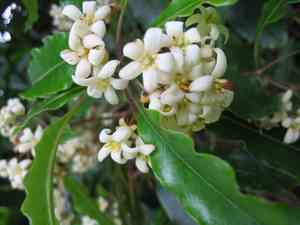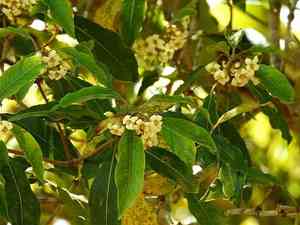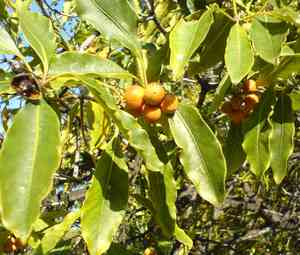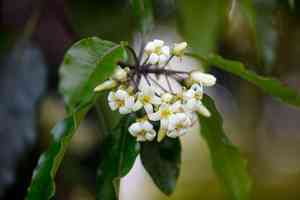
Australian cheesewood(Pittosporum undulatum)

Australian cheesewood (Pittosporum undulatum)

Also known as: Victorian box, Orange pittosporum, Native daphne, Orange berry pittosporum

The tree you're describing is the Australian Cheesewood (*Pittosporum undulatum*). Known for its eye-catching orange, woody fruits, this fast-growing species has become invasive in regions such as Australia, South Africa, Hawaii, and Brazil. It also serves as an attractant for moths and butterflies.

Attributes of Australian cheesewood

Lifespan
Perennial
Plant Type
Tree, Shrub
Plant Height
9 m to 15 m
Spread
9 m to 12 m
Leaf Color
Glossy green
Flower Size
2.5 cm
Flower Color
White Yellow

ForwardPlant - Identify plants with a snap

Identify and diagnose plants, get toxicity alerts, and explore safety guides for all types of fungi.

Try for Free

Images of Australian cheesewood

Australian cheesewood(Pittosporum undulatum)

Quickly Identify Australian cheesewood

1
Pyramidal shape reaching 30-50 feet (9-15 meters), commonly used as hedge plant.
2
Dark gray, rough, scaly bark contrasting with glossy dark green leaves with wavy edges.
3
Creamy-white fragrant flowers blooming in early spring, followed by small orange berries with sticky seeds.
4
Dense foliage aiding windbreak function.

Scientific Classification of Australian cheesewood

Phylum
Vascular plants
Class
Dicotyledons
Order
Apiales
Family
Cheesewood
Genus
Cheesewoods
Species
Australian cheesewood

Planting and Growing of Australian cheesewood

Care Difficulty
Easy
Watering Schedule
Every 3 days
Sunlight Requirements
Partial sun
Sunshine Duration
6-10 hours
Ideal Temperature
60-75℉
Soil Type
Potting Mix, Peat Mix
Soil pH
6.5-7.5
Fertilizer Type
Balanced
Pruning Season
Spring, Summer
Pruning Area
Branches, Leaves
Pruning Frequency
2 times a year
Repotting Season
Spring
Pot Type
Plastic, Ceramic

water icon How to Water Australian cheesewood?

For Pittosporum undulatum, it is essential to provide around 500 milliliters of water per session. This amount should be enough to moisten the soil thoroughly without making it waterlogged. Ideally, aim to water until the top inch of the soil is damp yet not saturated, ensuring the roots receive adequate moisture without drowning.
What are the symptoms of an underwatered Australian cheesewood?
What should I do if my Australian cheesewood is not getting enough water?
What are the symptoms of an overwatered Australian cheesewood?
How to save an overwatered Australian cheesewood?

sunlight icon What Are the Sunlight Requirements for Australian cheesewood?

Sunlight Requirements: Partial sun, Full sun
Duration of light: 6 to 8 hours
Partial to full sunlight is preferred; plants receiving adequate light display robust growth and lush foliage, contributing to their resilience and visual appeal.
What is the best sunlight condition for Pittosporum undulatum?
How can I achieve perfect lighting for my plant?
What are the benefits of providing ideal light conditions?
More About Sunlight Requirements Techniques

temperature icon What Is the Ideal Temperature Range for Australian cheesewood?

Ideal Temperature: 60 ~ 75℉
The ideal temperature range for growing Pittosporum undulatum is between 60°F and 75°F. Within this range, the plant can thrive and exhibit optimal growth, producing lush foliage and healthy blooms. Maintaining consistent temperatures within this range helps sustain the plant's metabolic processes and reduces stress, fostering a robust immune system against pests and diseases.

soil icon What Soil is Best for Australian cheesewood?

Soil type: Loam, Sandy loam
Soil PH: 6.5 ~ 7.5
Pittosporum undulatum thrives in well-drained soil, which prevents waterlogging and root rot. This facilitates healthy root growth and overall plant vigor, ensuring robust and lush foliage. Rich soil provides essential nutrients that bolster the plant's growth, flowering, and resistance to diseases. Ensuring a nutrient-dense soil supports the plant's lush appearance and continual blooming cycle. Soil that retains moderate moisture supports the plant's water needs without oversaturation. This balance helps maintain optimal hydration, promoting vigorous growth and resilience against drought.

fertilize icon How to Fertilize Australian cheesewood?

Fertilizer type: Balanced
For Pittosporum undulatum, the appropriate amount of fertilizer will depend on the fertilizer type. Liquid fertilizers should be diluted according to package instructions, generally at half strength, and applied to just moisten the soil. For slow-release fertilizers, use approximately one tablespoon per square foot, evenly distributed around the root zone.

prune icon How to Prune Australian cheesewood?

Pruning Time: Spring, Summer, Autumn
The best time to prune Pittosporum undulatum is during its active growing seasons: spring, summer, and autumn. Start by removing dead or damaged branches. Proceed with thinning out crowded areas to boost air circulation and sunlight. Finish by shaping the plant for aesthetic appeal while ensuring the overall structure remains balanced. While pruning is vital for the health of Pittosporum undulatum, excessive cutting can harm the plant. Prioritize maintaining its natural form. Avoid trimming during winter, as this could reduce its resilience to cold snaps and delay its growth in the following spring. More About Pruning Techniques

propagate icon How to Propagate Australian cheesewood plant?

Propagate Time: Spring,Early spring
1
Collect seeds from mature Pittosporum undulatum fruits. Ensure that the seeds are fully ripe and free from any signs of damage or disease to maximize the chances of successful germination.
2
Select healthy branches and cut 6- to 8-inch sections just below a node. Remove any leaves from the lower part of the cuttings, and dip the cut end into rooting hormone to enhance root formation.
3
Sow seeds in a prepared seed tray filled with well-draining soil. For cuttings, plant them into a pot with a suitable rooting medium such as perlite or vermiculite, and keep them in a warm, sheltered spot.
More About Propagating Techniques

repot icon How to Repot Australian cheesewood plant?

Repotting frequency: Annually or when rootbound
1
Pittosporum undulatum signals its need for repotting through slowed growth and roots protruding from the drainage holes. Ideally, repot during spring or summer when active growth supports recovery.
2
Select a pot that's one size larger, with excellent drainage to prevent waterlogging. A slightly heavier pot is helpful to provide stability as this plant grows quite large and bushy with time.
3
Opt for a well-draining loamy soil, which balances moisture retention and aeration. This mix ensures the roots stay healthy and minimizes the risk of rot, fostering a robust environment.

ForwardPlant - Identify plants with a snap

Find the best spots for them to optimize their health, simply using your phone.

Try for Free

Toxicity of Australian cheesewood

Is Australian cheesewood toxic to humans?

Australian cheesewood presents a mild toxicity risk to humans when ingested. The entire plant harbors saponins, which are the primary agents behind its toxic characteristics. Consumption can lead to various symptoms, including nausea, vomiting, and diarrhea, with severity fluctuating based on the quantity consumed. Given that every part of australian cheesewood is toxic, precautions must be taken to avert accidental ingestion, particularly in areas where the plant thrives. It is crucial for individuals to be mindful of the potential hazards linked to australian cheesewood to prevent any negative health repercussions.

Is Australian cheesewood toxic to cat?

The Australian cheesewood possesses a mild level of toxicity for cats. Cats may inadvertently consume portions of the Australian cheesewood, which could result in poisoning as a consequence of the saponins found throughout the plant. If a cat ingests any parts of the Australian cheesewood, it may exhibit signs of physical discomfort or illness. Since every part of the Australian cheesewood is toxic, it is crucial to keep cats away from this plant. In the event that a cat ingests parts of Australian cheesewood, prompt veterinary care is vital to address the potential effects on the cat's health.

Is Australian cheesewood toxic to dog?

Australian cheesewood is regarded as possessing a mild toxicity level to dogs. Canines might inadvertently consume various parts of the australian cheesewood plant, which can result in potential poisoning. Every component of the plant, including the leaves, stems, and berries, harbors toxic elements that can pose risks when ingested by dogs. Upon ingestion, the primary symptoms a dog may display encompass gastrointestinal disturbances such as vomiting and diarrhea. It is essential for dog owners to remain alert and prevent their pets from gaining access to or consuming any part of the australian cheesewood. If a dog accidentally consumes australian cheesewood, it is vital to seek prompt veterinary assistance to ensure appropriate treatment and management of any symptoms.

Identify toxic plants for your safety

Learn which plants are harmful to you and your pets, and make informed choices for a safer home!

Try for Free
WARNING
The judgment on toxicity and danger is for reference only. We DO NOT GUARANTEE any accuracy of such judgment. Therefore, you SHALL NOT rely on such judgment. It is IMPORTANT TO SEEK PROFESSIONAL ADVICE in advance when necessary.
More About Toxic Techniques