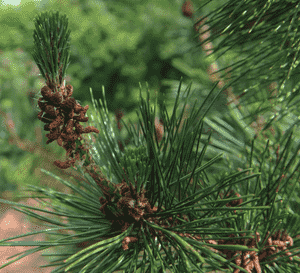
Japanese black pine (Pinus thunbergii)
Also known as: Black pine
The Japanese Black Pine (Pinus thunbergii) is exceptionally tolerant of sand and salt spray, making it highly suitable for coastal landscaping. Interestingly, these trees tend to grow larger when planted inland compared to their coastal counterparts.
Attributes of Japanese black pine
Images of Japanese black pine
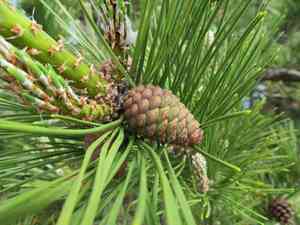
Quickly Identify Japanese black pine
Scientific Classification of Japanese black pine
Planting and Growing of Japanese black pine
 How to Water Japanese black pine?
 What Are the Sunlight Requirements for Japanese black pine?
 What Is the Ideal Temperature Range for Japanese black pine?
 What Soil is Best for Japanese black pine?
 How to Fertilize Japanese black pine?
 How to Prune Japanese black pine?
 How to Propagate Japanese black pine plant?
 How to Repot Japanese black pine plant?
Toxicity of Japanese black pine
Is Japanese black pine toxic to humans?
Japanese black pine presents a mild toxicity risk to humans, primarily through allergic reactions that occur upon contact and the potential for toxicity if ingested. The toxic component of the Japanese black pine is its resin, which can lead to human poisoning. Upon skin contact, the resin may provoke allergic reactions, which can manifest as symptoms including skin irritation, redness, and itching. If the resin is inadvertently ingested, it may result in gastrointestinal distress, characterized by symptoms such as nausea, vomiting, and diarrhea. These manifestations illustrate the mild toxicity level associated with Japanese black pine; while not typically fatal, they can indeed cause considerable discomfort. It is crucial for individuals to avoid inadvertently swallowing the resin and to handle Japanese black pine cautiously to avert allergic reactions.



