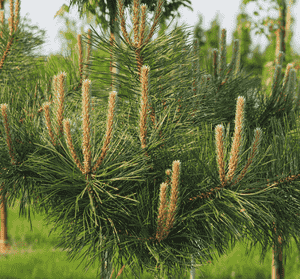
Austrian pine (Pinus nigra)
Also known as: Austrian Pine, European Black Pine
The Aleppo Pine (Pinus halepensis) is an evergreen conifer indigenous to the Mediterranean region of Europe. It can reach heights of up to 55 meters and has a remarkable lifespan, with some trees living for as long as 500 years.
In This Article
Attributes of Austrian pine
Lifespan
Perennial
Plant Type
Tree
Plant Height
15 m to 18 m
Spread
6 m to 12 m
Leaf Color
Green
Flower Size
1.9 cm
Flower Color
Yellow
Images of Austrian pine
Quickly Identify Austrian pine
1
Dark brown to black, deeply furrowed bark.
2
Needle-like leaves in bundles of two, stiff and sharply pointed.
3
Male cones yellow, cylindrical, in dense clusters; female cones small, oval, purplish.
4
Robust cones, 2.5 to 3 inches in length, with blunt spines on scales.
5
Distinct bark with flat vertical ridges and deep furrows, thickening with maturity.
Scientific Classification of Austrian pine
Phylum
Vascular plants
Class
Conifers
Order
Pinales
Family
Pine
Genus
Pines
Species
Austrian pine
Planting and Growing of Austrian pine
Care Difficulty
Easy
Watering Schedule
Every 2 days
Sunlight Requirements
Full sun
Sunshine Duration
4-8 hours
Ideal Temperature
50-77℉
Soil Type
Potting Mix, Peat Mix
Soil pH
4.5-8.5
Fertilizer Type
Balanced
Pruning Season
Spring, Summer
Pruning Area
Branches, Leaves
Pruning Frequency
2 times a year
Repotting Season
Spring
Pot Type
Plastic, Ceramic
 How to Water Austrian pine?
For Pinus nigra, it's crucial to provide around 1500 ml of water per session. Ensure the soil is soaked thoroughly without becoming waterlogged. Aim for the moisture to reach the deeper roots without pooling at the surface, maintaining a balance between hydration and drainage.
More About Watering Techniques→
What are the symptoms of an underwatered Austrian pine?
›
What should I do if my Austrian pine is not getting enough water?
›
What are the symptoms of an overwatered Austrian pine?
›
How to save an overwatered Austrian pine?
›
 What Are the Sunlight Requirements for Austrian pine?
The ideal light range for Pinus nigra is full sun to partial sunlight. Adhering to these conditions ensures healthy growth, better natural form retention, and optimal overall health.
More About Sunlight Requirements Techniques→
Question 1: What type of sunlight is ideal for Pinus nigra?
›
Question 2: How can I ensure my Pinus nigra gets the right amount of sunlight?
›
Question 3: What are the benefits of providing ideal sunlight to Pinus nigra?
›
 What Is the Ideal Temperature Range for Austrian pine?
Pinus nigra, or black pine, thrives best within a temperature range of 50°F to 77°F. This range provides the optimal conditions for photosynthesis and metabolic processes necessary for healthy growth. Maintaining temperatures within this range ensures that the plant does not experience stress and can flourish in its environment, leading to robust development.
 What Soil is Best for Austrian pine?
Pinus nigra thrives in well-drained soils, ensuring that the roots do not become waterlogged. This is crucial for preventing root rot and ensuring healthy, robust growth. Well-draining soils allow for oxygen exchange around the roots, promoting strong and efficient nutrient uptake. The tree prefers soils rich in nutrients, which support its growth and resilience. A soil composition that is balanced in essential minerals like nitrogen, phosphorus, and potassium will bolster the tree’s health, providing it with the necessary components for photosynthesis and overall vitality. While Pinus nigra can tolerate dry conditions, moderate moisture in the soil is optimal. Consistent moisture levels help maintain the tree's growth rate and needle coloration, preventing the stress that can lead to poor health and vulnerability to pests.
More About Soil→
 How to Fertilize Austrian pine?
For Pinus nigra, a mature tree generally needs about one pound of fertilizer per inch of trunk diameter per year. Use a balanced fertilizer, such as 10-10-10, to ensure it receives equal parts of essential nutrients. Distribute the fertilizer evenly across the root zone to promote uniform growth.
 How to Prune Austrian pine?
Spring and early summer are the best times for pruning Pinus nigra. This is when the tree is actively growing, which allows cuts to heal quickly. Avoid pruning in late summer or autumn, as the cuts might not heal properly before winter. Start by removing any dead, dying, or diseased branches. This not only improves the appearance of your tree but also keeps it healthy by preventing disease spread. Make clean cuts close to the branch collar. To improve light penetration and air circulation, thin out some of the denser outer branches. This helps in reducing the risk of fungal infections and promotes healthy growth in the inner areas of the tree.
More About Pruning Techniques→
 How to Propagate Austrian pine plant?
1
Collect seeds from mature Pine cones that have opened naturally. Typically, the seeds should be harvested in late spring when the cones have dried. Ensure the cones are stored in a dry place if immediate sowing is not possible.
2
Select semi-hardwood cuttings during late winter. The branches should be healthy with a length between 10 to 15 centimeters. Use sharp pruning shears to make a clean cut just below a node, and remove any excess leaves.
3
Select a compatible rootstock and scion for grafting, ideally in early spring when growth is commencing. Make clean cuts and utilize a grafting method suitable for Pinus nigra, such as the whip or tongue graft.
 How to Repot Austrian pine plant?
1
Pinus nigra should be repotted when you notice roots growing out of the drainage holes, or if water simply doesn’t seem to penetrate the soil well anymore. Late spring or early autumn are ideal times when the tree is not in an active growth phase.
2
Select a pot that is wide rather than deep with adequate drainage holes. This ensures that the roots have space to grow laterally, mimicking their natural environment and offering better support for wind resistance.
3
Choose a soil mix specifically for conifers or pines, which typically includes a blend of sand, peat, and perlite. This prevents water logging and provides adequate aeration, crucial for Pinus nigra's root health.



