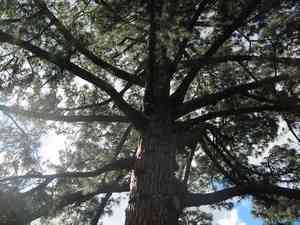
Canary islands pine (Pinus canariensis)
Also known as: Canary Island Pine
The Canary Island pine (Pinus canariensis), a member of the conifer family, thrives in subtropical climates. Notably, fossils of this species have been discovered in Turkey, dating back to the Pliocene epoch. This tree is essential for the Canary Islands' water supply, as it captures moisture from Atlantic condensation and helps channel it into the ground. Additionally, it is popular as an ornamental tree in temperate areas.
In This Article
Attributes of Canary islands pine
Lifespan
Perennial
Plant Type
Tree
Plant Height
15 m
Spread
8 m
Leaf Color
Green Blue
Flower Size
1.5 cm
Flower Color
Yellow Green
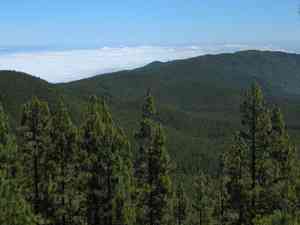
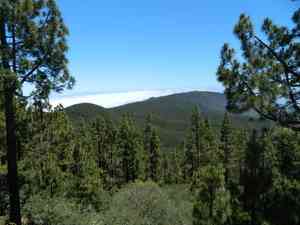
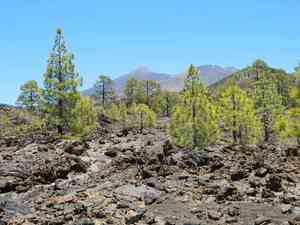
Images of Canary islands pine
Quickly Identify Canary islands pine
1
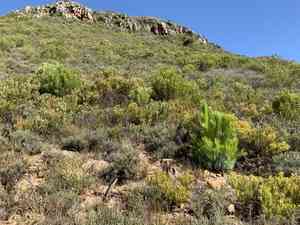
Look for tall trees with a slender trunk and long, dark green needles grouped in threes. The bark is dark, thick, and deeply furrowed, which helps the tree to resist fire.
Scientific Classification of Canary islands pine
Phylum
Vascular plants
Class
Conifers
Order
Pinales
Family
Pine
Genus
Pines
Species
Canary islands pine
Planting and Growing of Canary islands pine
Care Difficulty
Easy
Watering Schedule
Every 2 days
Sunlight Requirements
Full sun
Sunshine Duration
6-10 hours
Ideal Temperature
50-77℉
Soil Type
Potting Mix, Peat Mix
Soil pH
6.5-7.5
Fertilizer Type
Balanced
Pruning Season
Spring, Summer
Pruning Area
Branches, Leaves
Pruning Frequency
2 times a year
Repotting Season
Spring
Pot Type
Plastic, Ceramic
 How to Water Canary islands pine?
The Canary Island pine (Pinus canariensis) requires a deep watering of about 1000 ml each time, ensuring the soil is thoroughly moist but not waterlogged. The key is to allow water to penetrate deeply to encourage robust root growth. This mimics the natural rainfall patterns of its native Canary Islands.
What are the symptoms of an underwatered Canary islands pine?
›
What should I do if my Canary islands pine is not getting enough water?
›
What are the symptoms of an overwatered Canary islands pine?
›
How to save an overwatered Canary islands pine?
›
 What Are the Sunlight Requirements for Canary islands pine?
Pinus canariensis thrives in full sun conditions, making sunlight exposure for most of the day beneficial. Continuous exposure to direct light enhances its capacity for photosynthesis, resulting in stronger growth and vibrant needle coloration.
More About Sunlight Requirements Techniques→
What is the perfect environment for Pinus canariensis?
›
How can you ensure adequate lighting daily?
›
What benefits does ideal light provide for Pinus canariensis?
›
 What Is the Ideal Temperature Range for Canary islands pine?
Pinus canariensis thrives best in temperatures ranging from 50 to 77 degrees Fahrenheit. This range provides a balanced environment for photosynthesis, ensuring that the plant can efficiently convert sunlight into energy without being hindered by cold or heat stress. By maintaining this temperature range, you foster healthy growth and development of the plant.
 What Soil is Best for Canary islands pine?
Pinus canariensis thrives in well-draining soils which prevent root rot and other waterlogging issues. This condition ensures that the roots remain healthy and absorb essential nutrients more effectively, promoting overall plant vitality. This pine prefers soils that offer moderate nutrient content, facilitating steady growth without overwhelming the plant. A balanced nutrient profile supports healthy foliage and strong structural development. The tree is best suited to soils with a pH ranging from slightly acidic to neutral, ensuring optimal nutrient uptake. This pH range helps maintain soil microorganisms that aid in decomposition and nutrient cycling.
 How to Fertilize Canary islands pine?
For Pinus canariensis, the amount of fertilizer should be moderate. Use a balanced fertilizer diluted to half the recommended strength for liquid applications. For solid applications, a layer of around 5 cm of compost or slow-release granules once per year suffices, ensuring they are evenly spread.
 How to Prune Canary islands pine?
Begin by removing any dead, broken, or diseased branches using a sharp cutting tool. Make clean cuts just outside the branch collar to allow proper healing. Focus on enhancing the shape by trimming any cross-growing branches that disrupt the tree’s natural flow. When shaping your Pinus canariensis, gently thin the canopy to allow more light and air to penetrate, which aids in reducing the risk of pests and diseases. Aim for an open structure with evenly spaced branches.
More About Pruning Techniques→
 How to Propagate Canary islands pine plant?
1
Fill the seed tray with a well-draining mix, place the seeds on top, and cover lightly with soil. Water thoroughly and place the tray in a warm, sunny location. Keep the soil consistently moist but not waterlogged, to ensure germination.
2
Select healthy and mature branches for cuttings, usually 6 to 8 inches long, with several nodes. Ensure the cuttings are taken from disease-free plants in the early morning when they are turgid.
3
Dip the cut end of the cutting in a rooting hormone to enhance root development. Then, place the cutting in a prepared pot with a mix of sand and peat, keeping it in a humid environment to promote rooting.
 How to Repot Canary islands pine plant?
1
Monitor the plant for signs like roots growing through drainage holes or soil becoming compacted. These are indicators that it's time to repot. Additionally, a lack of growth spurts might mean the roots need more space.
2
Select a pot that is one size larger than the current one with ample drainage holes. A slightly larger pot allows room for growth without excessive soil, which retains too much moisture, potentially leading to root rot.
3
Opt for well-draining, sandy loam soil to mimic the natural habitat of Pinus canariensis. The soil should allow air to reach the roots while retaining enough moisture to keep them hydrated without waterlogging.



