
Blue spruce (Picea pungens)
Also known as: White spruce, Silver spruce
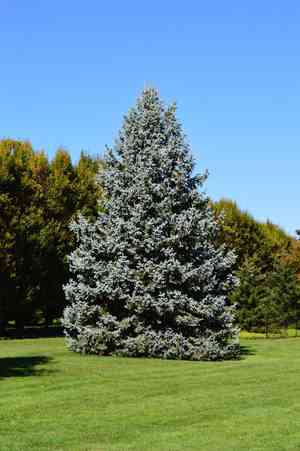
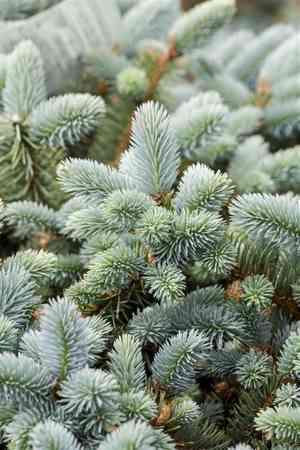
The blue spruce (Picea pungens) stands out due to its striking blue-tinted needles, a feature that differentiates it from other pine trees, which typically have green needles. This unique coloration, caused by a waxy coating, makes the blue spruce a popular choice for ornamental use and Christmas tree production. Its dense and attractive crown further enhances its appeal for decorative purposes.
In This Article
Attributes of Blue spruce
Lifespan
Perennial
Plant Type
Tree
Plant Height
10 m to 50 m
Spread
5 m
Leaf Color
Green Blue Gray Silver
Flower Size
8 cm to 15 cm
Flower Color
Yellow Red Green
Images of Blue spruce
Quickly Identify Blue spruce
1
Bluish saber-like needles, up to 1.5 inches (3.8 cm) long, in a spiral arrangement.
2
Symmetrical pyramidal shape with branches bearing sticky resin and open seed cones.
3
Female cones are oblong-cylindrical, green to brown, with toothed wavy scales.
4
Alternate incurved leaves with apical spines, dull green to silvery-white, up to 1 inch (2.5 cm).
5
Robust purplish-gray bark with rugged scales, distinctive grooves, and scaling patterns.
Scientific Classification of Blue spruce
Phylum
Vascular plants
Class
Conifers
Order
Pinales
Family
Pine
Genus
Spruces
Species
Blue spruce
Planting and Growing of Blue spruce
Care Difficulty
Easy
Watering Schedule
Every 2 days
Sunlight Requirements
Full sun
Sunshine Duration
4-8 hours
Ideal Temperature
50-60℉
Soil Type
Potting Mix, Peat Mix
Soil pH
6.5-7.5
Fertilizer Type
Balanced
Pruning Season
Spring, Summer
Pruning Area
Branches, Leaves
Pruning Frequency
Once a year
Repotting Season
Spring
Pot Type
Terracotta, Plastic
 How to Water Blue spruce?
Picea pungens, commonly known as the Colorado Blue Spruce, requires moderate watering. Water deeply until the soil around the roots is saturated but not waterlogged. Typically, 1000 milliliters of water ensures that moisture reaches the deeper roots, promoting healthy, robust growth. Always allow the top inch of soil to dry out between watering sessions.
More About Watering Techniques→
What are the symptoms of an underwatered Blue spruce?
›
What should I do if my Blue spruce is not getting enough water?
›
What are the symptoms of an overwatered Blue spruce?
›
How to save an overwatered Blue spruce?
›
 What Are the Sunlight Requirements for Blue spruce?
Favoring full sun to partial sun, Picea pungens achieves optimal growth with ample light, which promotes dense, vibrant foliage and vigorous health, reducing disease risk.
More About Sunlight Requirements Techniques→
What kind of light does Picea pungens need?
›
How can you achieve ideal light for Picea pungens?
›
Why is ideal light important for Picea pungens?
›
 What Is the Ideal Temperature Range for Blue spruce?
Picea pungens, also known as Colorado Blue Spruce, thrives in cooler climates. The ideal temperature range for this plant is between 50°F and 60°F. These temperatures allow for optimal growth and health, ensuring the tree maintains its distinctive blue needle coloration and robust structure. Providing these conditions helps the plant to photosynthesize efficiently and keep pests and diseases at bay.
 What Soil is Best for Blue spruce?
Picea pungens thrives in well-drained soils to prevent root rot. Excess moisture can lead to fungal infections, so ensuring proper drainage is essential for healthy growth. This tree benefits from soils rich in organic matter that can provide the necessary nutrients for strong, steady growth. Fertile soil contributes to its vibrant blue-green foliage. While Picea pungens can tolerate some drought, it flourishes best with moderate soil moisture. Adequate water retains the tree's health without stressing it from dehydration.
More About Soil→
 How to Fertilize Blue spruce?
For Picea pungens, it is essential to provide the correct amount of fertilizer to ensure optimal growth. Use a balanced 10-10-10 or 12-12-12 NPK fertilizer. For liquid fertilizer, a diluted solution should be applied at the root zone. For slow-release fertilizers, evenly spread about 1 cup near the base of the tree.
 How to Prune Blue spruce?
Start by removing any dead, diseased, or broken branches. This step helps prevent the spread of disease and improves the tree's overall health and appearance. Trim back branches to maintain a pleasing conical shape. Focus on cutting just above new buds to encourage bushier growth and fill potential gaps in the structure. Prune internal branches that cross or rub against each other to improve air circulation, reducing the potential for fungal diseases and promoting a robust structure.
More About Pruning Techniques→
 How to Propagate Blue spruce plant?
1
Collect seeds from healthy cones in the fall. Make sure the cones are fully matured but not open yet. Allow the cones to dry until they open, then extract the seeds. Store in a cool, dry place if immediate sowing is not possible.
2
Take cuttings from healthy branches in late winter or early spring. Use a clean, sharp knife or pruning shears to ensure a smooth cut. Cuttings should be about 15-20 cm long and should include a node where roots can potentially form.
3
Grafting is usually done in early spring. Select a healthy, disease-free rootstock and scion. Make precise cuts to fit the scion to the rootstock securely. Bind tightly with grafting tape to promote healing and stability. Ensure consistent humidity for successful grafting.
 How to Repot Blue spruce plant?
1
Repot when you notice your Picea pungens is getting root-bound, which is usually evident by roots poking out of the drainage holes, slow growth despite adequate care, or the plant becoming top-heavy. This signals that it's time to provide a new, larger environment for the roots to expand and support the growing tree.
2
Choose a pot that is slightly larger than the current one, typically 2 inches greater in diameter. This prevents excess water retention that can occur with a much larger pot. Ensure the pot has good drainage holes to prevent waterlogging, which could lead to root rot, ensuring a healthier root system and vigorous growth post-repotting.
3
Opt for a well-draining, acidic soil mix. Picea pungens thrives in an acidic environment that mimics its natural habitat. The mixture should retain some moisture while allowing for good aeration to prevent root rot and promote healthy growth—a blend of peat, perlite, and pine bark mulch works well.



