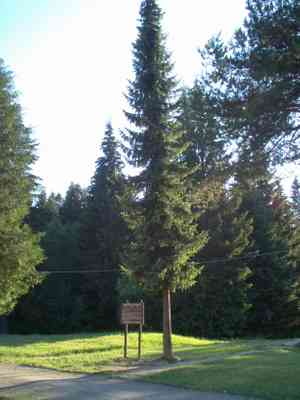
Serbian spruce (Picea omorika)
Also known as: Omorica
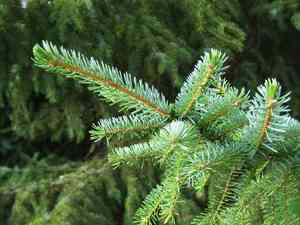
This tree is a medium-sized evergreen that typically reaches 20 meters in height, though it can occasionally grow up to 40 meters. Its trunk can be as wide as 1 meter in diameter. The branches are covered in buff-brown shoots that are densely hairy. The needle-like leaves measure 1 to 2 cm in length and are flattened in cross-section. The foliage is dark blue-green on the upper side and has a blue-white hue on the underside.
In This Article
Attributes of Serbian spruce
Lifespan
Perennial
Plant Type
Tree
Plant Height
15 m to 18 m
Spread
4.5 m to 8 m
Leaf Color
Green White
Flower Size
2.5 cm to 8 cm
Flower Color
Red Yellow Violet
Images of Serbian spruce


Quickly Identify Serbian spruce
1
Needles are glossy dark green with silver underside and two white lines, 0.5-1 inch (1.3-2.5 cm) long.
2
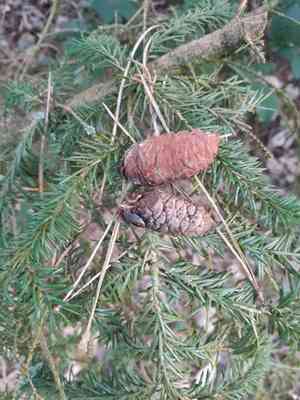
Cone fruit transitions from purple to reddish-brown, pendulous with finely toothed scales.
3
Stem is slender, reddish-brown, and supports pendant branches curving upwards at ends, aiding identification.
4
Leaves are needle-like, sharp-pointed, firm, and slightly rigid, arranged in overlapping manner.
5
Bark patterns develop cracking into small, thin, scaly plates in shades of gray, silver, and brown.
Scientific Classification of Serbian spruce
Phylum
Vascular plants
Class
Conifers
Order
Pinales
Family
Pine
Genus
Spruces
Species
Serbian spruce
Planting and Growing of Serbian spruce
Care Difficulty
Easy
Watering Schedule
Every 2 days
Sunlight Requirements
Full sun
Sunshine Duration
6-8 hours
Ideal Temperature
50-68℉
Soil Type
Potting Mix, Peat Mix
Soil pH
6.5-7.5
Fertilizer Type
Balanced
Pruning Season
Spring, Summer
Pruning Area
Branches, Leaves
Pruning Frequency
2 times a year
Repotting Season
Spring
Pot Type
Plastic, Ceramic
 How to Water Serbian spruce?
When watering Picea omorika, aim for about 1000 ml each time. Ensure water reaches the root zone, but avoid waterlogging. The soil should be moist but not soggy—it's all about achieving a gentle balance to provide the roots with adequate hydration without suffocating them.
What are the symptoms of an underwatered Serbian spruce?
›
What should I do if my Serbian spruce is not getting enough water?
›
What are the symptoms of an overwatered Serbian spruce?
›
How to save an overwatered Serbian spruce?
›
 What Are the Sunlight Requirements for Serbian spruce?
The ideal light range for Picea omorika is full sun to partial sun, facilitating robust growth, healthy foliage, and resistance to pests and diseases.
More About Sunlight Requirements Techniques→
How much sunlight does Picea omorika need?
›
What if I cannot provide full sun?
›
How can sunlight intensity affect Picea omorika?
›
 What Is the Ideal Temperature Range for Serbian spruce?
Picea omorika thrives best within an ideal temperature range of 50 to 68 degrees Fahrenheit. This range promotes healthy growth by ensuring that photosynthesis and respiration occur efficiently. Keeping it within this range helps minimize stress on the plant.
 What Soil is Best for Serbian spruce?
Picea omorika requires well-drained soil to prevent root rot. This ensures healthier growth by allowing sufficient oxygen to reach the roots, promoting robust tree development. The soil should be capable of retaining sufficient moisture without becoming waterlogged. This preventive measure helps reduce stress on the plant during dry periods. The soil should be nutrient-rich to support the growth of Picea omorika. A well-fertilized soil provides essential nutrients, enhancing growth and foliage quality.
 How to Fertilize Serbian spruce?
Picea omorika, known as the Serbian spruce, generally requires modest fertilization. Too much can harm the plant, so it's best to follow a balanced slow-release fertilizer schedule, applying around one pound per inch of trunk diameter annually.
 How to Prune Serbian spruce?
To prune Picea omorika, start by removing any dead, damaged, or diseased branches to maintain the overall health of the tree. Use sharp, clean pruning shears to make clean cuts, which will aid in faster healing. For structural pruning, thin out crowded branches to improve air circulation and allow sunlight to penetrate the inner branches, this promotes healthier and more vigorous growth. Always prune back to a lateral branch, bud, or main trunk to avoid leaving stubs.
More About Pruning Techniques→
 How to Propagate Serbian spruce plant?
1
Sow the Picea omorika seeds in seed trays filled with a mix of peat and sand. Maintain constant moisture without waterlogging, ensuring good drainage for better germination.
2
Select healthy branches and cut segments of about 10-15 cm in length. Remove the lower needles and prepare the cuttings by treating them with rooting hormone to encourage root growth.
3
Insert the prepared cuttings into pots with a well-draining potting mix. Ensure they are planted deep enough to support themselves, and keep them in a humid environment for optimal rooting.
 How to Repot Serbian spruce plant?
1
Recognize the need for repotting by observing the roots of Picea omorika. When they begin to circle the pot or grow out of drainage holes, it's time to consider shifting your plant. Additionally, slower growth and quick-drying soil are signals that repotting is needed.
2
Select a pot that is slightly larger than the current one but not overwhelmingly so. A pot that is too large can lead to water retention issues, while a too-small pot can restrict root growth. Ensure it has adequate drainage holes to allow excess water to escape easily, promoting healthier root systems.
3
Opt for a well-draining, acidic soil mix. This not only ensures the roots receive adequate oxygen but also mimics the natural conditions of Picea omorika's native habitat. A mix designed for conifers will provide essential nutrients and maintain the necessary acidity for healthy growth.



