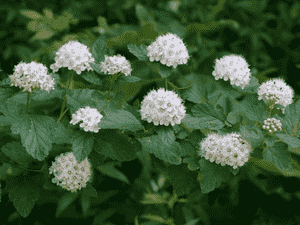
Common ninebark (Physocarpus opulifolius)
Also known as: Eastern ninebark, Diabolo ninebark
Ninebark (*Physocarpus opulifolius*), native to the eastern United States, is often planted for both erosion control and decorative use. Notable cultivars like Dart's Gold and Diabolo have been honored with the Royal Horticultural Society's Award of Garden Merit.
In This Article
Attributes of Common ninebark
Lifespan
Perennial
Plant Type
Shrub
Plant Height
2 m to 3 m
Spread
1 m to 2 m
Leaf Color
Green Yellow Red Gold Brown
Flower Size
5 mm to 1 cm
Flower Color
White Pink
Images of Common ninebark
Quickly Identify Common ninebark
1
Distinct exfoliating bark with reddish-brown inner layers, peeling in strips for visual interest.
2
Maple-like leaves, 3-5 lobed, transitioning from bright green to red-orange in autumn.
3
Small white-pink flowers in dense clusters, 0.25 inches (0.6 cm) wide with radial symmetry.
4
Ornamental fruits, drooping seed capsules in reddish-brown, 0.25 inches (6-7 mm) diameter.
5
Moderate-sized shrub, dense and rounded form, reaching 3-10 feet (0.9-3 m) tall and wide.
Scientific Classification of Common ninebark
Phylum
Vascular plants
Class
Dicotyledons
Order
Rosales
Family
Rose
Genus
Ninebarks
Species
Common ninebark
Planting and Growing of Common ninebark
Care Difficulty
Easy
Watering Schedule
Every 4 days
Sunlight Requirements
Full sun
Sunshine Duration
6-10 hours
Ideal Temperature
65-75℉
Soil Type
Potting Mix, Peat Mix
Soil pH
6.5-7.5
Fertilizer Type
Balanced
Pruning Season
Spring, Summer
Pruning Area
Branches, Leaves
Pruning Frequency
2 times a year
Repotting Season
Spring
Pot Type
Plastic, Ceramic
 How to Water Common ninebark?
When watering Physocarpus opulifolius, aim to provide approximately 500 ml of water per session. This ensures the soil remains adequately moist without becoming waterlogged. Check that the top 1-2 inches of soil are dry before re-watering.
More About Watering Techniques→
What are the symptoms of an underwatered Common ninebark?
›
What should I do if my Common ninebark is not getting enough water?
›
What are the symptoms of an overwatered Common ninebark?
›
How to save an overwatered Common ninebark?
›
 What Are the Sunlight Requirements for Common ninebark?
This plant flourishes best with full sun to partial sun conditions. Ideal light promotes vibrant leaf pigmentation, robust growth, and increased resilience against environmental stresses.
More About Sunlight Requirements Techniques→
Optimal Sunlight Exposure
›
Solutions for Optimal Sunlight
›
Benefits of Ideal Sunlight
›
 What Is the Ideal Temperature Range for Common ninebark?
The ideal temperature range for Physocarpus opulifolius lies between 65°F and 75°F. This range promotes optimal growth and health as it simulates the plant's natural environment. Maintaining these temperatures ensures the plant can photosynthesize efficiently, develop vibrant foliage, and produce healthy blooms.
 What Soil is Best for Common ninebark?
This plant thrives in well-drained soil, which is essential to prevent root rot. Well-drained soil ensures that excess water does not accumulate around the roots, providing a healthy environment for growth. Physocarpus opulifolius benefits from soil enriched with organic matter. Nutrient-rich soils supply the necessary elements for healthy foliage and vibrant growth, enhancing the plant's overall vitality. While requiring good drainage, this plant also prefers soil that retains some moisture. A balance here helps ensure that the plant remains hydrated during dry spells, facilitating sustained development and resilience.
More About Soil→
 How to Fertilize Common ninebark?
When applying fertilizer to Physocarpus opulifolius, it’s essential to ensure that you're not overwhelming the plant. Typically, you should use a balanced, all-purpose fertilizer diluted to half strength for liquid applications. This means if the fertilizer package suggests 1 tablespoon per gallon of water, you would use only ½ tablespoon instead. For slow-release fertilizers, a sprinkle of granules around the base of the plant, about ¼ cup, is generally sufficient.
More About Fertilizing Techniques→
 How to Prune Common ninebark?
It's essential to prune your Physocarpus opulifolius in early spring before new growth begins or immediately after flowering to shape the shrub and encourage abundant blooms. Avoid pruning in winter as it may damage newly formed buds. Start by removing dead, diseased, or damaged branches. This allows the shrub to focus on new growth. Trim back any overgrown or crossed branches to maintain a pleasing shape, cutting just above healthy buds or branch junctions.
More About Pruning Techniques→
 How to Propagate Common ninebark plant?
1
Harvest seeds from mature capsules in autumn. Clean and dry them thoroughly before storage or immediate sowing. Store them in a cool, dry place until spring planting.
2
In late spring, take stem cuttings approximately 5-6 inches long from healthy plants. Remove lower leaves and dip the cut ends in rooting hormone. Plant in moist, well-drained soil.
3
Divide mature plants in early spring or late autumn when the plant is dormant. Carefully dig up the plant and separate the roots into smaller sections, ensuring each has several healthy shoots.
 How to Repot Common ninebark plant?
1
Physocarpus opulifolius shows signs of needing a repotting when its roots start coming out of the drainage holes, the plant seems too large for its pot, or the growth has stalled despite proper care. Spring or autumn is the best time for this procedure, as it allows the plant to establish itself in its new environment during active growing seasons.
2
Select a pot that is one size larger than the current one, with ample drainage holes to prevent waterlogging. This allows room for root expansion and reduces the risk of root rot. A slightly larger pot also ensures better stability and prevents the plant from becoming root-bound too quickly.
3
Opt for loamy, well-draining soil that retains moisture yet doesn’t remain soggy. A good soil mix enhances aeration and encourages robust root development. It prevents overwatering issues and supports healthy foliage growth, maintaining the plant's vibrancy and vigor.



