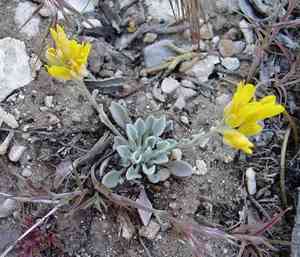
San bernardino mountains bladderpod (Physaria kingii)
Also known as: King's Bladderpod
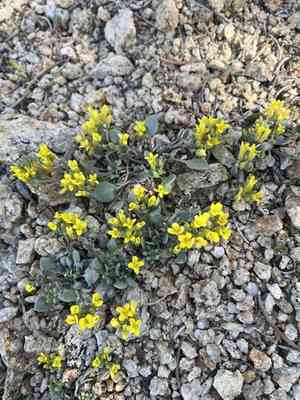
The San Bernardino Mountains bladderpod (Physaria kingii subsp. bernardina) is a rare plant found in a limited number of locations near Big Bear in the San Bernardino Mountains of southern California. Due to threats from activities such as mining and other human disturbances, it is classified as an endangered species at the federal level.
In This Article
Attributes of San bernardino mountains bladderpod
Lifespan
Biennial, Perennial
Plant Type
Herb
Plant Height
10-30 cm
Spread
15-45 cm
Leaf Color
Silver-gray
Flower Size
1-2 cm
Flower Color
Yellow
Images of San bernardino mountains bladderpod
Quickly Identify San bernardino mountains bladderpod
1
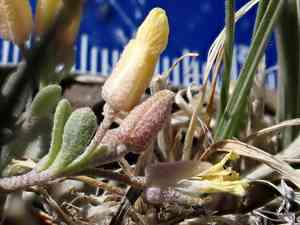
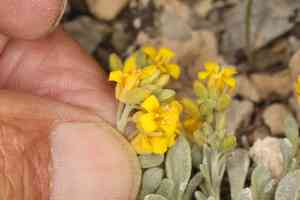
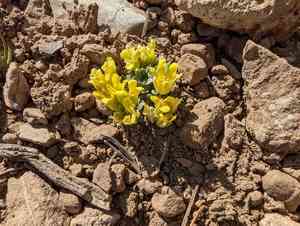
Look for silver-gray, hairy foliage and clusters of bright yellow, four-petaled flowers. The plant typically forms a low-growing rosette.
Scientific Classification of San bernardino mountains bladderpod
Phylum
Vascular plants
Class
Dicotyledons
Order
Brassicales
Family
Cruciferae
Genus
Physaria
Species
San bernardino mountains bladderpod
Planting and Growing of San bernardino mountains bladderpod
Care Difficulty
Moderate
Watering Schedule
Every 2 days
Sunlight Requirements
Full sun
Sunshine Duration
4-8 hours
Ideal Temperature
60-75℉
Soil Type
Potting Mix, Peat Mix
Soil pH
6.5-7.5
Fertilizer Type
Balanced
Pruning Season
Spring, Summer
Pruning Area
Branches, Leaves
Pruning Frequency
2 times a year
Repotting Season
Spring
Pot Type
Plastic, Ceramic
 How to Water San bernardino mountains bladderpod?
The watering amount for Physaria kingii is around 250 milliliters per session. It's important to ensure that water reaches the entire root zone but doesn't sit in the soil too long, causing sogginess. Ensure the top inch of soil is dry before re-watering, as Physaria kingii prefers drier conditions similar to its natural desert habitat.
What are the symptoms of an underwatered San bernardino mountains bladderpod?
›
What should I do if my San bernardino mountains bladderpod is not getting enough water?
›
What are the symptoms of an overwatered San bernardino mountains bladderpod?
›
How to save an overwatered San bernardino mountains bladderpod?
›
 What Are the Sunlight Requirements for San bernardino mountains bladderpod?
Physaria kingii prospers in a full sun to partial sun range. This balance offers benefits such as strong growth, attractive flowering, and improved drought resilience, building a robust organism capable of environmental adaptation.
What kind of lighting does Physaria kingii prefer?
›
How can you achieve ideal light conditions for Physaria kingii?
›
What are the benefits of ideal lighting for Physaria kingii?
›
 What Is the Ideal Temperature Range for San bernardino mountains bladderpod?
The ideal temperature range for Physaria kingii is between 60°F to 75°F. This range supports optimal physiological processes including photosynthesis, nutrient uptake, and growth. Maintaining this range creates a stable environment that simulates its natural habitats, thereby promoting healthy development and enabling the plant to produce vibrant foliage and blooms.
 What Soil is Best for San bernardino mountains bladderpod?
Physaria kingii requires well-drained soil to thrive. With its roots avoiding excess moisture, it can efficiently absorb nutrients and oxygen, ensuring healthy growth and vibrant foliage. A slightly nutrient-rich environment benefits Physaria kingii by promoting vigorous growth and enhancing its flowering potential. Incorporating organic matter can contribute to a more fertile substrate. Loose soil structures allow the roots of Physaria kingii to expand freely, facilitating easy access to nutrients. This creates an optimal growing medium, preventing root congestion and promoting vibrant plant development.
 How to Fertilize San bernardino mountains bladderpod?
For Physaria kingii, use a balanced liquid fertilizer that is diluted to half its recommended strength. Apply enough to moisten the root zone without causing runoff, typically around 100 ml per plant depending on its size and soil conditions.
 How to Prune San bernardino mountains bladderpod?
The best time to prune Physaria kingii is during the early to mid-spring before new growth appears. This timing helps the plant heal efficiently and prepares it for the productive growing season. Begin by removing any dead or diseased stems, cutting back to healthy tissue. Focus on thinning the plant to improve air circulation and sunlight penetration, cutting back overgrown branches just above a node. Finish by trimming to maintain the desired shape.
More About Pruning Techniques→
 How to Propagate San bernardino mountains bladderpod plant?
1
Fill the seed tray with a sterile potting mix. Make sure the soil is evenly distributed and lightly moistened. This provides an optimal environment for seed germination, which is crucial for the initial stages of growth.
2
Sprinkle the seeds evenly across the surface of the soil. Cover them lightly with a thin layer of potting mix. This helps in anchoring the seeds and protecting them from being displaced by water or wind.
3
Place the seed tray in a warm, sunny location. Ideally, it should receive indirect sunlight. Maintain consistent moisture in the soil by misting as needed to keep the seeds hydrated for optimal germination.
 How to Repot San bernardino mountains bladderpod plant?
1
Repot Physaria kingii when you notice its roots are peeking out of the drainage holes or circling the soil surface. These are clear signs the plant has outgrown its current pot and needs more space to flourish.
2
Opt for a pot that is slightly larger in diameter than the current one, ensuring it has ample drainage holes. This secures healthy root growth by preventing waterlogging, thus protecting your plant from root rot.
3
Select a well-draining sandy loam soil mix, ideal for mimicking the plant's natural environment, promoting root aeration, and assisting in effective water management, crucial for Physaria kingii's growth.



